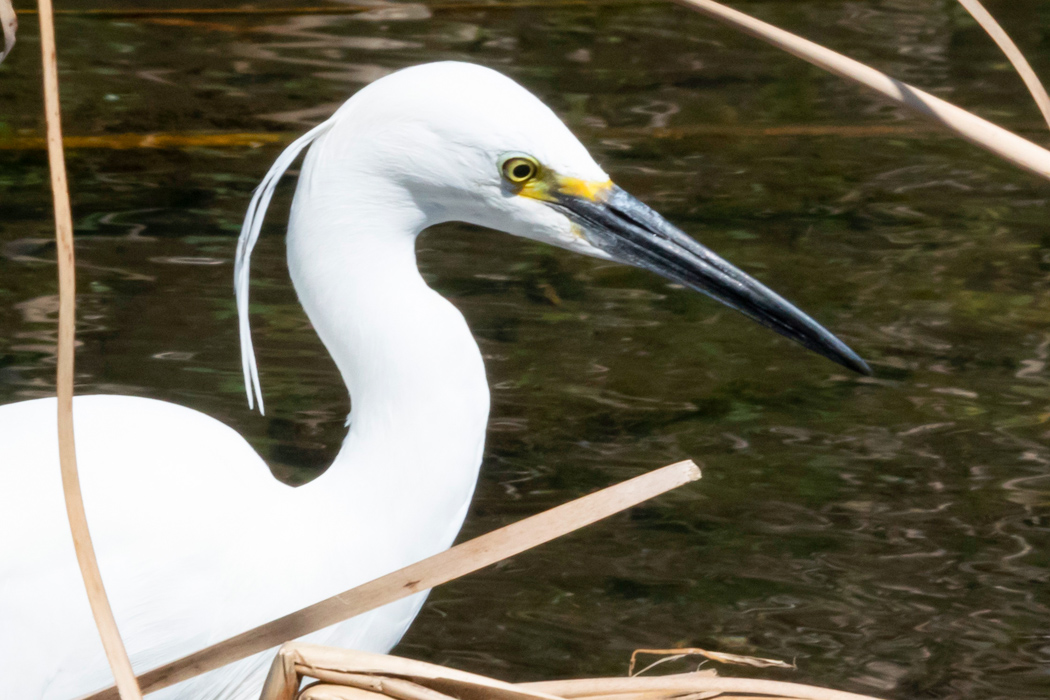
Little Egret
A heron with stylish nuptial plumes in summer.
| Scientific name | Egretta garzetta |
| English name | Little Egret |
| Japanese name | 小鷺 |
| Class | Aves |
| Order | Pelcaniformes |
| Family | Ardeidae |
| Genus | Egretta |
| Species | garzetta |
| Full length | 60cm |
| Distribution | Widely distributed in tropical and temperate regions |
Little Egret Characteristics and Morphology
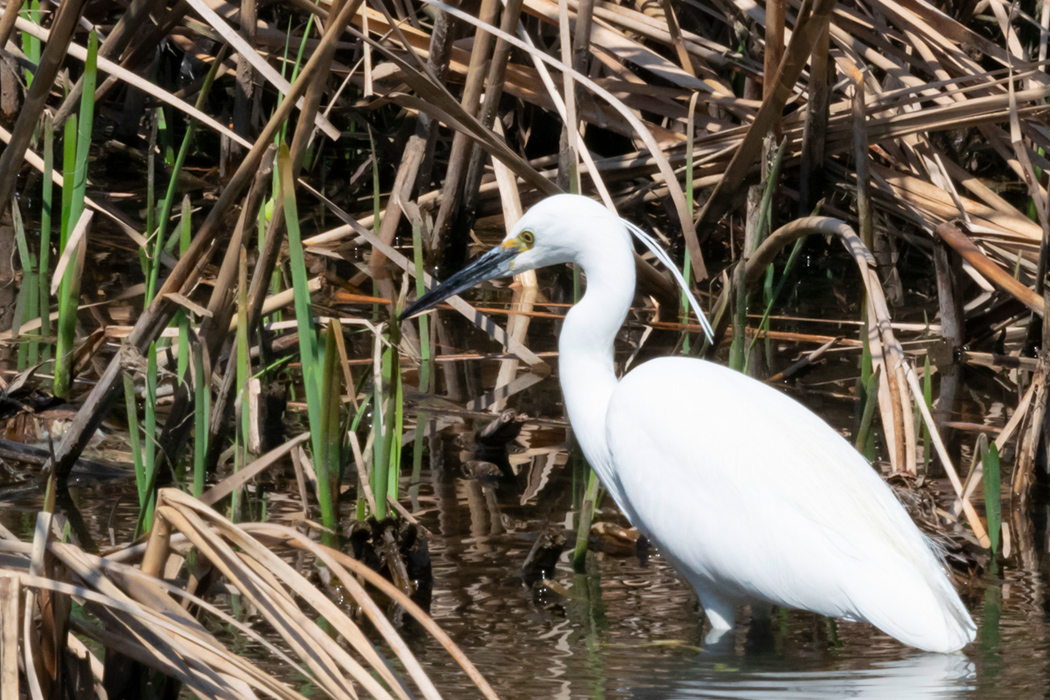
A type of white heron, slightly smaller than the Great Egret. Body length is about 60cm. Sexes are alike. In winter, it does not have ornamental feathers and is a little plain.
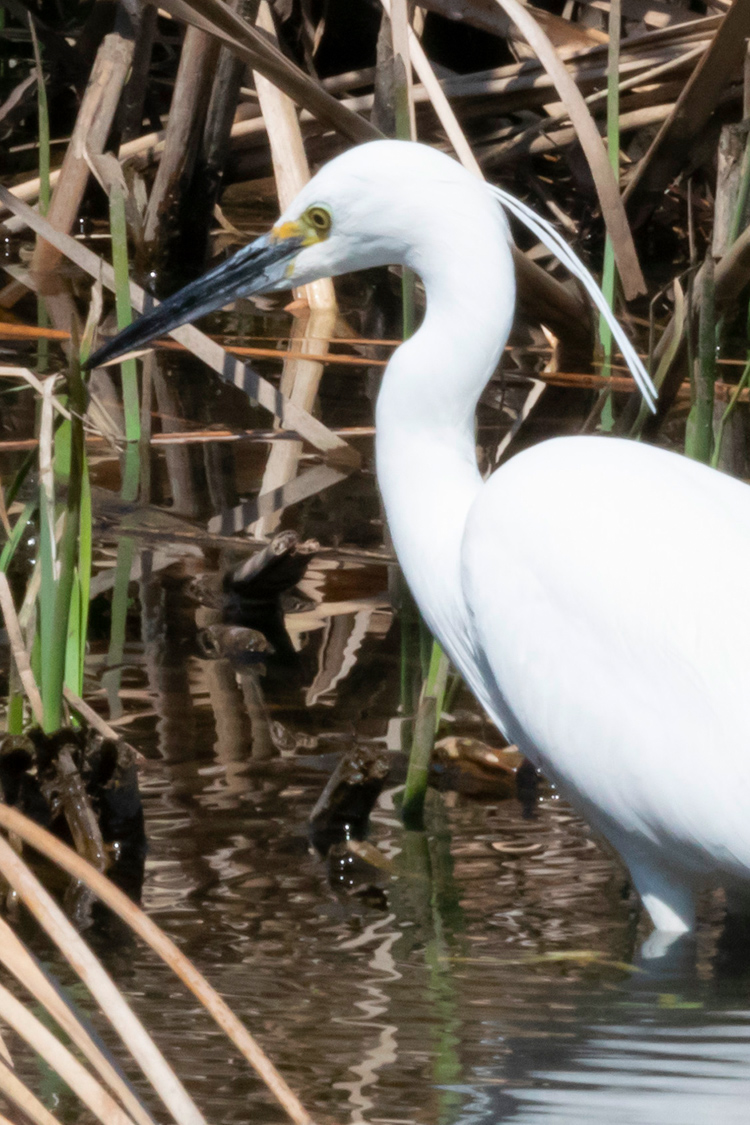
In summer plumage, it is characterized by two crest plumes protruding from the back of its head. The bill is short and black throughout the year. The base of the bill is yellow. The iris is also yellow.
In summer plumage, it also has ornamental feathers on its chest and shoulders.
The tail feathers are short. The legs are black, and the toes are yellow.
Song
They cry with a "Gyaa" or "Gaa" sound.
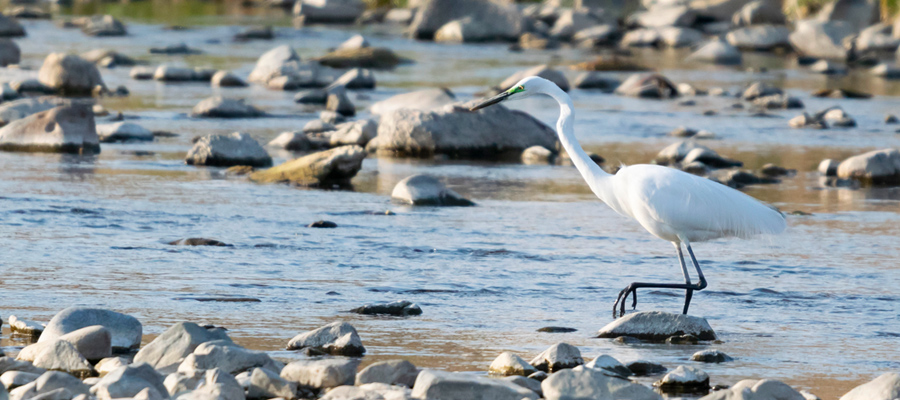
Little Egret Ecology
Habitat
Inhabits shallow waters such as rivers and rice fields.
Food
Eats small fish and crustaceans.
Life Cycle
Forms colonies in forests to breed.
Little Egret Photos
Little Egret Photos are introduced.
Tap the photo to open the detail page.
Little Egret Behavior
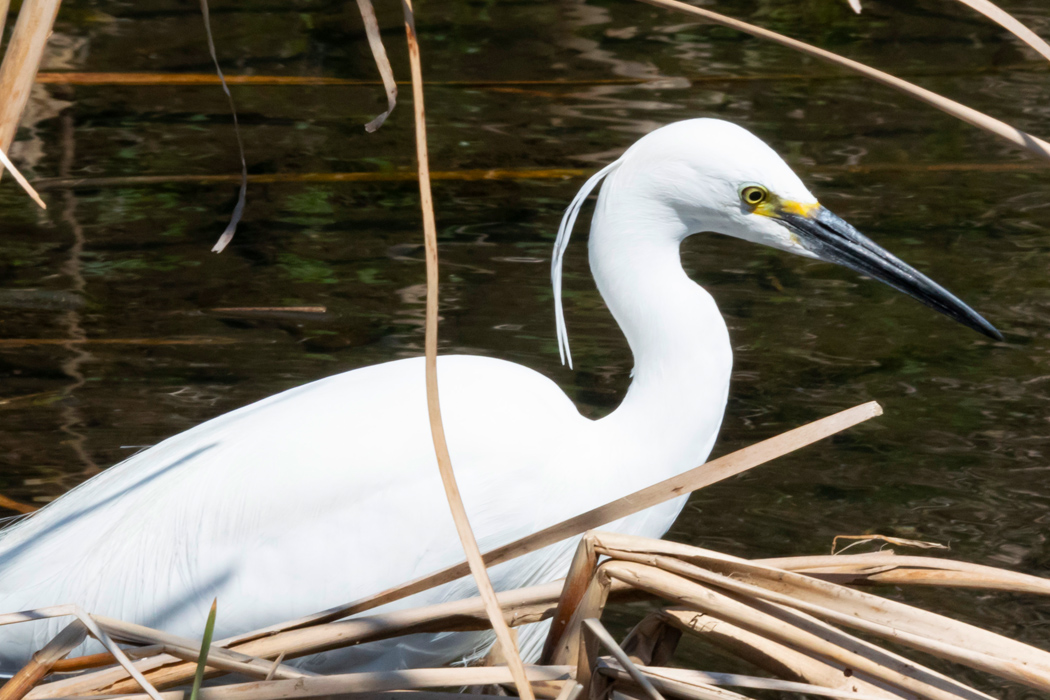
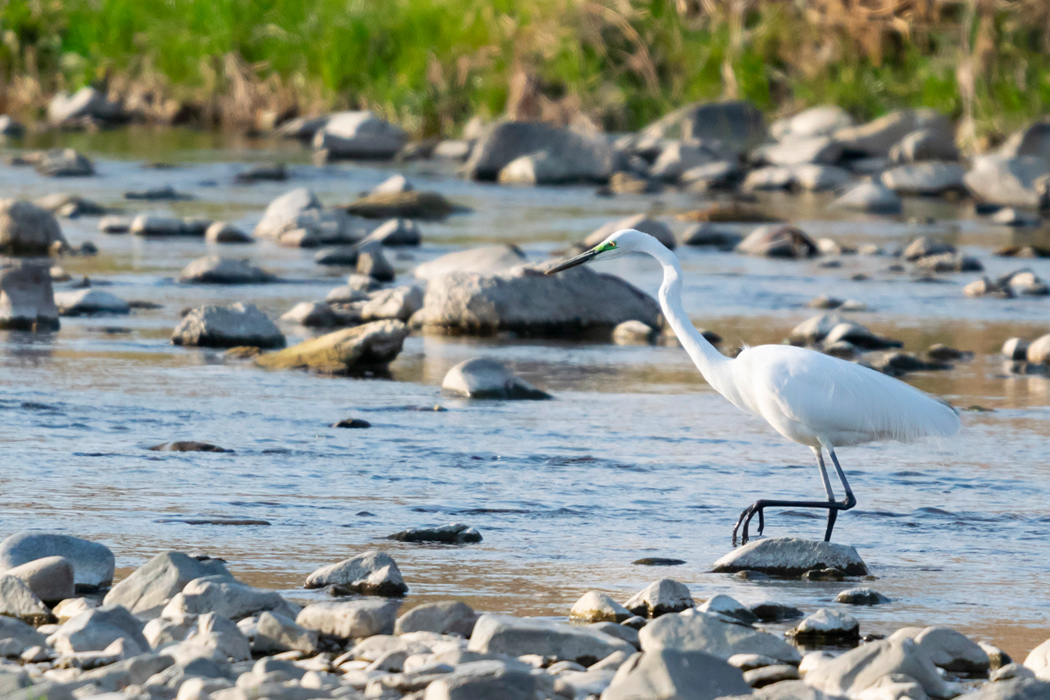
When flying, it retracts its neck in an S-shape like other herons. It not only uses its bill but also vibrates its feet to stir up prey before eating it. They live in groups. They are more active during the day than other heron species and forage for food. They are active until evening and return to their roosts around dusk.
Little Egret Information
Naming
The scientific name "garzetta" means "small heron," similar to the Japanese name.
Little Egret Found Locations
Nogawa River in Mitaka, Asakawa River in Hachiōji
I found it foraging in the shallows of the Nogawa River in Mitaka. It was relatively easy to spot because it was not with other herons in the Nogawa River. It moved slowly, straddling obstacles such as aquatic plants with its feet, and pecked at and ate small fish when it found them.
It is also often seen in the Asakawa River in Hachiōji, but it is often difficult to identify because it is mixed in with other heron species.
Picture book
curious "singing whale"...... Read more
Short crest and pointed head....... Read more
Hind wings orange color is one point....... Read more
Also called "Heike bird"....... Read more
The third abdominal segment reflects silver....... Read more
There is a white band in the middle of the body....... Read more