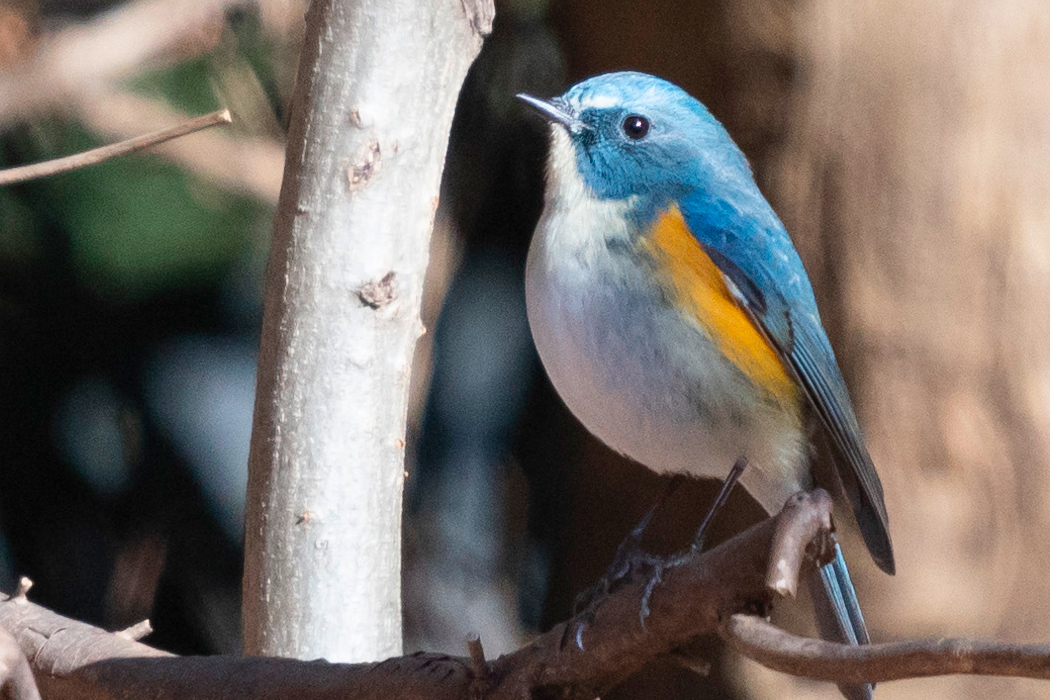
Red-flanked Bluetail
A blue bird that is one of the "Three Blue Birds of Japan."
| Scientific name | Tarsiger cyanurus |
| English name | Red-flanked Bluetail |
| Japanese name | 瑠璃鶲 |
| Class | Aves |
| Order | Passeriformes |
| Family | Muscicapidae |
| Genus | Tarsiger |
| Species | cyanurus |
| Full length | 14cm |
| Distribution | Eurasia. Breeds in high mountains during summer and winters in central Honshu and southward during winter. |
Red-flanked Bluetail Characteristics and Morphology
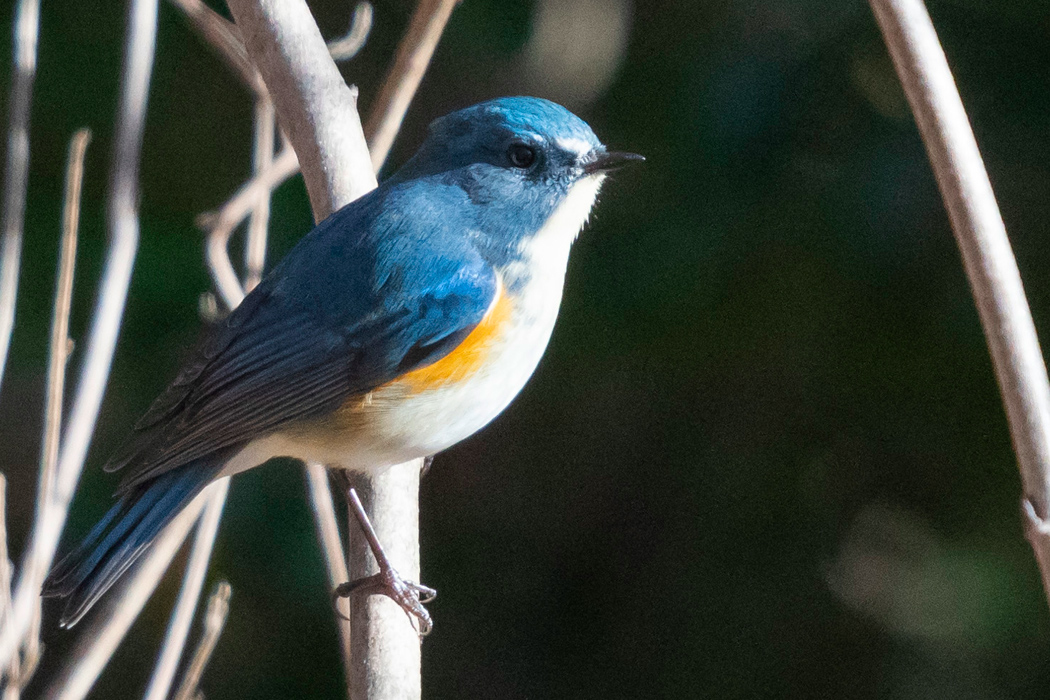
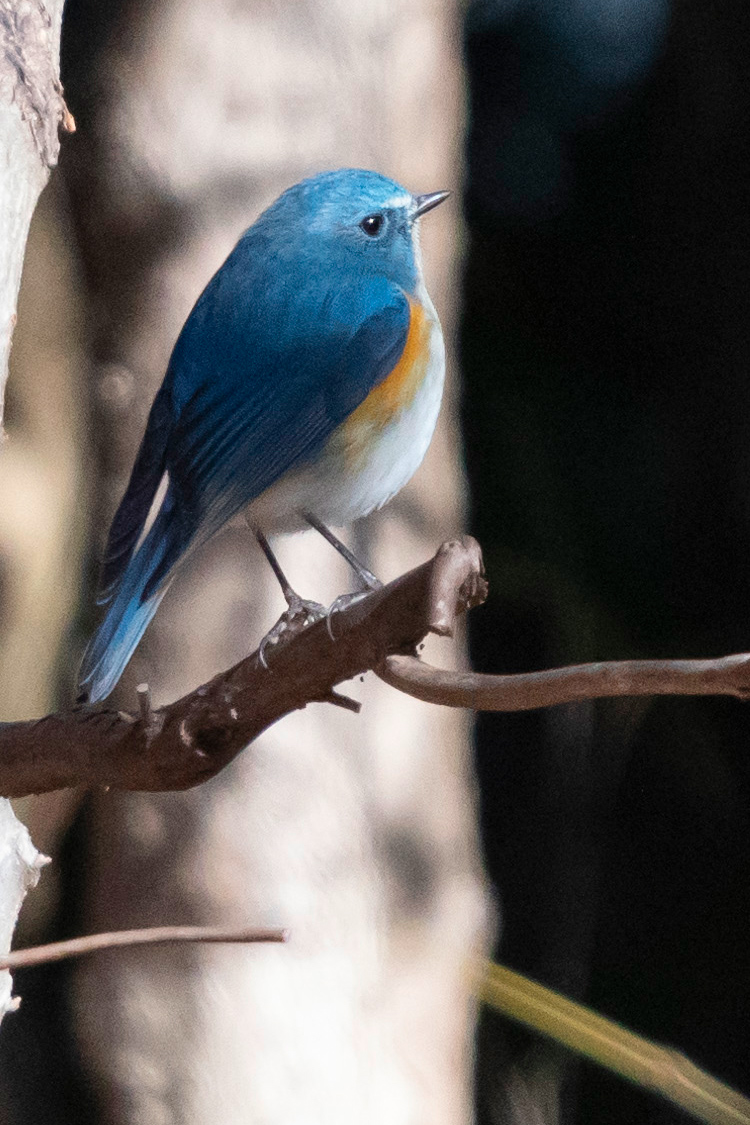
A sparrow-sized blue bird of the Old World flycatcher family. Colors differ significantly between males and females.
Bill is short and lead-colored. Iris is black.
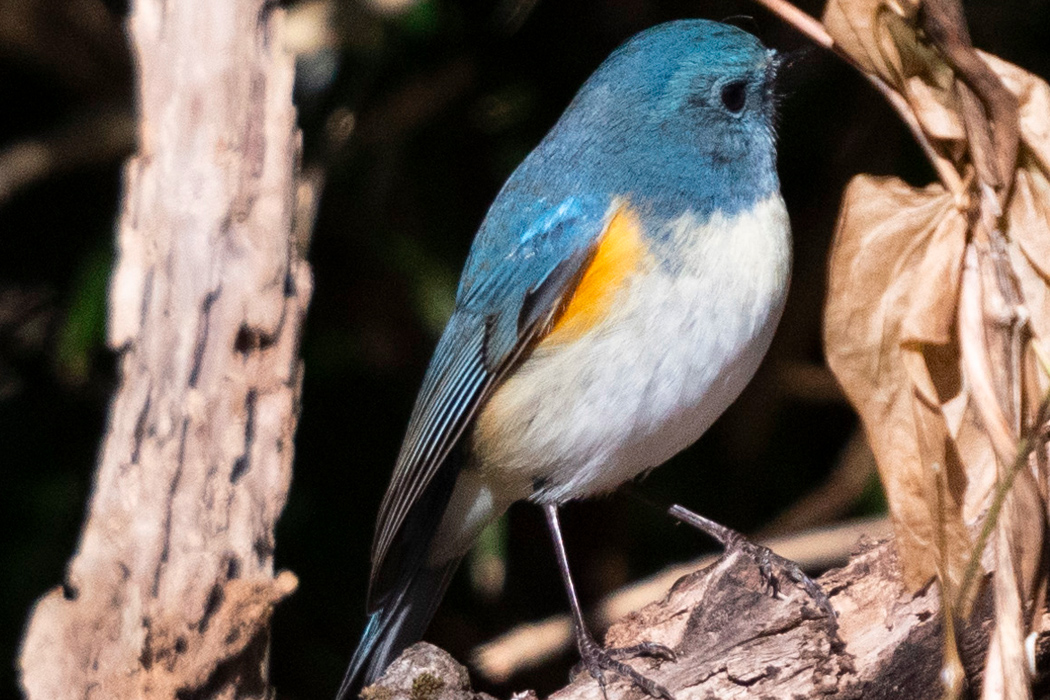
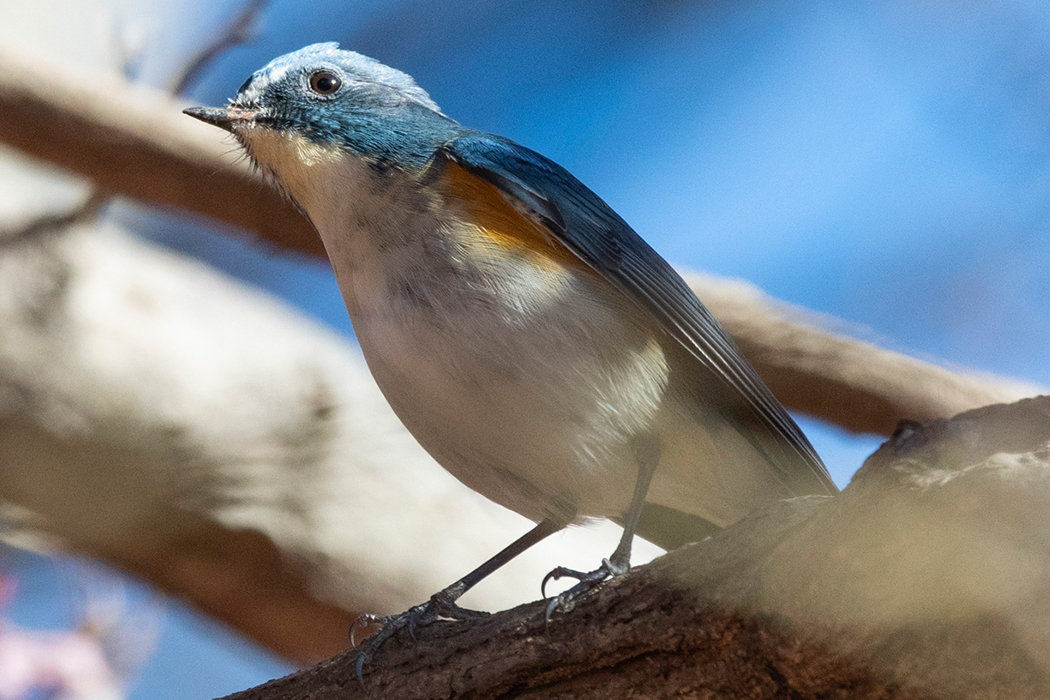
The belly is rounded and white. Yellow feathers grow along the sides of the body from the base of the scapulars.
Both males and females have a blue tint to the tail feathers, though the intensity varies. Legs are black.
Male
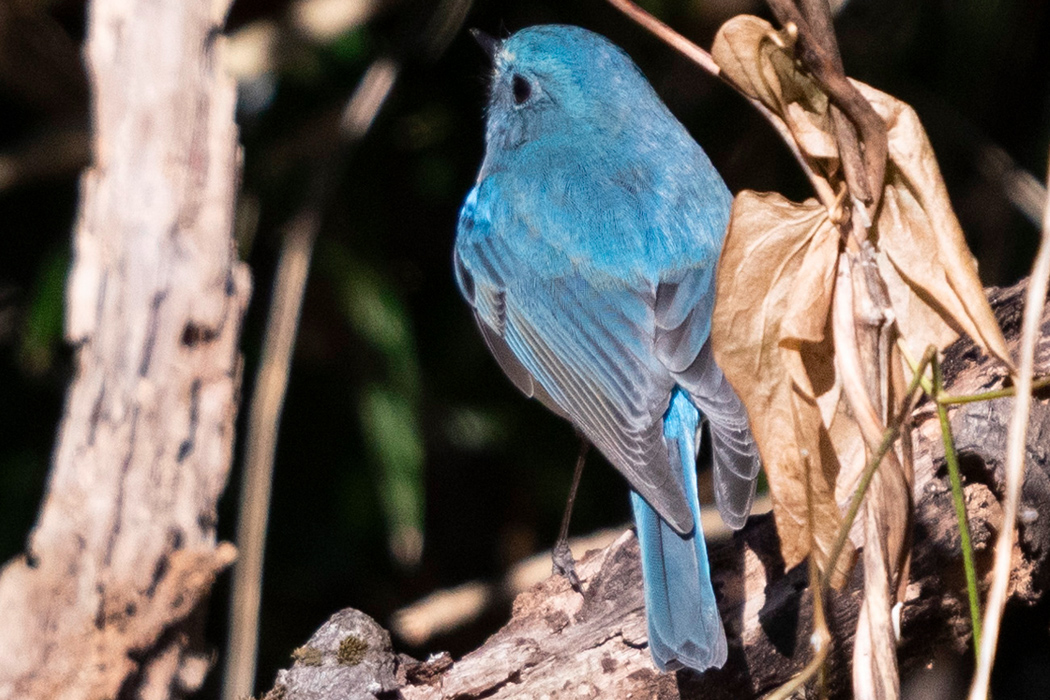
Features a beautiful lapis lazuli blue. It takes 2 to 3 years after birth for a male to develop this striking blue plumage.
A white line runs from the bill to above the eye. The throat is white.
The dorsal side is a beautiful blue. Primary feathers are closer to dark brown.
Female
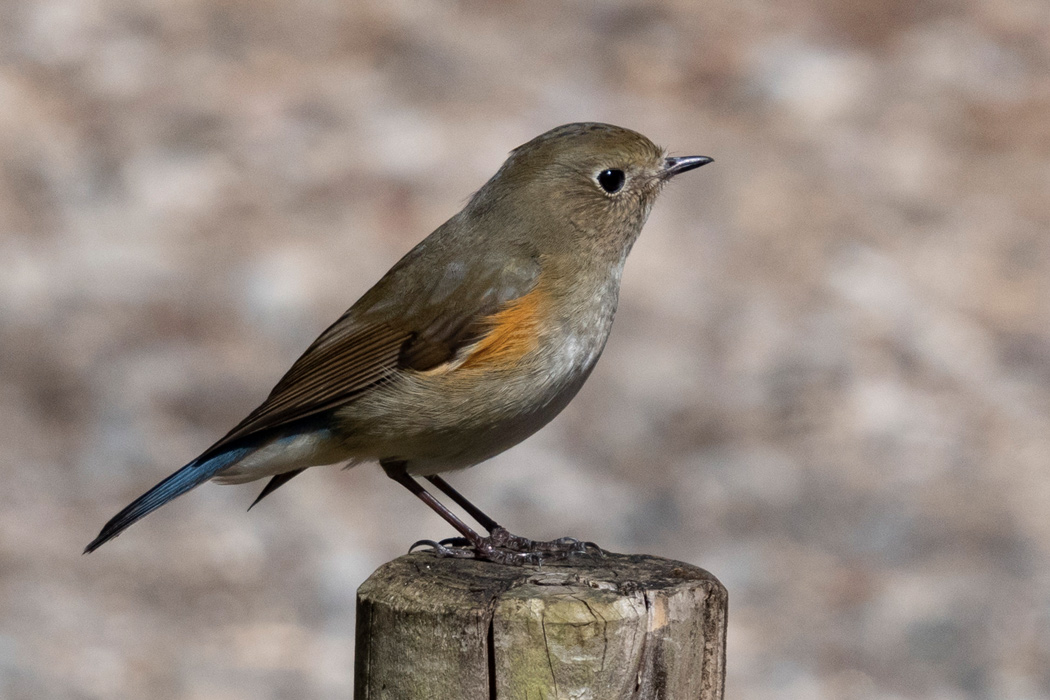
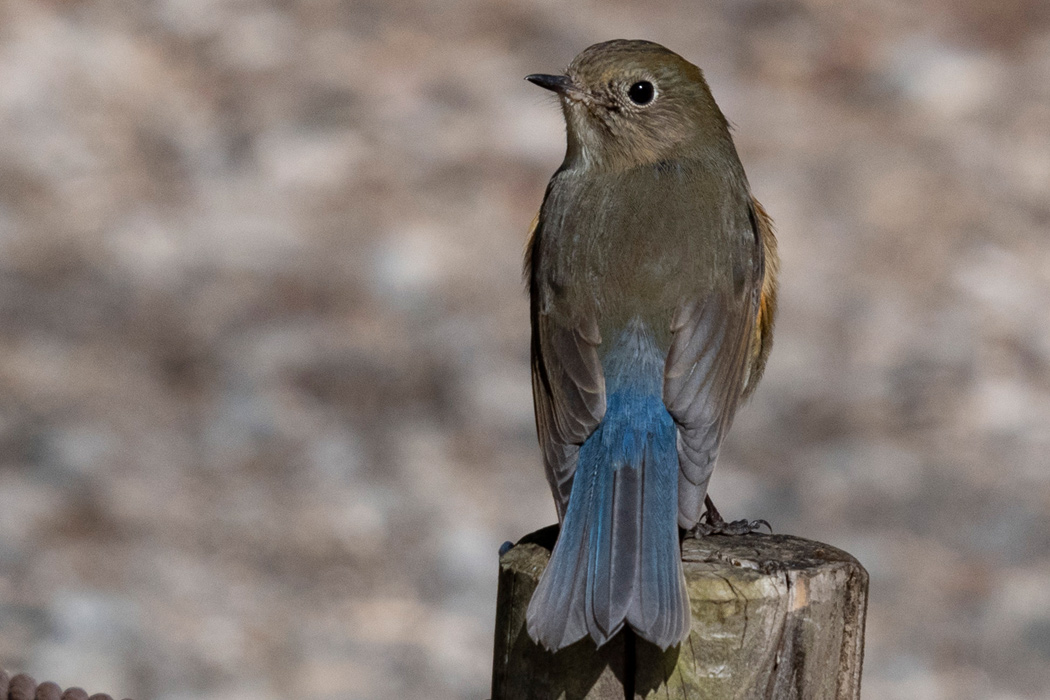
Generally a subdued brown color.
There is a white eye ring around the eye.
The tail feathers are not as vivid as the male's, but some individuals show a bluish tint.
Juvenile
Young males have a subdued color similar to females, with the blue tint gradually increasing over time.
It is difficult to distinguish young males from females at a glance.
Song
Like the Daurian Redstart, it makes "hi-hi" and "kata-kata-kata" sounds. The male's song during breeding season is a slightly fast-paced "hyoro-hyoro" or "pyuru-pyuru."
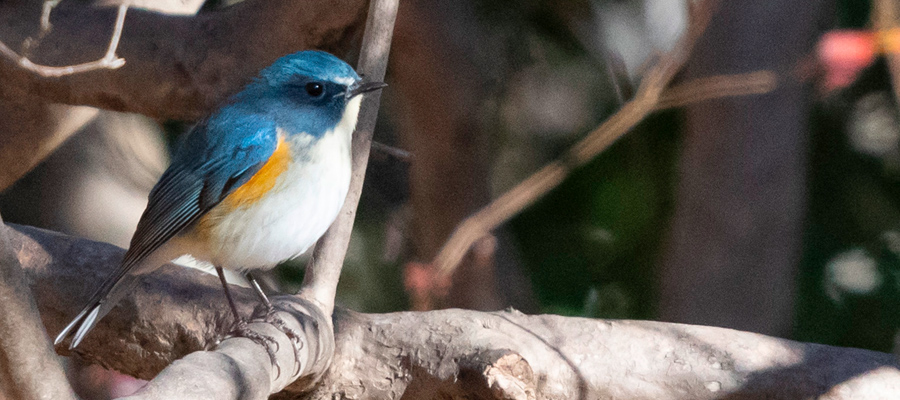
Red-flanked Bluetail Ecology
Habitat
Inhabits dark forests with thickets. Found in high-altitude areas from Hokkaido to Shikoku in summer. Descends to low-mountain forests in winter.
Food
Feeds on insects and fruits.
Life Cycle
Establishes territories and breeds in summer. Performs seasonal migration to low-mountain forests in winter.
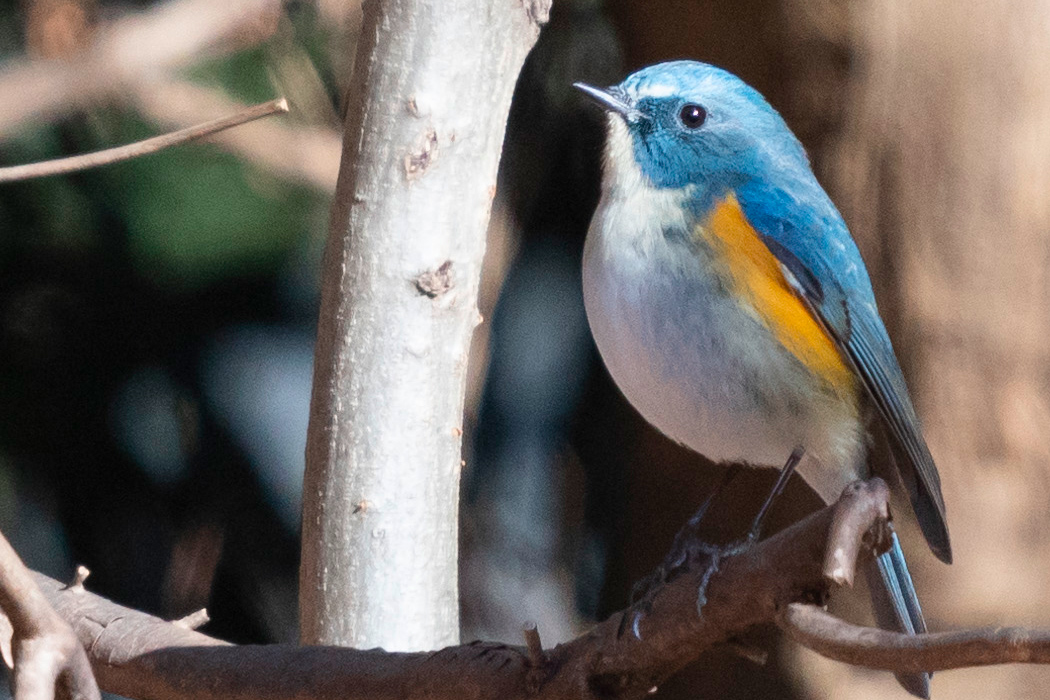
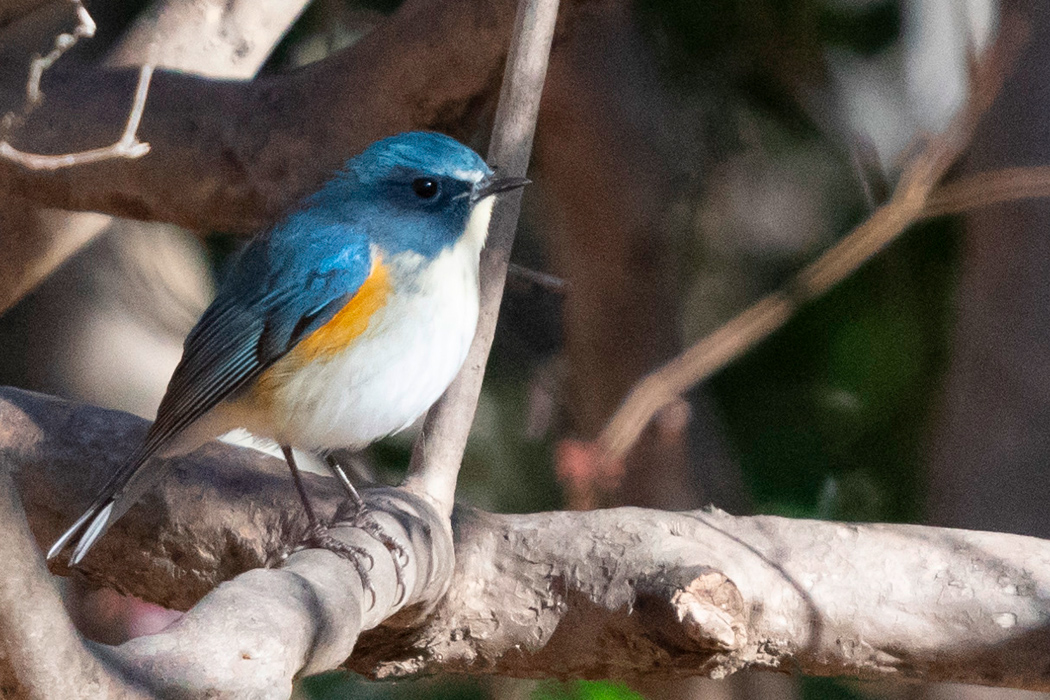
Red-flanked Bluetail Photos
Red-flanked Bluetail Photos are introduced.
Tap the photo to open the detail page.
Red-flanked Bluetail Behavior
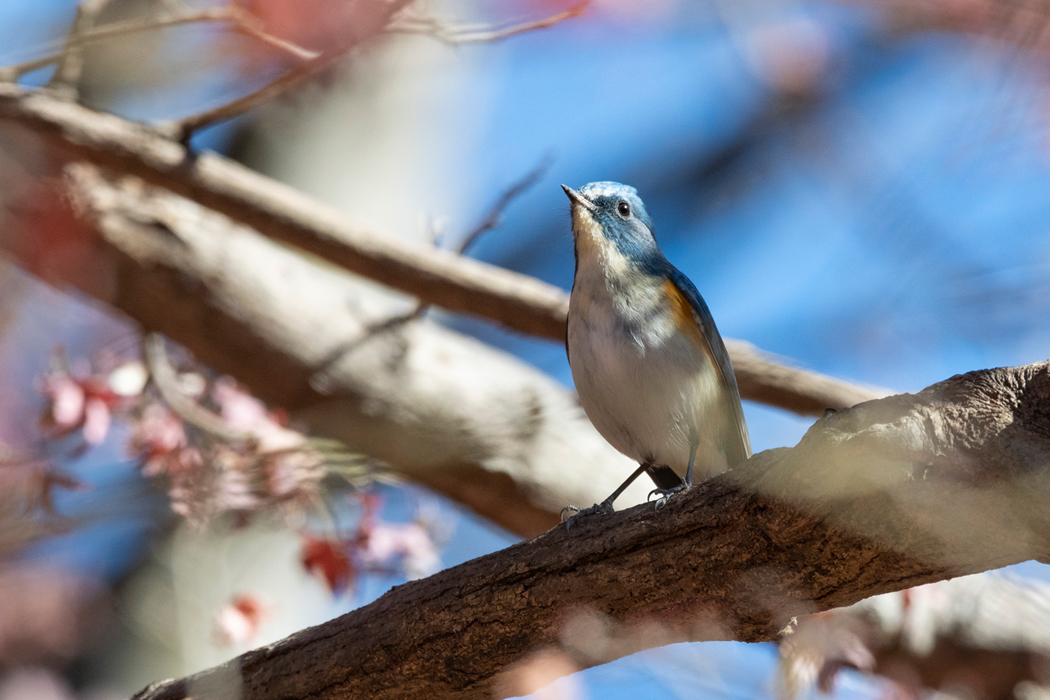
Acts solitary and moves between the ground and trees. Quietly emerges from the shadows to perch on branches and scan the surroundings. Moves along thickets. Sings from high branches. Moves near the ground. Often comes out into sunny spots.
Red-flanked Bluetail Information
Naming
The scientific name "cyanurus" is derived from "cyan" (dark blue), referring to the bird's beautiful blue color. The English name combines "Red-flanked" (referring to the sides) and "Bluetail."
One of the "Three Blue Birds of Japan" (Ruri Sancho).
Delayed Plumage Maturation
The delay of several years before an adult bird's plumage color appears is called "Delayed Plumage Maturation," a phenomenon also seen in other bird species.
Red-flanked Bluetail Found Locations
A park in Hachioji City
I photographed a male that emerged from a thicket in a park in Hachioji City. It quietly came out of the shadows, perched on a branch, and was looking around. It seemed to be eating something after descending to the ground. After a while, it moved several dozen meters along the thicket and returned to the depths of the forest.
On sunny days, you can hear the call of the Red-flanked Bluetail. If you are lucky, you can see them singing on high branches or moving near the ground. On the day I filmed, they were quite active and frequently appeared in sunny areas.
Red-flanked Bluetail Video
Red-flanked Bluetail is introduced by video.
A female perched on a stake along a forest road.
A male was foraging.
Red-flanked Bluetail Observation Log
These are the observation logs where we found Red-flanked Bluetail.
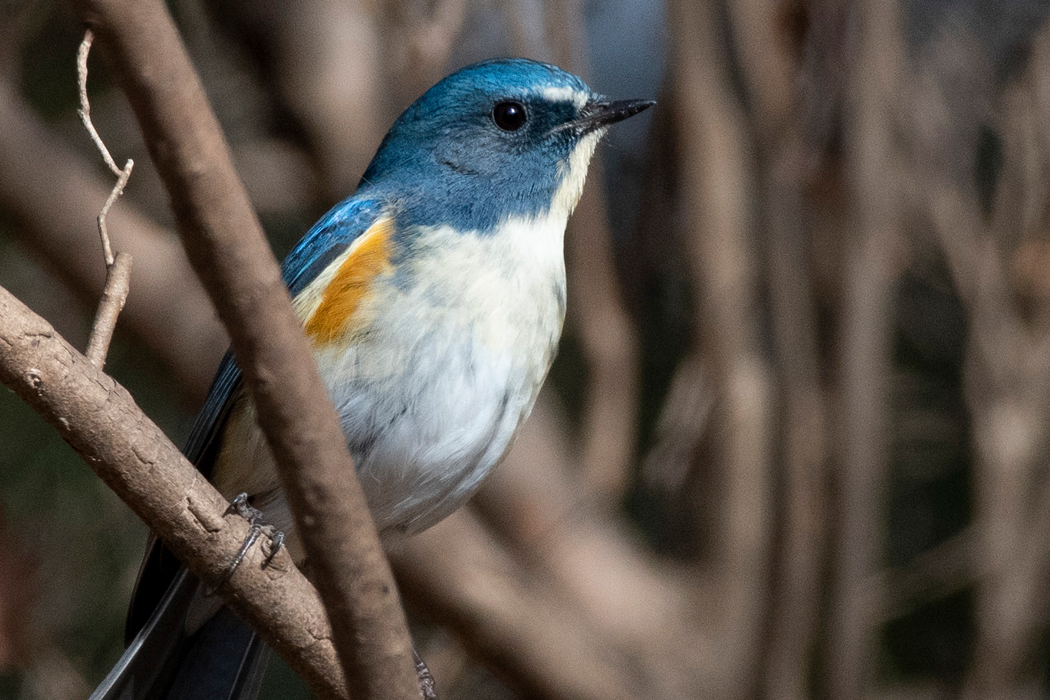
After hearing the call of a Blue-and-white Flycatcher around 11:30 AM, I waited for a while and a male came out into the sun. It was pecking at a grub and eating it from a decayed log.
Read more >

Siberian Blue Robins were singing all over the park. A male appeared along the stream.
Read more >
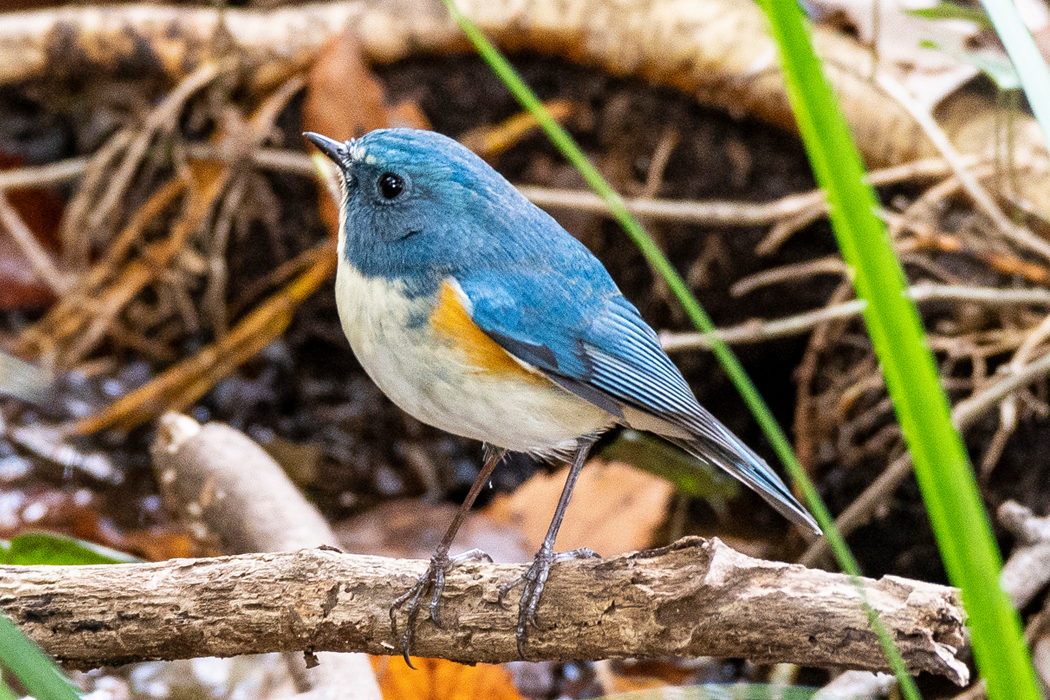
It was singing in the bushes next to the stairs.
Read more >
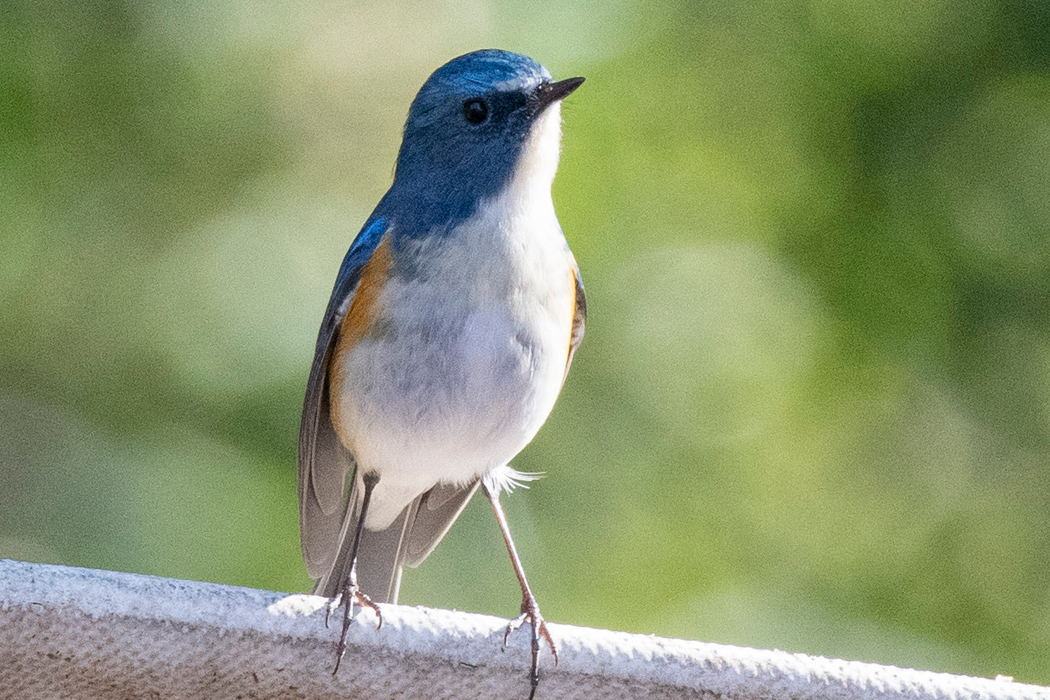
A Red-flanked Bluetail appeared in the upper square of Katakurajoshi Park.
Read more >
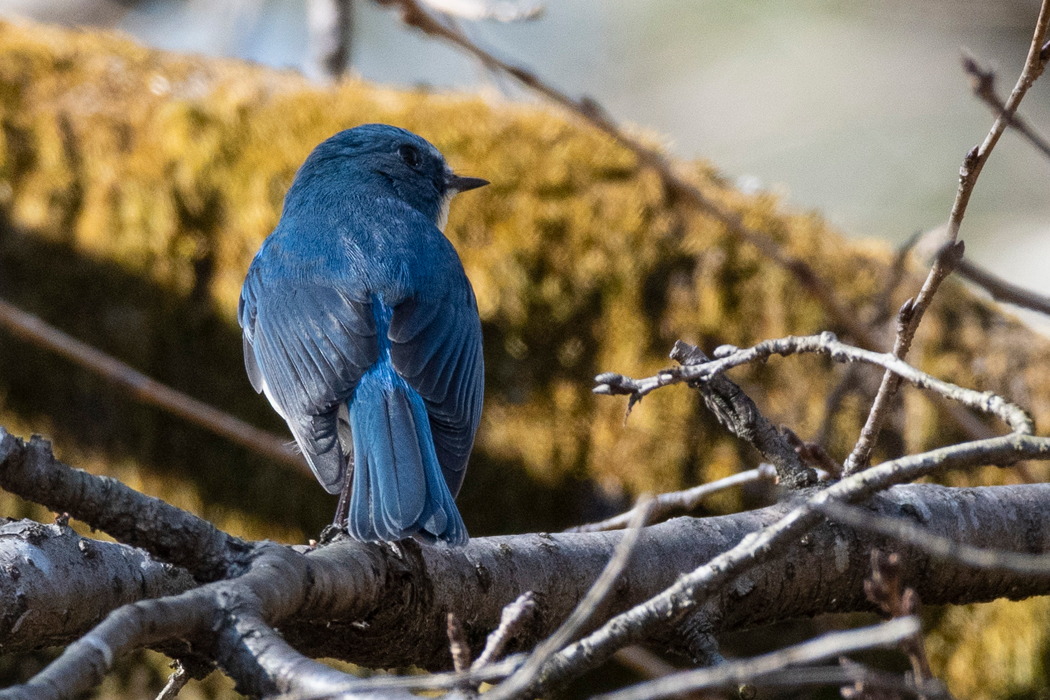
It's the usual Red-flanked Bluetail. It's very obliging.
Read more >
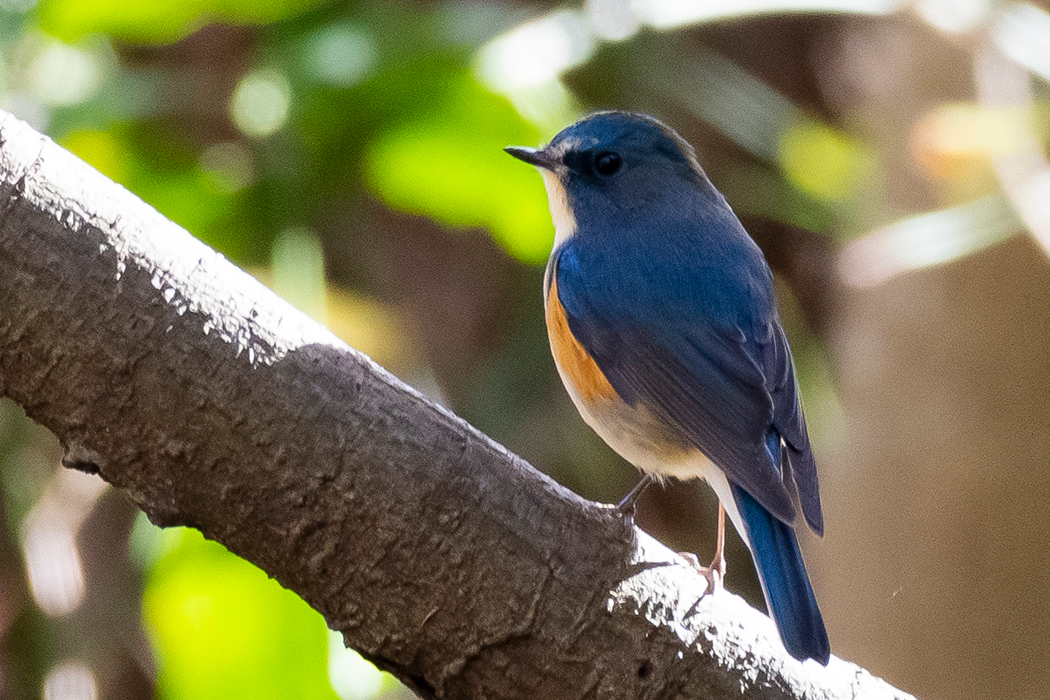
At Komiya Park, a male Blue-and-white Flycatcher appeared.
Read more >

Red-flanked Bluetails were seen in several places along the forest road.
Read more >
Picture book
Gray body with greenish-black primary feathers....... Read more
Goatfish with yellow rear part....... Read more
A popular wild bird known for its adorable face....... Read more
There is a black spot behind the eye....... Read more
The sudden descent from hovering is splendid....... Read more
Orange flowers bloom in summer....... Read more