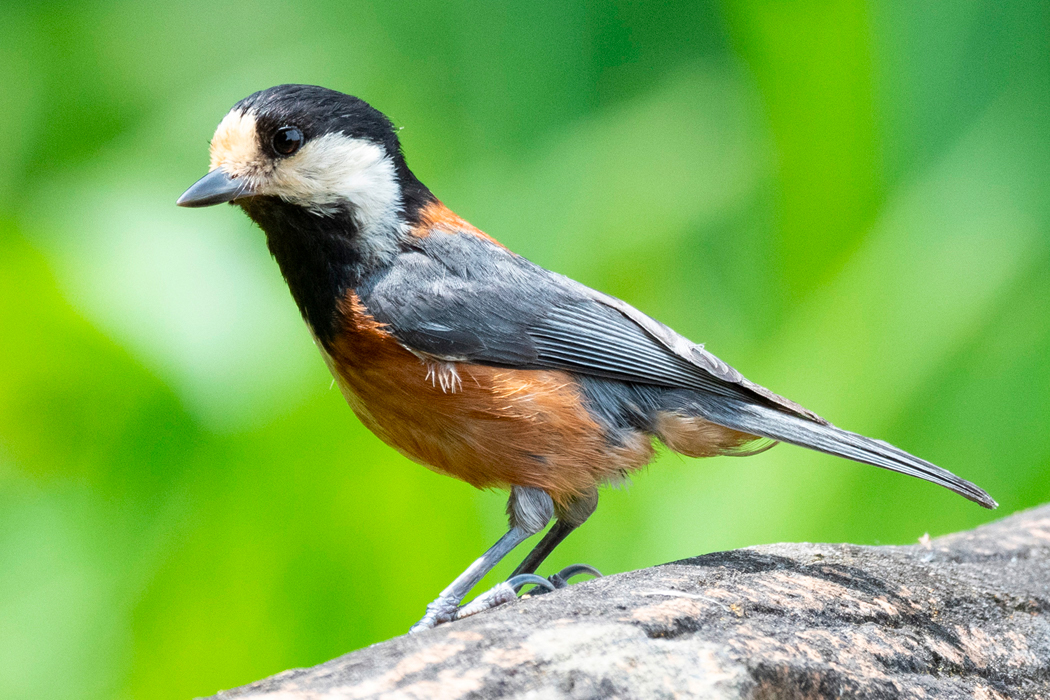
Varied Tit
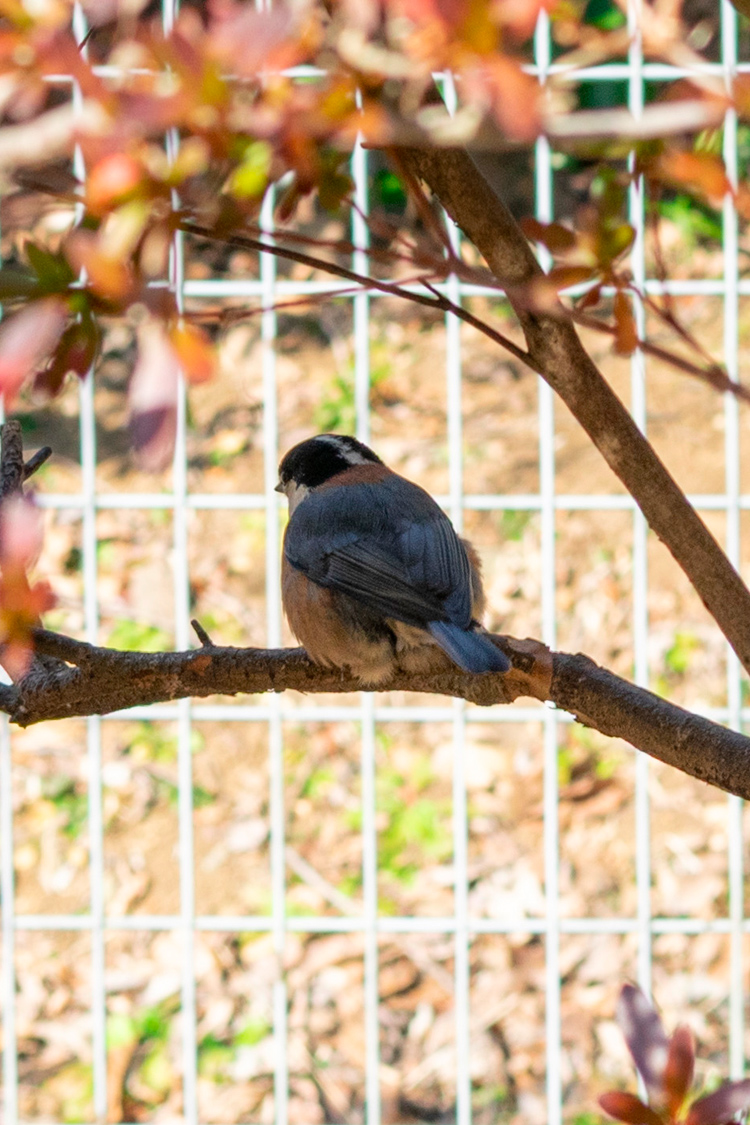
Orange belly and blue-gray wings.
| Scientific name | Sittiparus varius |
| English name | Varied Tit |
| Japanese name | 山雀 |
| Class | Aves |
| Order | Passeriformes |
| Family | Paridae |
| Genus | Sittiparus |
| Species | varius |
| Full length | 13-15cm |
| Distribution | Nationwide except for the Ogasawara Islands. |
Varied Tit Characteristics and Morphology
A sparrow-sized tit that gives a brownish first impression. Males and females are similar in color.
The head colors are black and white, with a white band running from the crown to the neck. The base of the beak is brown. The throat is black. The beak is lead-colored and short. Irises are black.
The wings are blue-gray. Depending on the light, they may appear strongly blue or more grayish. The belly is a deep brown near the flanks and a pale brown in the center.
The tail is blue-gray. The legs are lead-colored.
Song
Calls with a "tsu-tsu" or "pi-pi" sound, slightly lower in pitch than the Great Tit.
Varied Tit Ecology
Habitat
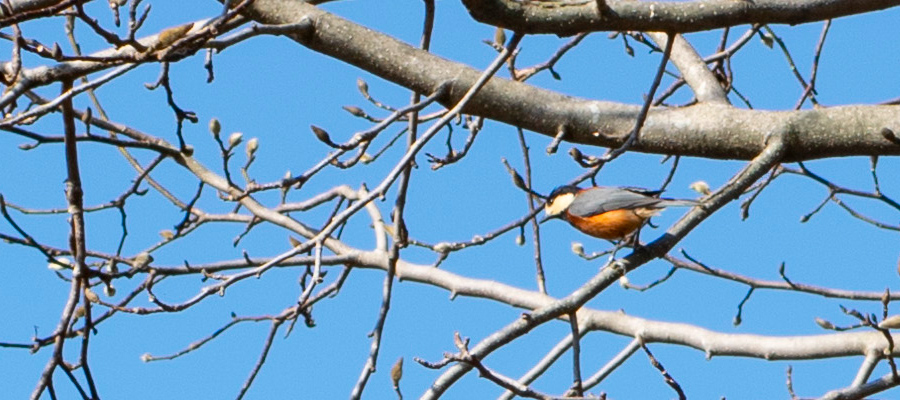
Inhabits broadleaf forests, specifically at lower elevations. Often seen in lowland woods and urban parks.
Food
Omnivorous; it moves from branch to branch eating insects and spiders, as well as tree seeds. It caches Japanese Snowbell (Egonoki) seeds.
Life Cycle
They nest in holes excavated by Japanese Pygmy Woodpeckers or in natural tree hollows, breeding from spring to summer.
Varied Tit Photos
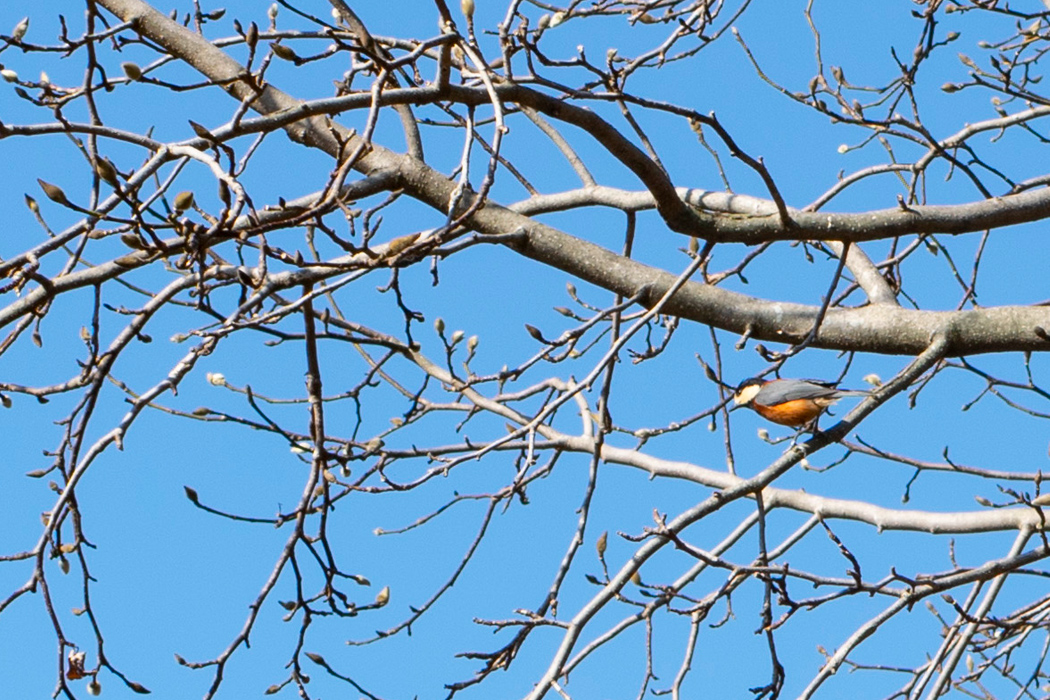
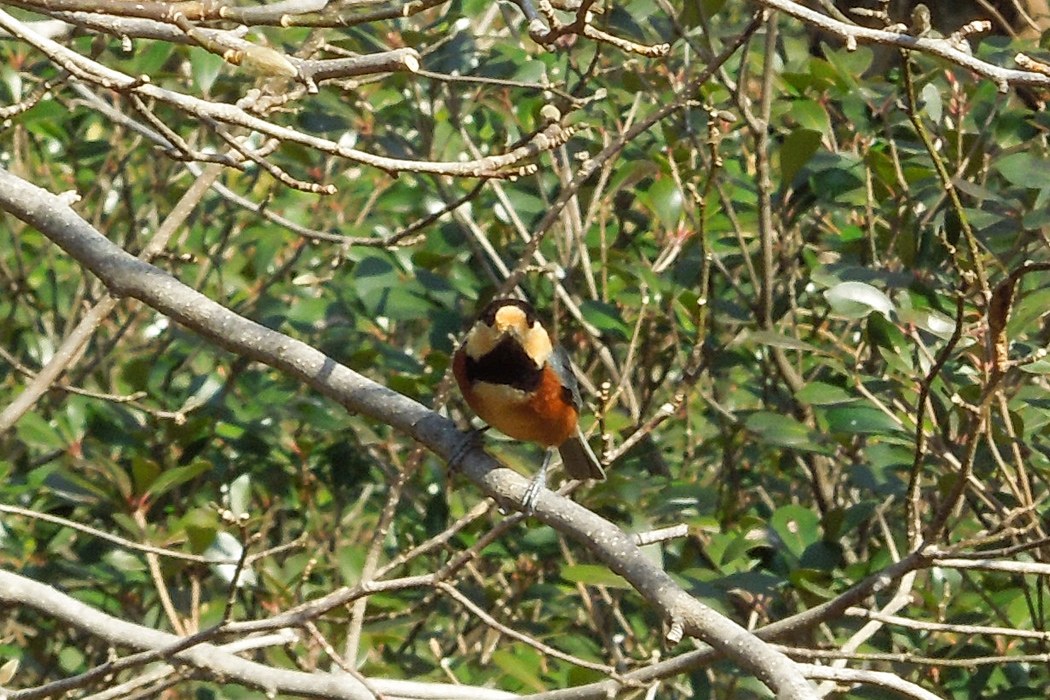
Varied Tit Photos are introduced.
Tap the photo to open the detail page.


Varied Tit Behavior
They sometimes exhibit a behavior of tapping on tree branches with their beaks. They are friendly wild birds that approach humans and may even perch on a hand. In the past, people kept them as pets and taught them tricks, such as drawing "omikuji" (fortune slips).
Varied Tit Information
Naming
The scientific name "varius" means "diverse in color," referring to the bird's mix of various colors like brown, black, and blue-gray. The English name follows the same logic. The Japanese name "Yamagara" (Mountain Sparrow) comes from its habitat in the mountains.
A resident bird of the Paridae family. A wild bird with a friendly personality. In the past, they were kept by people to perform tricks like drawing fortunes.
Varied Tit Found Locations
Yoyogi Park Bird Sanctuary
While observing birds at the Yoyogi Park Bird Sanctuary, one flew close by. It seemed accustomed to humans, perching on a branch so close I could almost reach out and touch it. It appeared to be patrolling the park at regular intervals, hopping quickly from branch to branch. It stayed hidden when I was eager to photograph it, only appearing when I was looking at unrelated scenery. Eventually, I was able to get a close-up shot of it foraging on the ground inside a hedge.
Katakura Castle Ruins Park
Varied Tits can be seen at Katakura Castle Ruins Park throughout the year. They appear in small flocks, tapping on tree branches as they move.
Picture book

A small hawk with a high-pitched voice....... Read more
Earth-colored wagtail companion...... Read more
Monotone duck....... Read more
Inhabits rivers and marshes, and uses more than 12 different calls....... Read more
The color and shape look like katsuobushi....... Read more
Black helmet-like head....... Read more