Black-crowned Night Heron
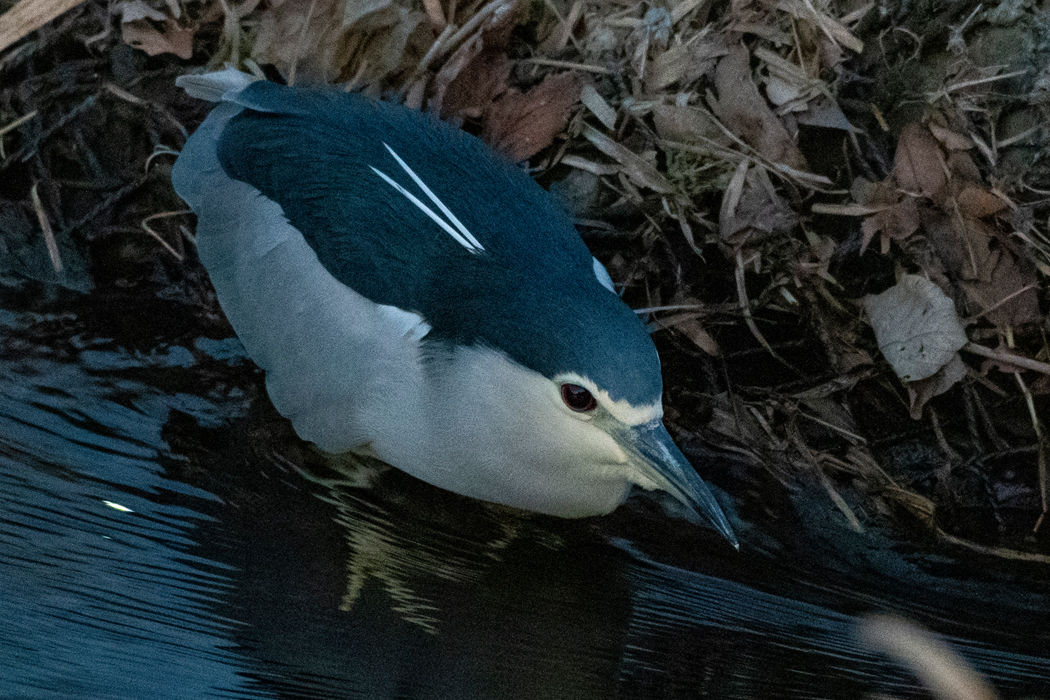
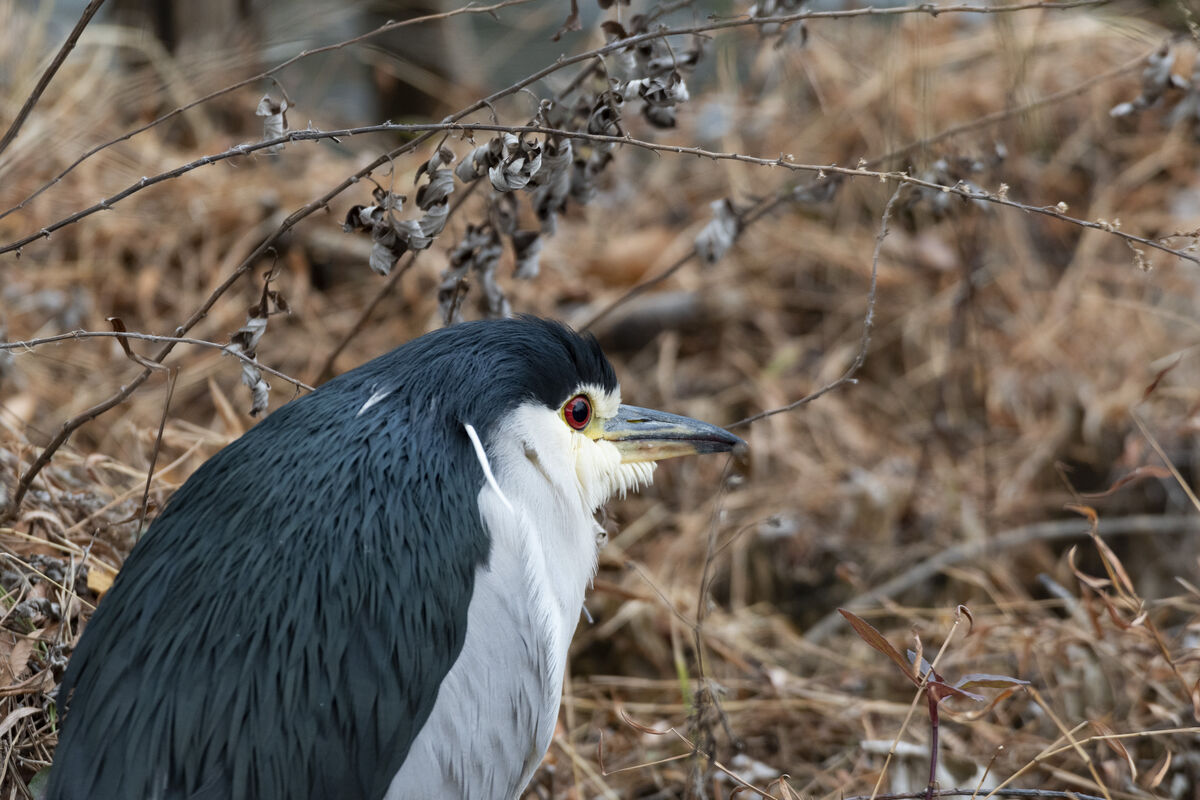
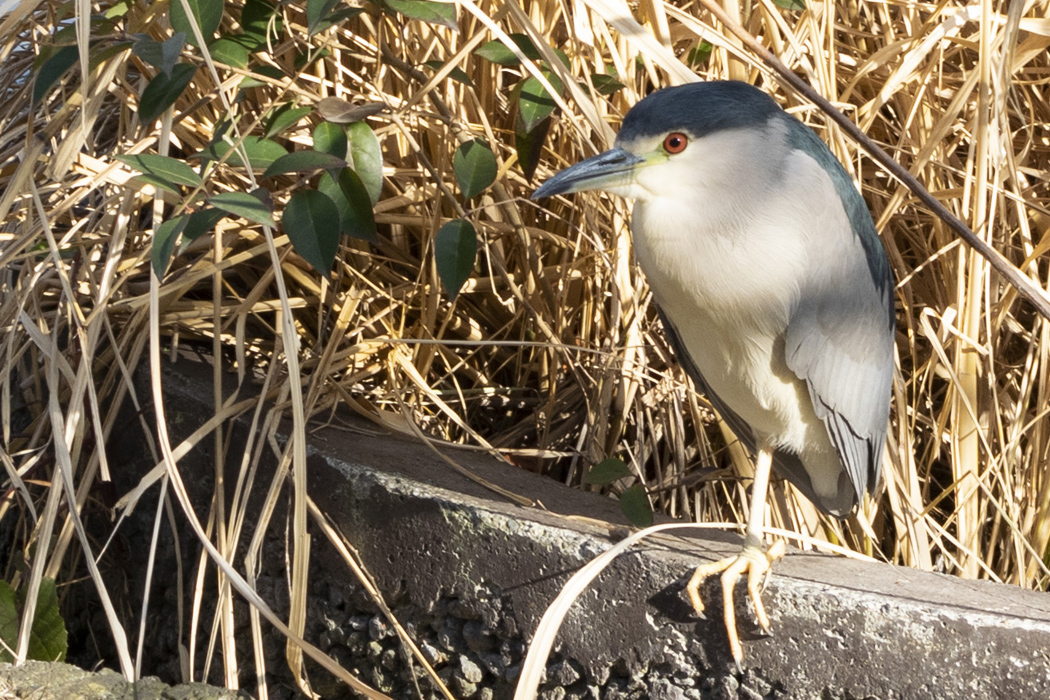
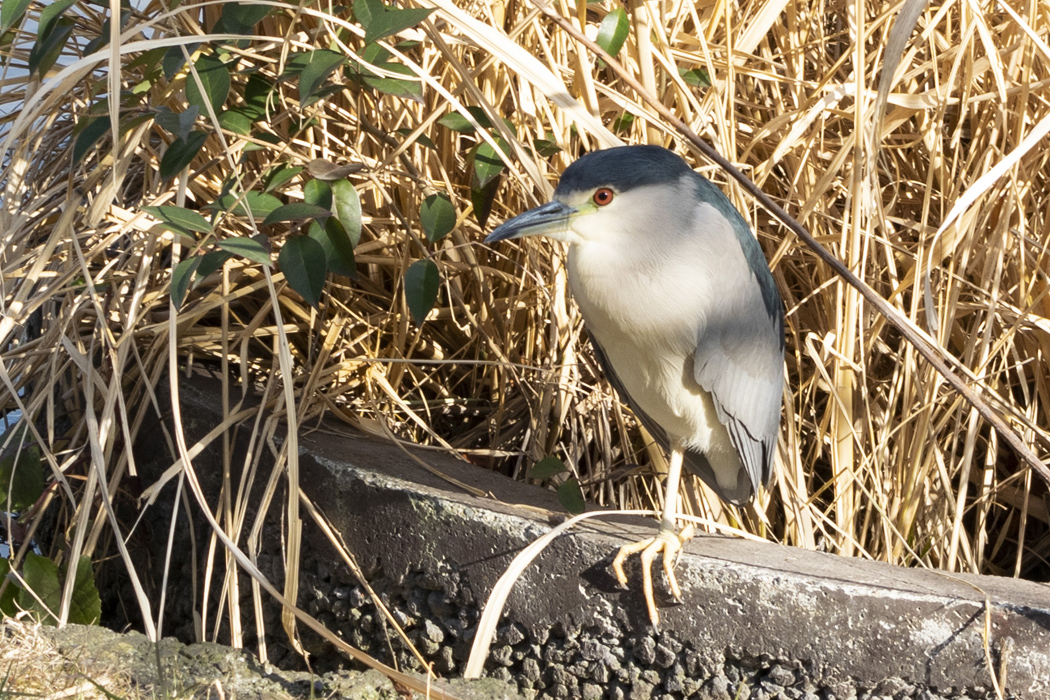
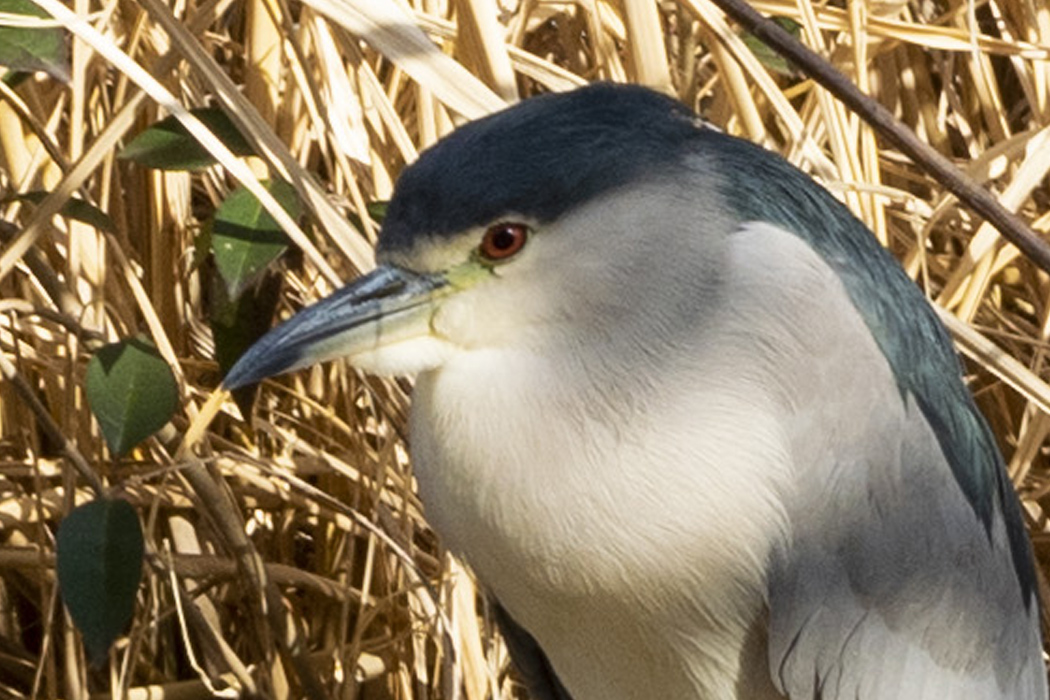
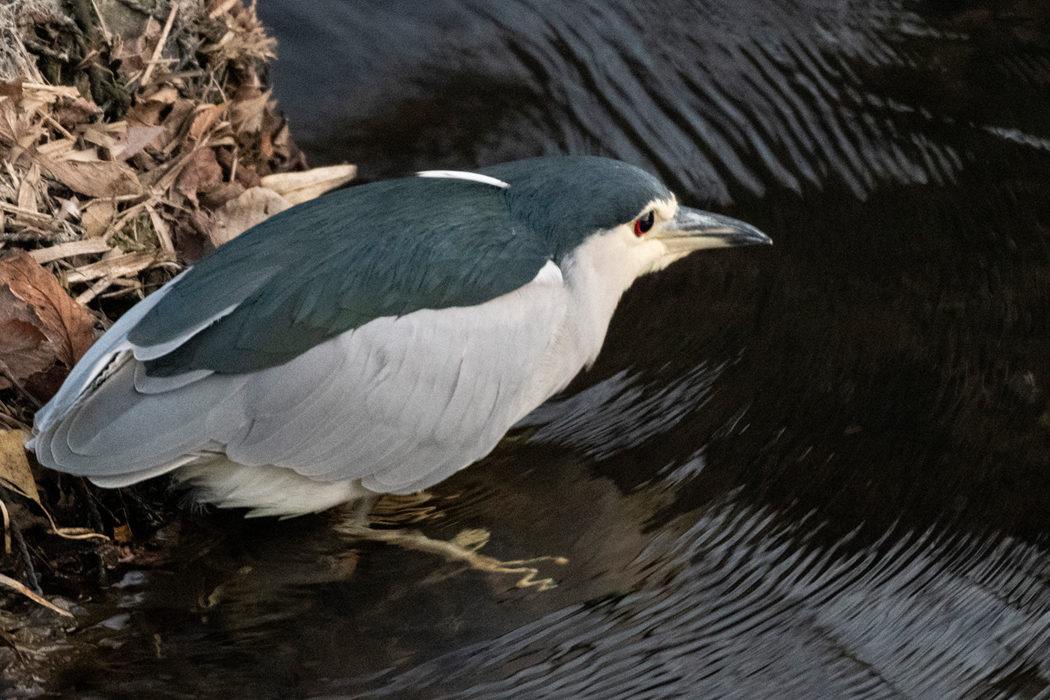
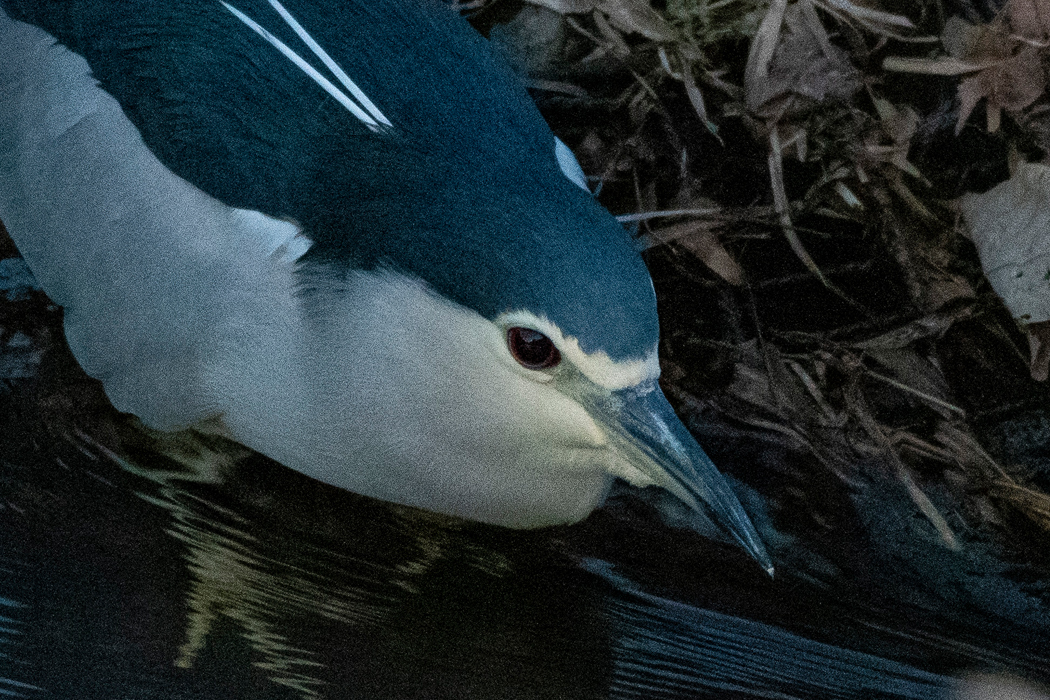
The red iris is beautiful.
| Scientific name | Nycticorax nycticorax |
| English name | Black-crowned Night Heron |
| Japanese name | 五位鷺 |
| Class | Aves |
| Order | Pelecaniformes |
| Family | Ardeidae |
| Genus | Nycticorax |
| Species | nycticorax |
| Full length | 58-65cm |
| Distribution | Found year-round south of Honshu |
Black-crowned Night Heron Characteristics and Morphology
A small heron, about the size of a crow. The neck is not particularly long. Males and females are the same color.
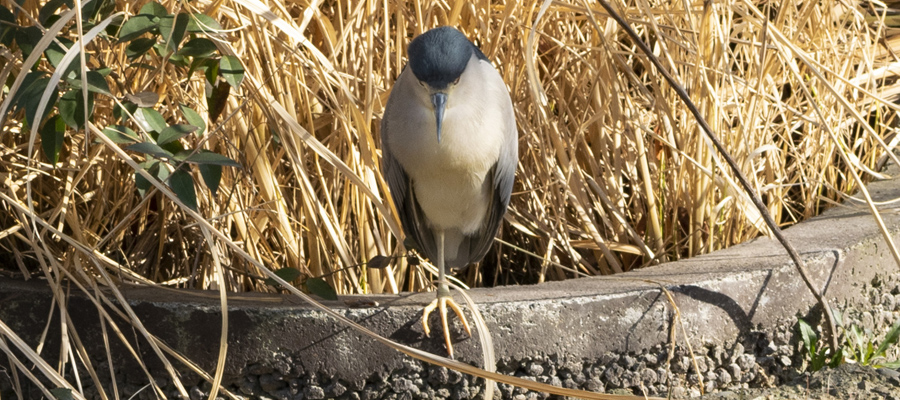
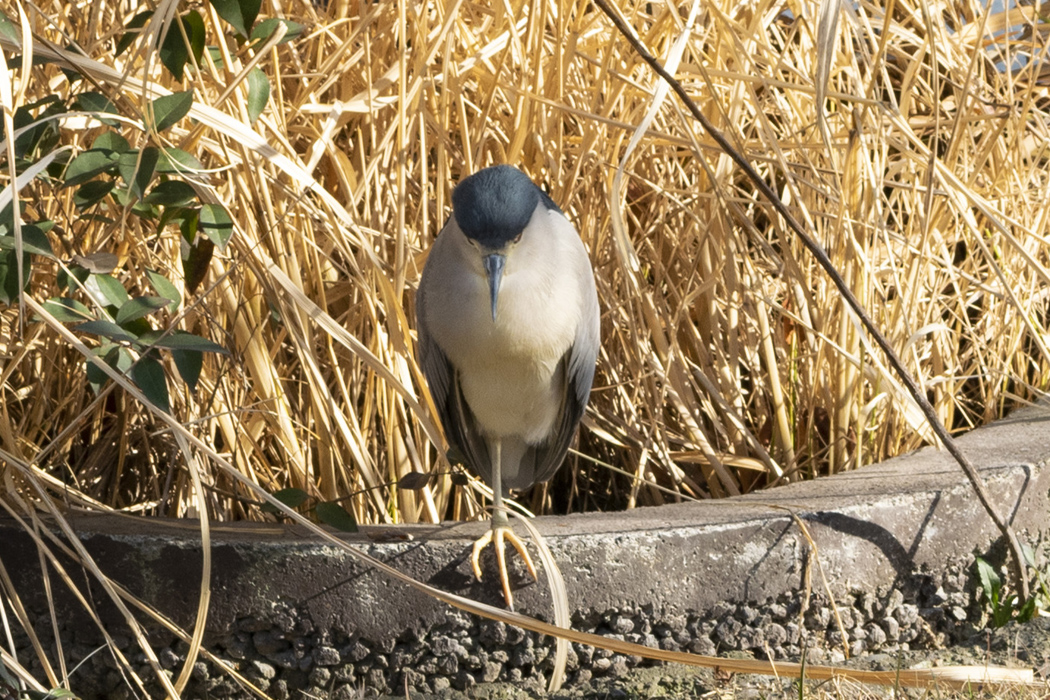
Often retracts its white neck, but occasionally extends it. The color from the crown to the back is a mix of navy and deep green. During the breeding season, white nuptial plumes develop on the back of the head. The iris is red. The bill is slightly long and lead-colored.
The back is a mix of blue and gray, with a slightly greenish hue. The wings are gray.
The tail feathers are short. The legs are yellow and strong.
Lives in similar areas as the Great Egret and Grey Heron, but has a shorter neck.
Juvenile
Overall brown with white and yellow spots. This appearance is why it is called 'Hoshigoi' (星五位).
Song
It makes a 'Gwa' or 'Kwa' sound.
Black-crowned Night Heron Ecology
Habitat
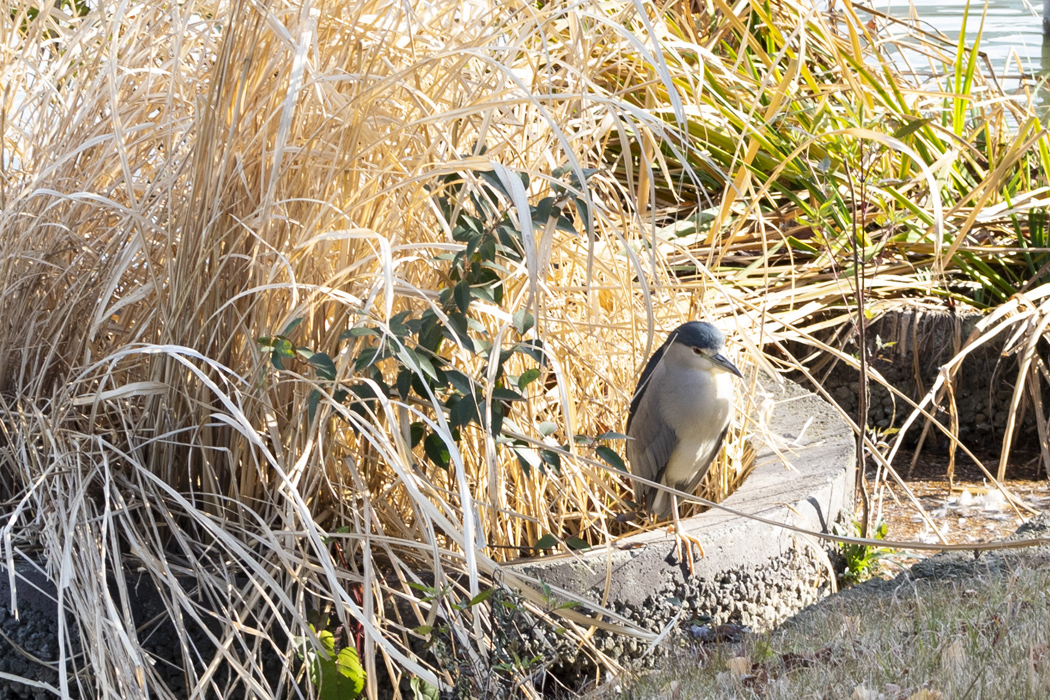
Inhabits small ponds, rivers, lakes, wetlands, etc. Can also be found in urban areas.
Food
Feeds on fish, amphibians, and crustaceans, which it catches near the water's edge.
Life Cycle
Breeds from spring to summer, building nests on trees by carrying branches. Forms colonies with other herons in coniferous forests.
Black-crowned Night Heron Photos
Black-crowned Night Heron Photos are introduced.
Tap the photo to open the detail page.
Black-crowned Night Heron Behavior
Forms small groups. It is nocturnal, hiding in grasslands and forests during the day. Becomes active in the evening. Calls 'Kwa' while flying.
Black-crowned Night Heron Information
Naming
The scientific name 'Nycticorax' means 'night raven,' referring to the species' nocturnal habits and nighttime calls. As for the Japanese name, there is an anecdote that it came to be called 'Goi-sagi (五位鷺)' because it was favored by Emperor Daigo. The juvenile is called 'Hoshigoi'. In some regions, it is called 'Yogarasu' (夜烏) from its call.
Black-crowned Night Heron Found Locations
Shinobazu Pond, Ueno Park
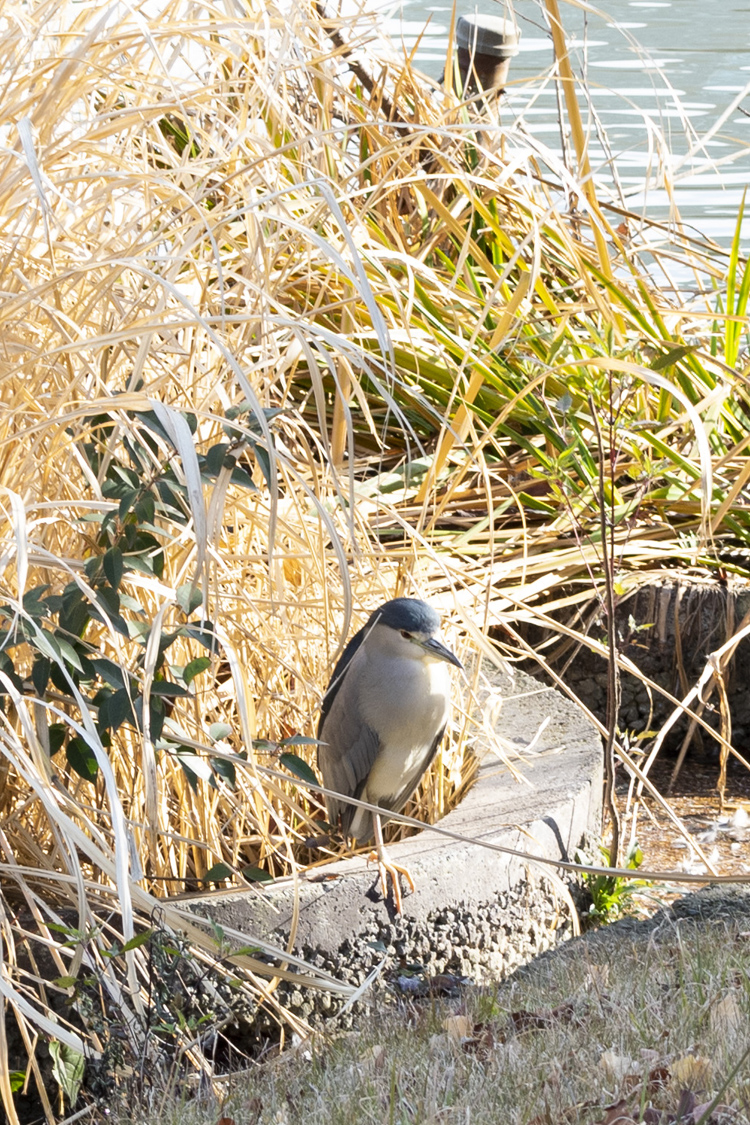
I found it resting near Shinobazu Pond in Ueno Park. It was napping right next to the path where people walk. It was in a quiet spot, a little away from other herons and ducks. It may have been still because it was daytime. It was not wary even when I took pictures from outside the fence, and it seemed used to people. Many wild birds other than herons come to Shinobazu Pond. And it was a wonderful place where you can see them closer than at the zoo.
Yudono River at Dusk
In mid-December, I found a Black-crowned Night Heron in the middle of the Yudono River while walking after sunset. I had never seen it before. It was getting darker and darker, but I took as many pictures as I could. It seemed to be foraging at its own pace. A Great Egret came along and they argued a little. When the Great Egret left, it returned to foraging.
Black-crowned Night Heron Video
Black-crowned Night Heron is introduced by video.
Foraging in the Yudono River at dusk.
Black-crowned Night Heron Observation Log
These are the observation logs where we found Black-crowned Night Heron.