
Far Eastern Skink
Now recognized as a separate species from the Japanese Skink (Plestiodon japonicus).
| Scientific name | Plestiodon finitimus |
| English name | Far Eastern Skink |
| Japanese name | 東日本蜥蜴 |
| Class | Reptilia |
| Order | Squamata |
| Family | Scincidae |
| Genus | Plestiodon |
| Species | finitimus |
| Full length | Around 20cm |
| Distribution | Distributed from Eastern Japan to Hokkaido. |
Far Eastern Skink Characteristics and Morphology
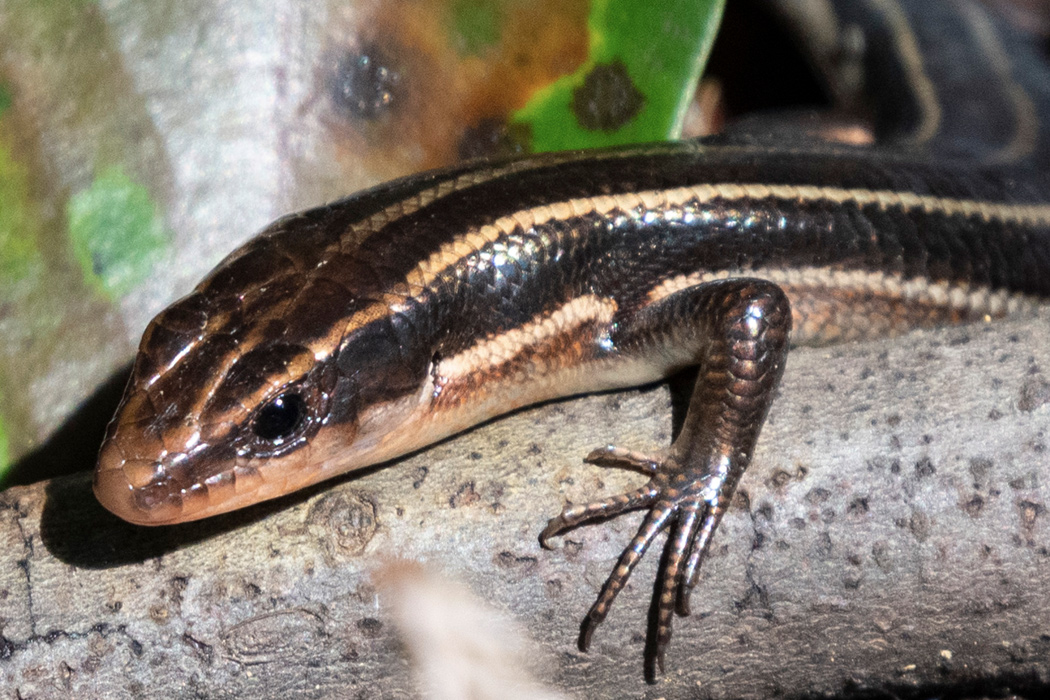
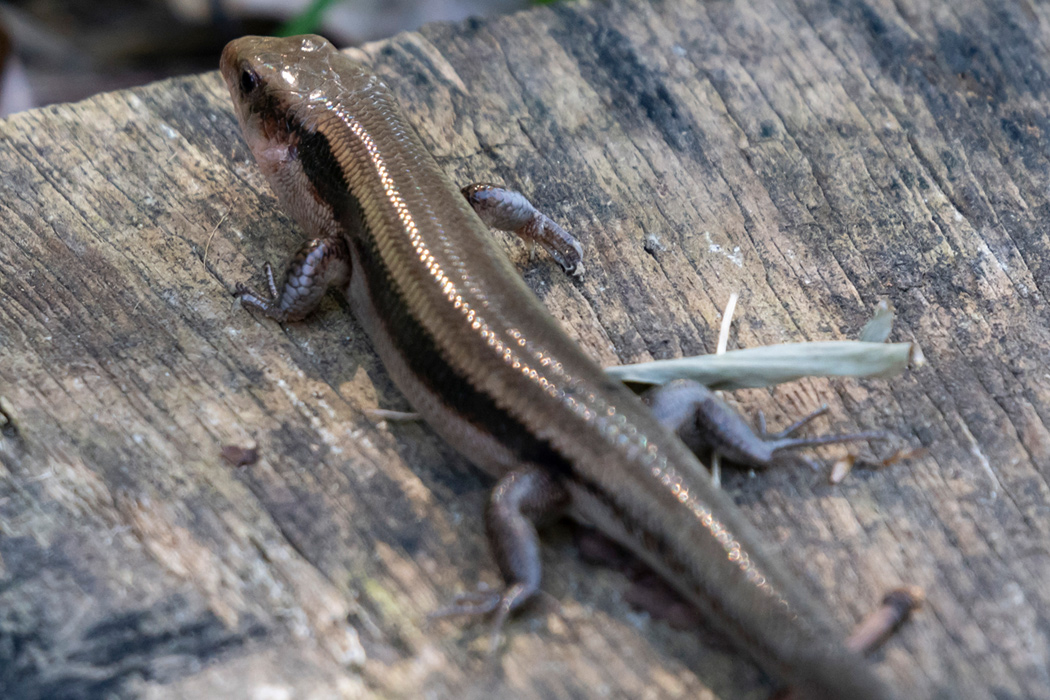
Grows to about 20cm including the tail. Adults have a brown body with dark brown lines running along the sides. The entire body has a glossy sheen; it looks like it might be slimy, but it doesn't feel that way when touched.
The belly is soft, and the area between the front and hind legs appears plump.
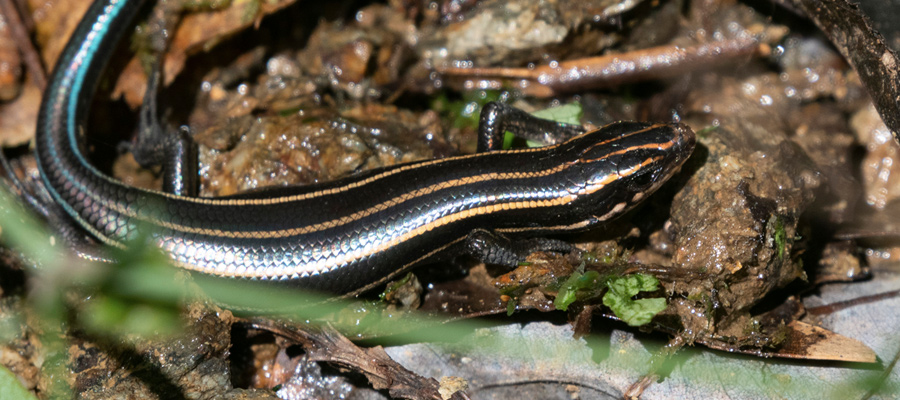
The tail is a metallic blue.
Male
During the breeding season, males develop a reddish tint from the cheeks to the belly.
The head shape is more angular compared to females.
Female
Darker in color than the male.
The lines running down the back are very distinct.
Juvenile
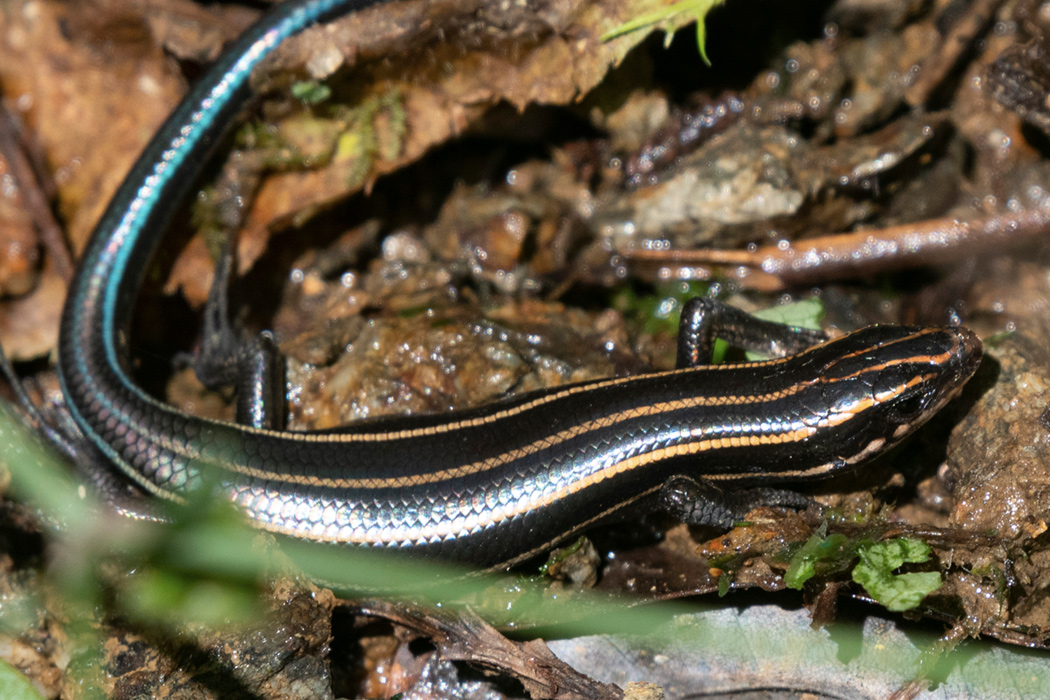
Juveniles have five bright brown longitudinal stripes running from the head to the tail on a dark brown base.
The tail section is a brilliant metallic blue.
Far Eastern Skink Ecology
Habitat
Found in sunny spots, ranging from mountainous areas to residential gardens.
Food
Preys on animal matter such as insects and earthworms.
Far Eastern Skink Photos
Far Eastern Skink Photos are introduced.
Tap the photo to open the detail page.
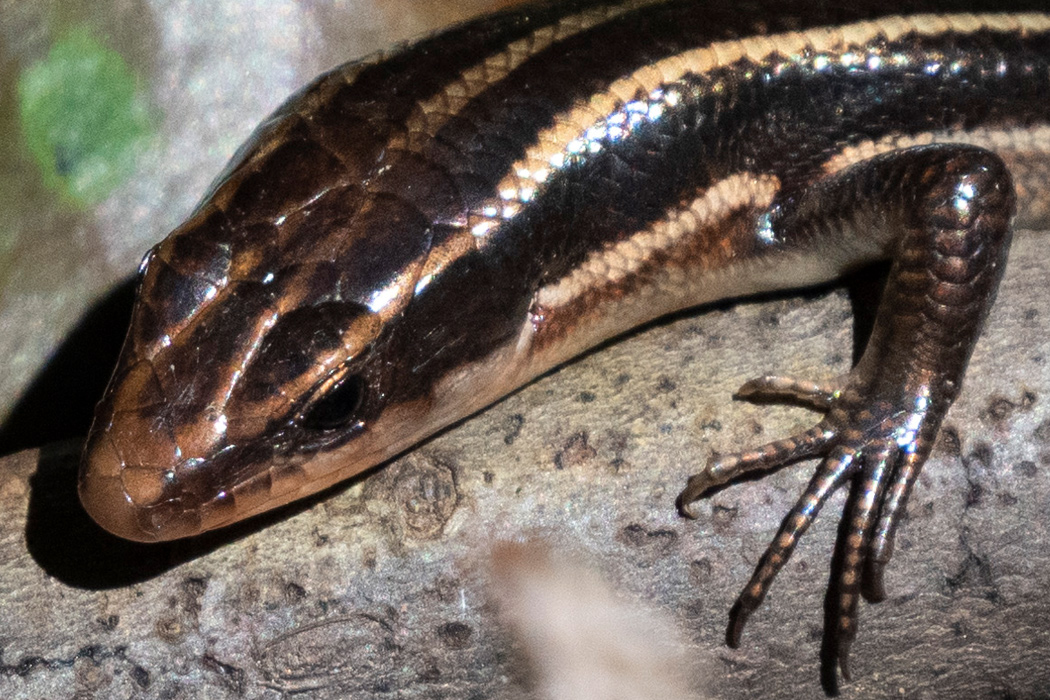
Far Eastern Skink Behavior
They are targeted by various animals such as cats and birds. When they sense danger, they perform autotomy (self-amputation of the tail) to save their lives. The severed tail continues to move for a while to distract the predator. The tail eventually regrows, but the bone structure does not return.
Far Eastern Skink Information
Naming
The genus name "Plestiodon" means "multiple teeth," referring to the fact that skinks in this genus have many teeth.
While they look almost identical to the Japanese Skink (Plestiodon japonicus) found in Western Japan, their genetics differ, making them a separate species.
Far Eastern Skink Found Locations
A sunny spot in Hachioji City
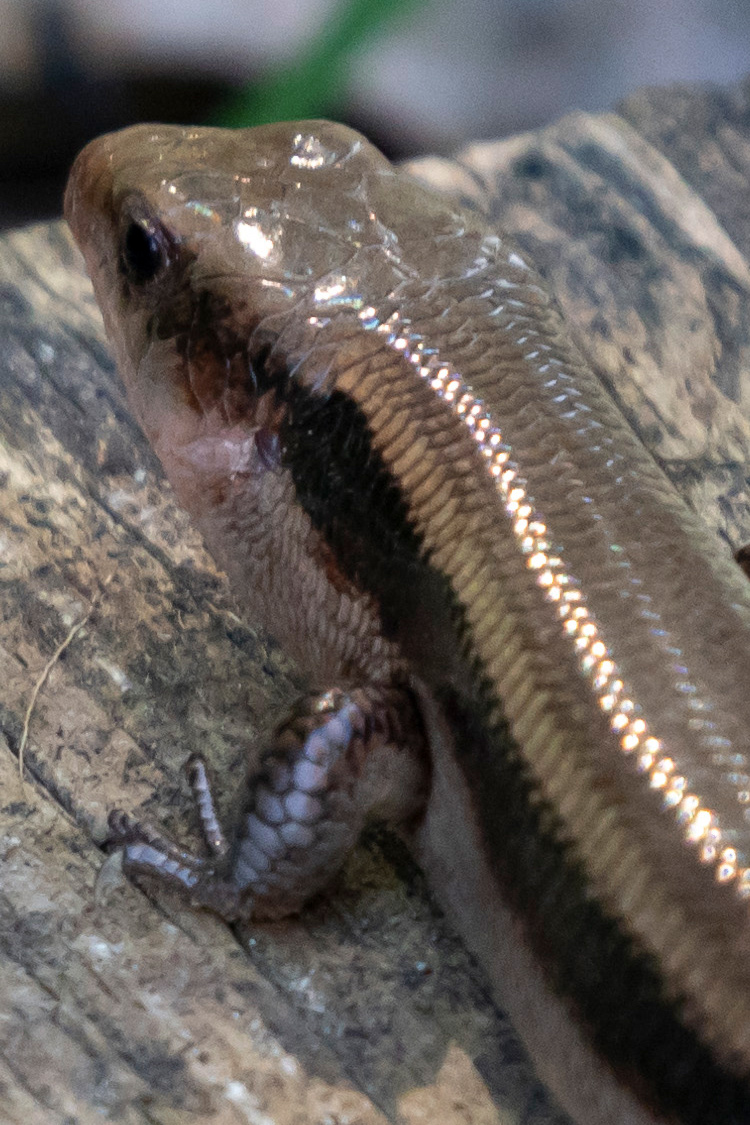
I photographed a juvenile out in a sunny spot in Hachioji City. They are quite cautious, so if you get too close, they quickly flee under leaves.
When I was a child, there was a "hot spot" for catching Far-Eastern Skinks under a sunny planter on my way to school, and I used to catch them often. We would nudge the planter with our feet and a few friends would surround the escaping skink to catch it. They are quite fast, so you have to move very nimbly or they will get away. I remember feeling a bit guilty whenever a tail would break off during the catch.
Picture book
The mottled pattern was likened to a Kyoto woman wearing a kimono....... Read more

Swims slowly with feet adapted for walking....... Read more
has a red mesh pattern....... Read more
A rough-natured, solitary heron....... Read more
Brown body with black head....... Read more
strong beak, sharp call...... Read more