Tufted duck
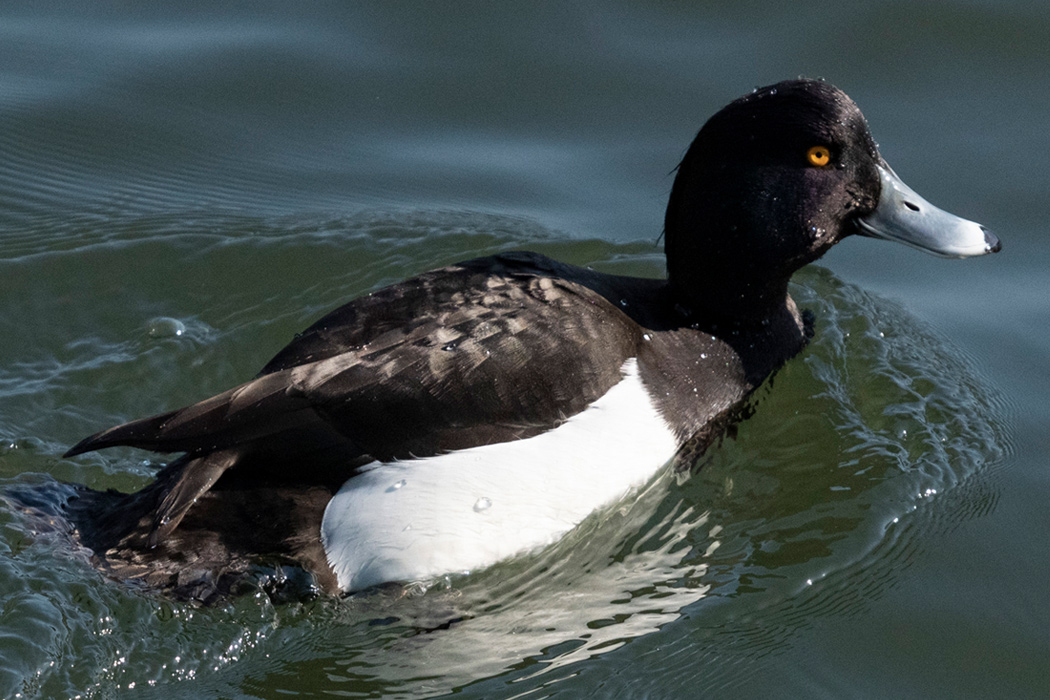
A monotone duck.
| Scientific name | Aythya fuligula |
| English name | Tufted duck |
| Japanese name | 金黒羽白 |
| Class | Aves |
| Order | Anseriformes |
| Family | Anatidae |
| Genus | Aythya |
| Species | fuligula |
| Full length | 40cm |
| Distribution | Breeds in northern Eurasia, migrating south to northern Africa and India. |
Tufted duck Characteristics and Morphology
A duck about 40cm in size, generally black. The color of the abdomen differs between males and females.
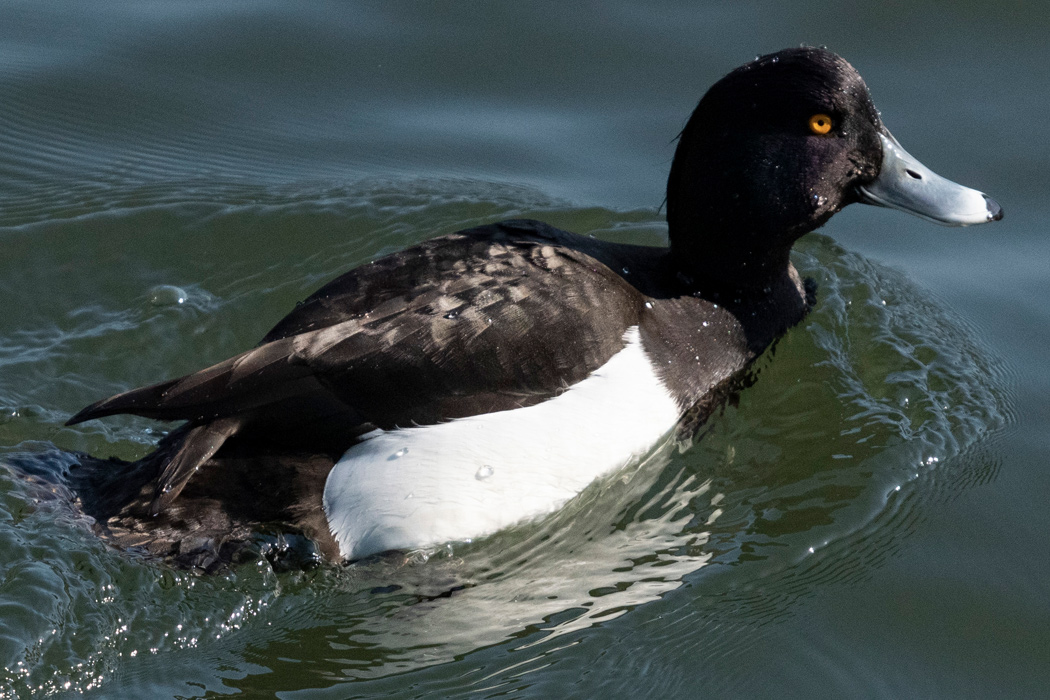
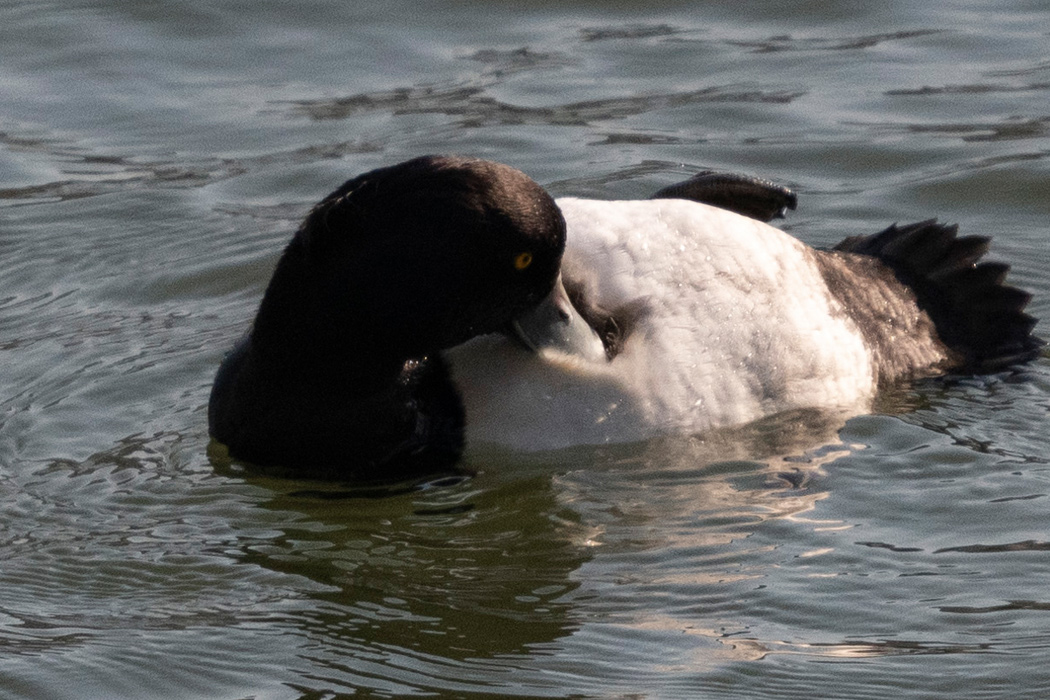
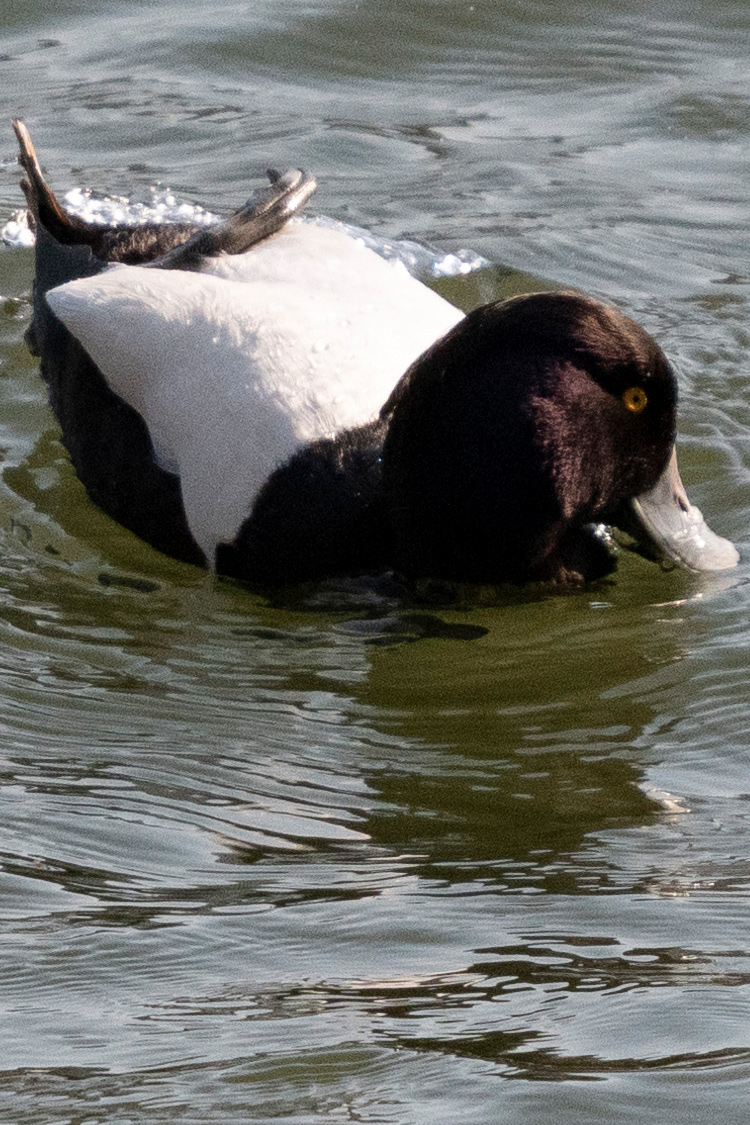
The black on the face has a glossy purple sheen. Characterized by yellow irises. The beak is slightly bluish-gray with a black tip.
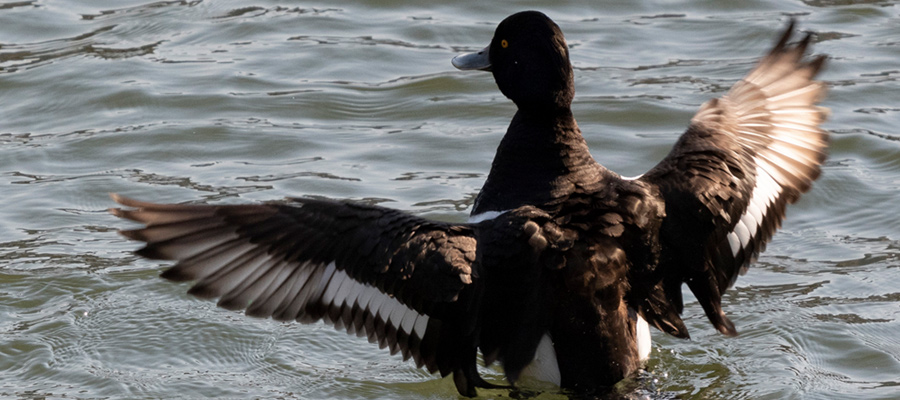
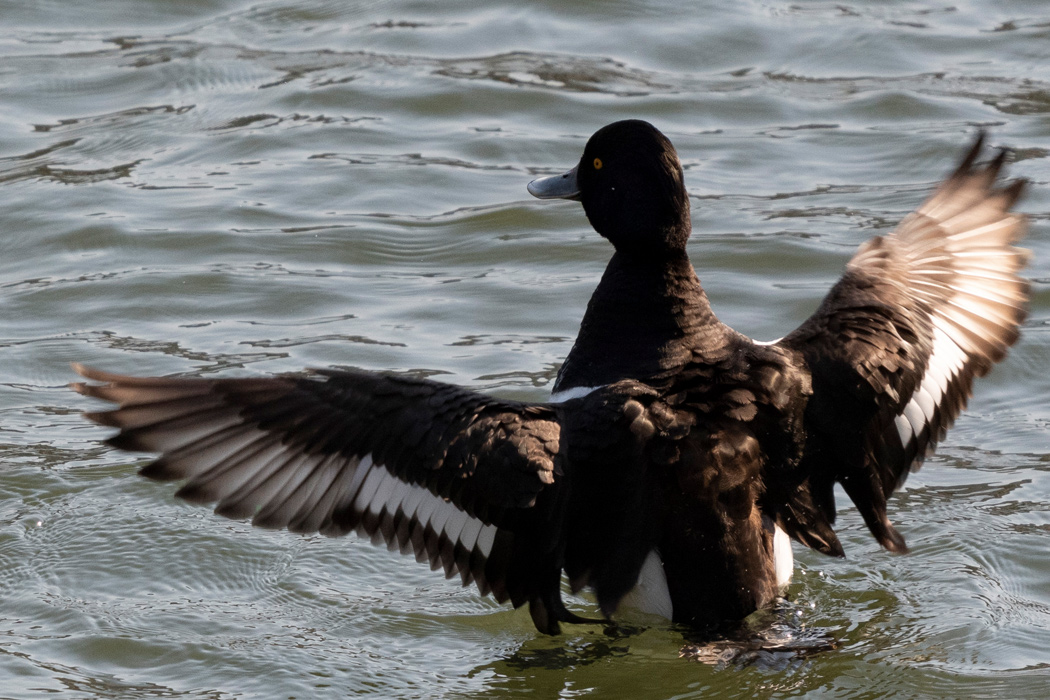
When the wings are spread, the upper half of the primary flight feathers is white.
The legs are black.
Male
Males are generally a darker black.
A crest develops on the back of the head.
The abdomen is pure white, creating a strong contrast.
Female
The color is slightly brownish.
The abdomen is brownish, not white.
Song
Does not sing very loudly, but makes a "kyuk-kyuk" sound.
Tufted duck Ecology
Habitat
Found in rivers, lakes, and coasts.
Food
Eats various things such as aquatic plants, insects, and crustaceans.
Life Cycle
In Japan, it is seen as a winter bird.
Tufted duck Photos
Tufted duck Photos are introduced.
Tap the photo to open the detail page.

Tufted duck Behavior
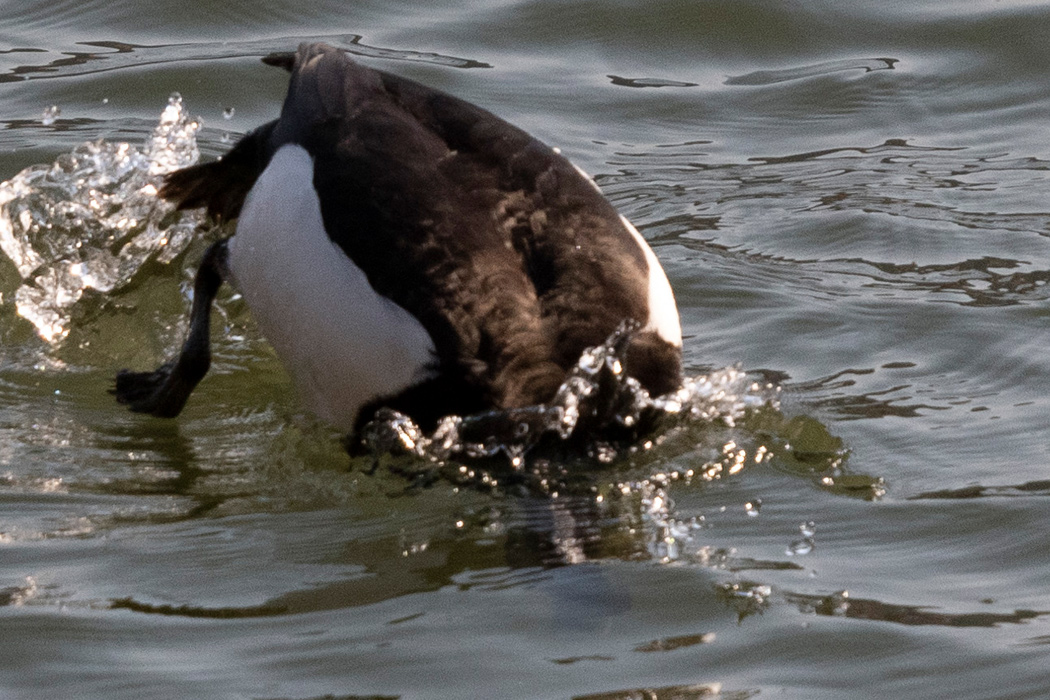
Moves on the surface of the water and dives headfirst when foraging. Many rest during the day and become active after dark. They dive from the surface to catch food, remaining underwater for several tens of seconds.
Tufted duck Information
Naming
The scientific name "fuligula" means "sooty throat," focusing on the black head. The English name "Tufted" means "crested," referring to the developed crest. The Japanese name "Hajiro" (羽白) is derived from the fact that the upper half of the primary flight feathers is white when the wings are spread.
Tufted duck Found Locations
Sagami River, Kanagawa Prefecture
I photographed a Tufted Duck swimming in the Sagami River in Kanagawa Prefecture. It was diving from the surface to catch food. It seemed to be able to hold its breath for quite a while, staying underwater for several tens of seconds. There were only three males, and the female was in the shade under a bridge a little further away. After observing for a while, I saw one of the males scratching its abdomen with its beak while swimming on its back. While swimming on its back, its white abdomen was completely exposed and defenseless, which was kind of cute.
Picture book
It features a bright head called "Akapoppo"....... Read more

It peeks out of a hole in the reef....... Read more
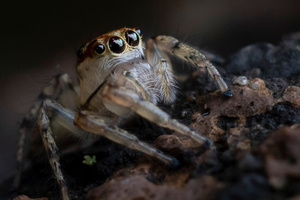
The species name comes from the German Dönitz who collected it....... Read more
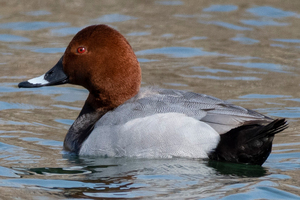
Bright reddish-brown plumage....... Read more
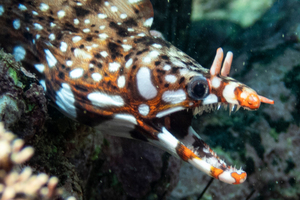
2 nostrils sticking out...... Read more
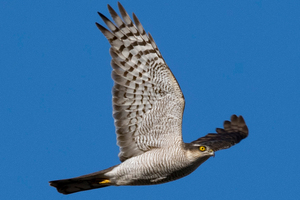
It looks smaller than a goshawk....... Read more