Common Reed Bunting
| Scientific name | Emberiza schoeniclus |
| English name | Common Reed Bunting |
| Japanese name | 大寿林 |
| Class | Aves |
| Order | Passeriformes |
| Family | Emberizidae |
| Genus | Emberiza |
| Species | schoeniclus |
| Subspecies | --- |
| Full length | 14-18cm |
| Distribution | Eurasia, northern Africa. Overwintering south of Honshu in Japan. |
Characteristics
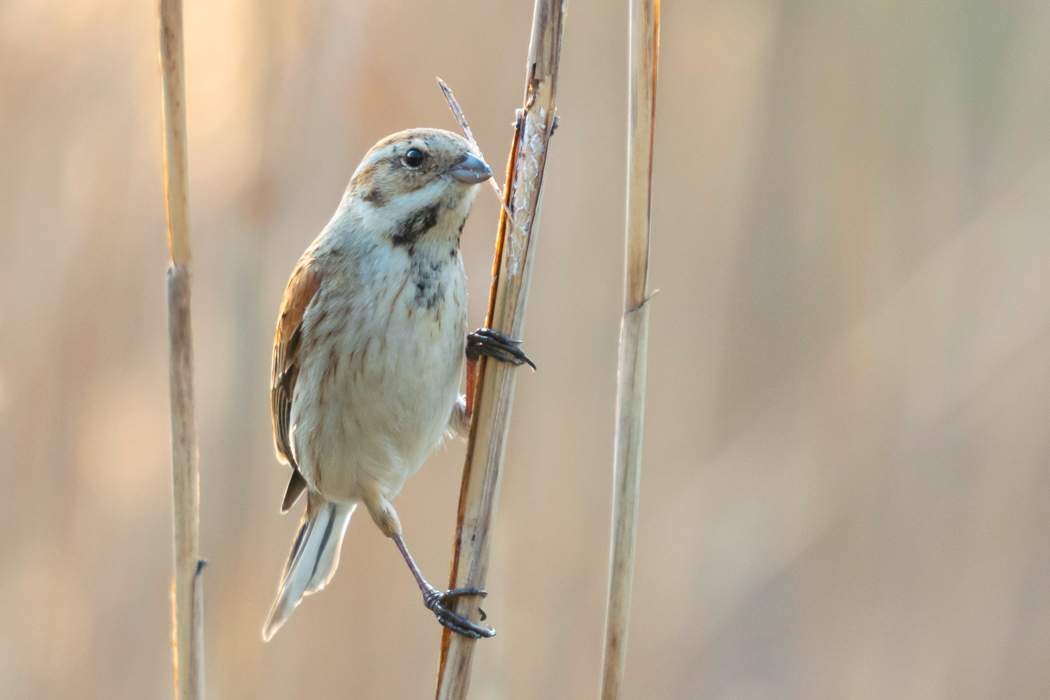
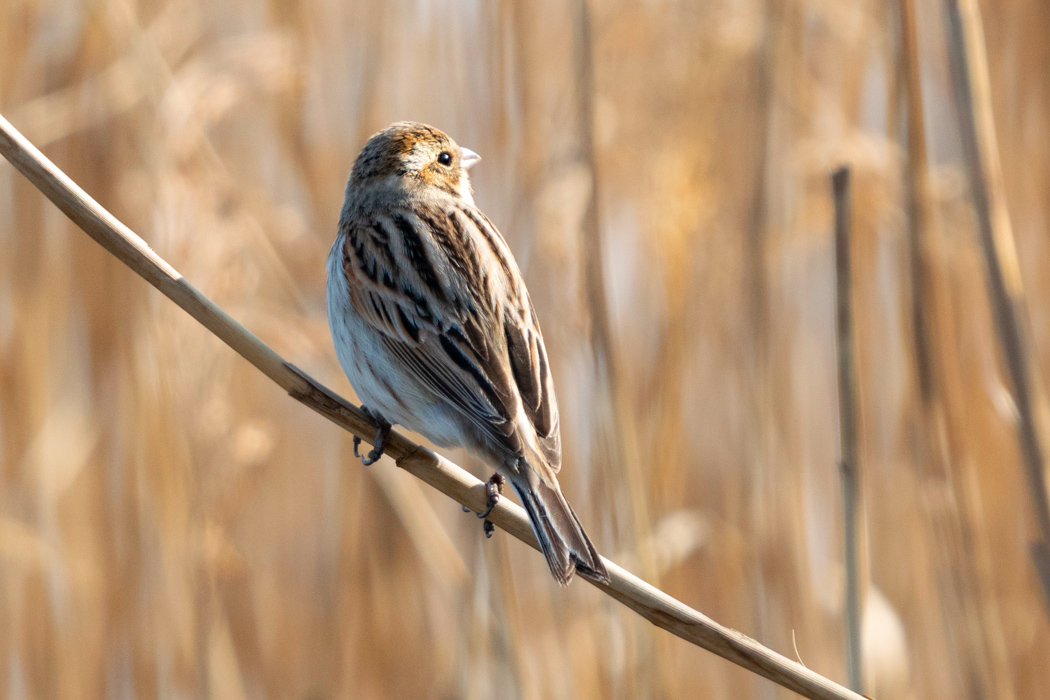
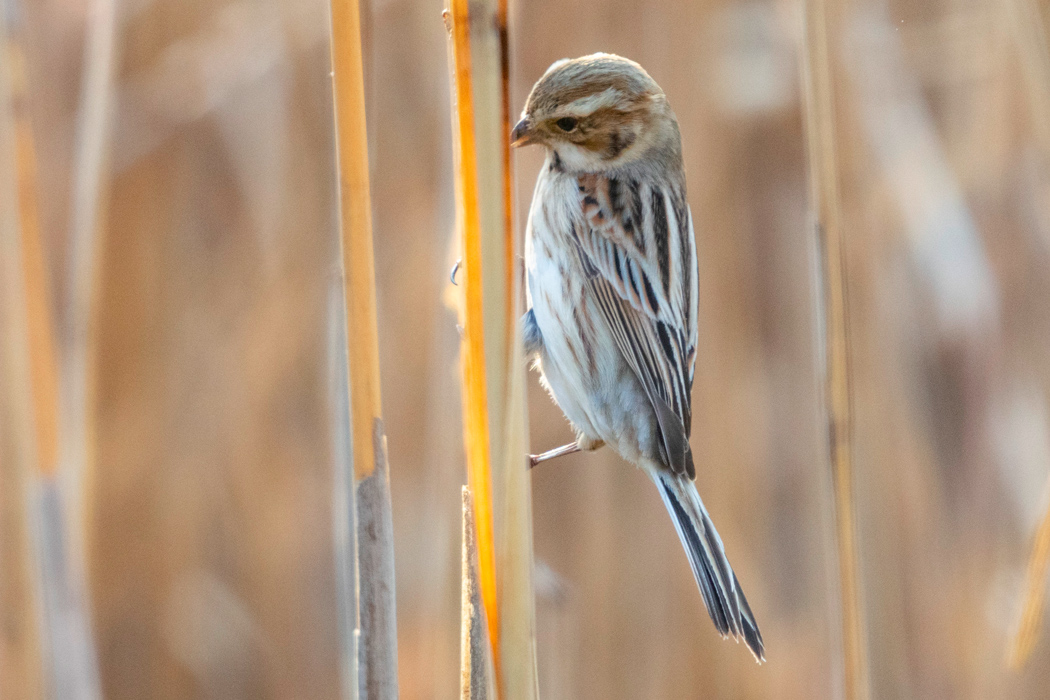
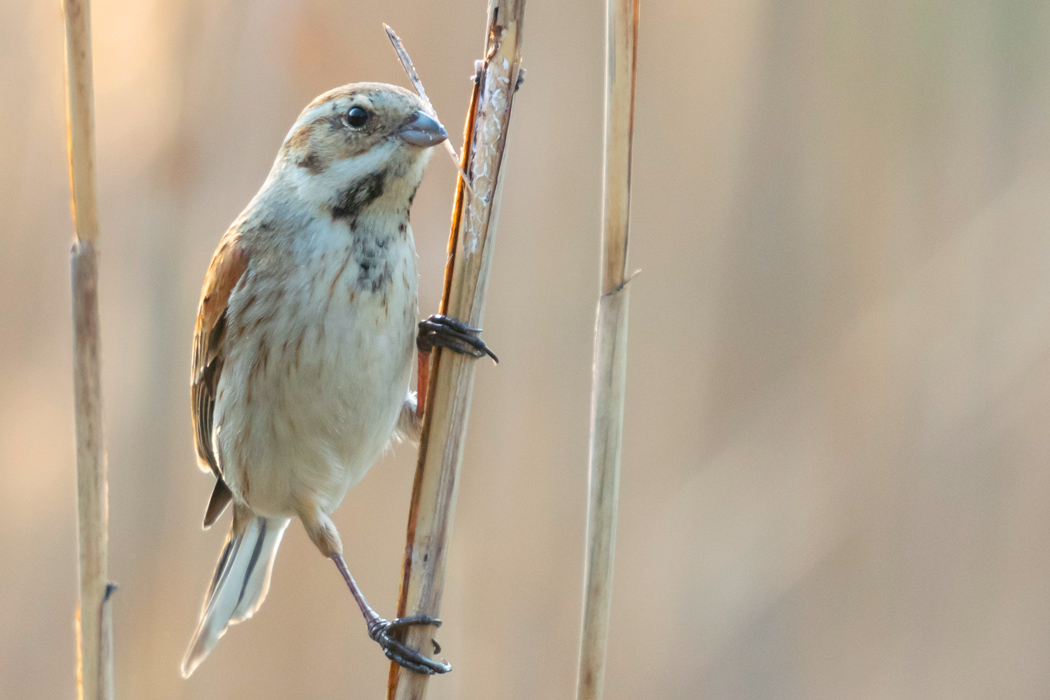
A wild bird of the American Sparrow family that lives in the reed field. The whole body is reddish brown with black patterns on the wings. The feathers on the head of males turn black in the summer. In winter, the same reddish brown as the whole body is mixed with white parts. A short tweet with a "chitch". The tip of the tail is in the shape of a "W".
Ecology
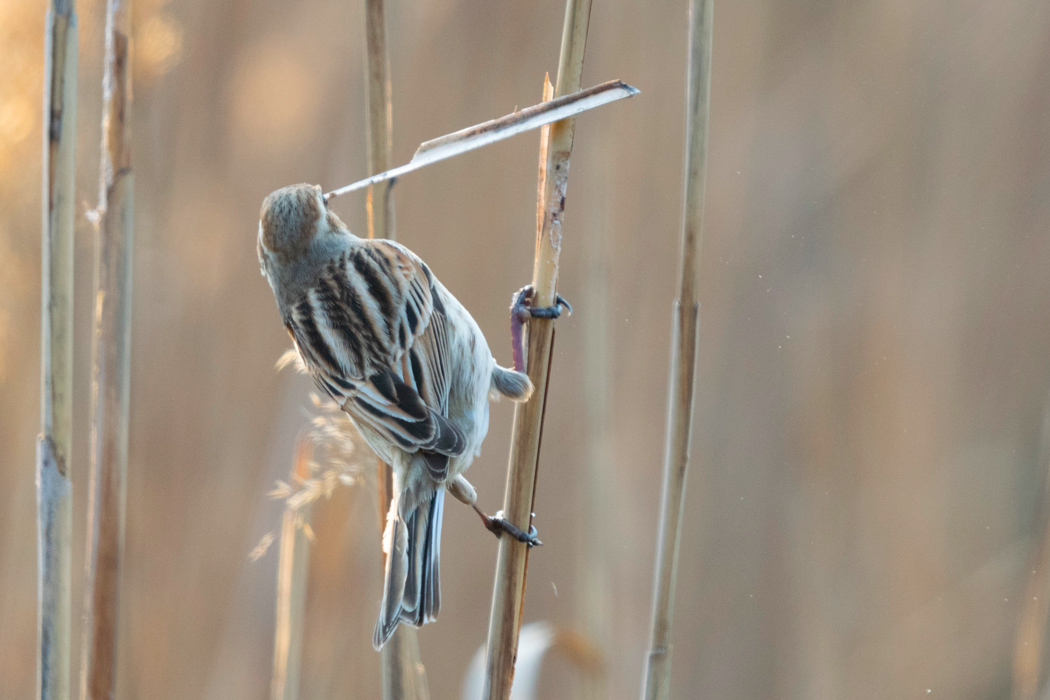
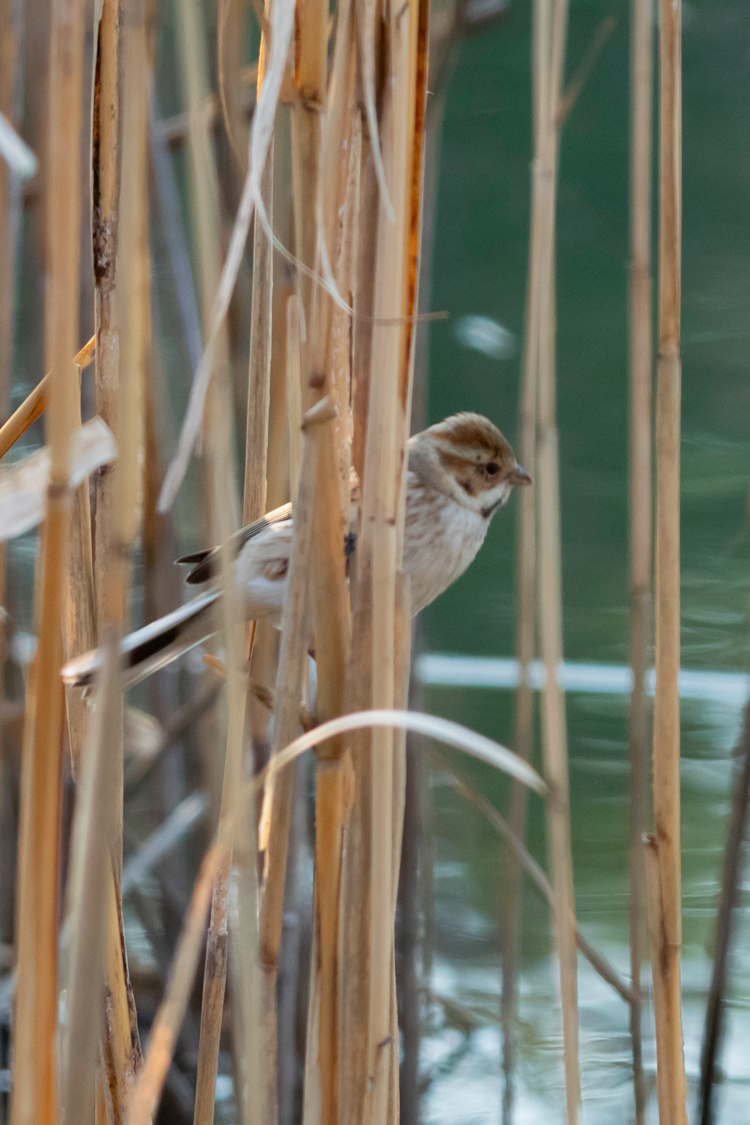
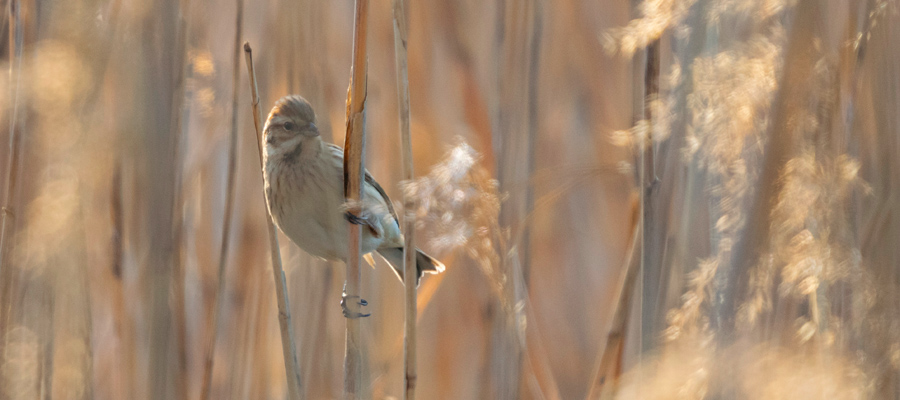
It lives in the reed fields near lakes and eats insects and seeds. It is looking for insects by peeling off the skin of reeds while making a "snap" noise. Form a small herd. It breeds in early summer and forms a bowl-shaped nest at the root of the grass.
Habitat
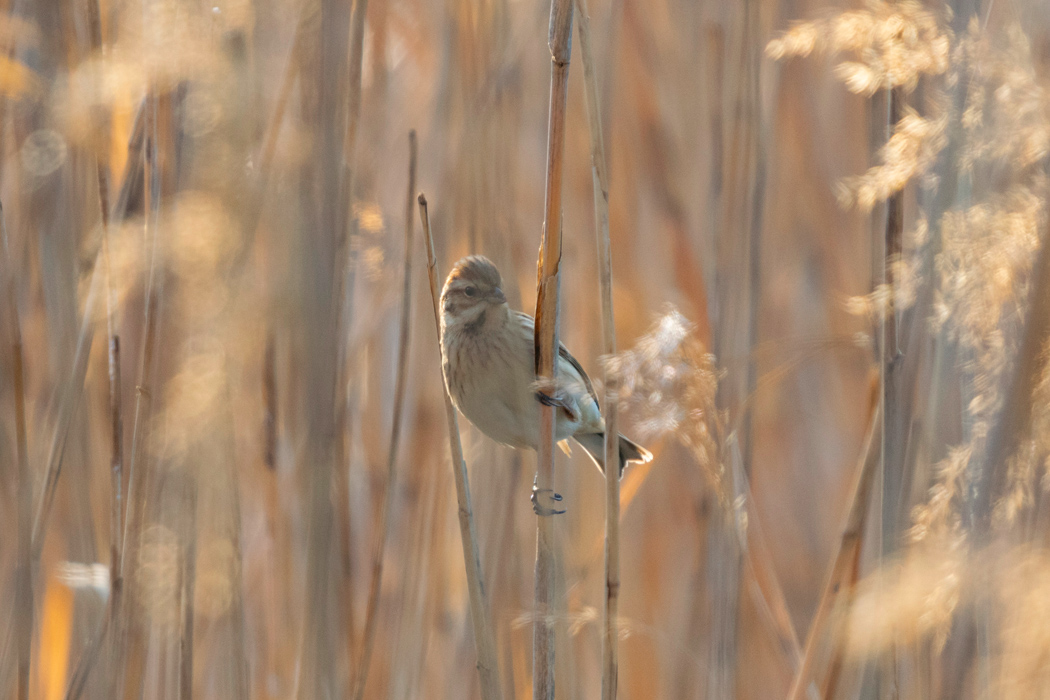
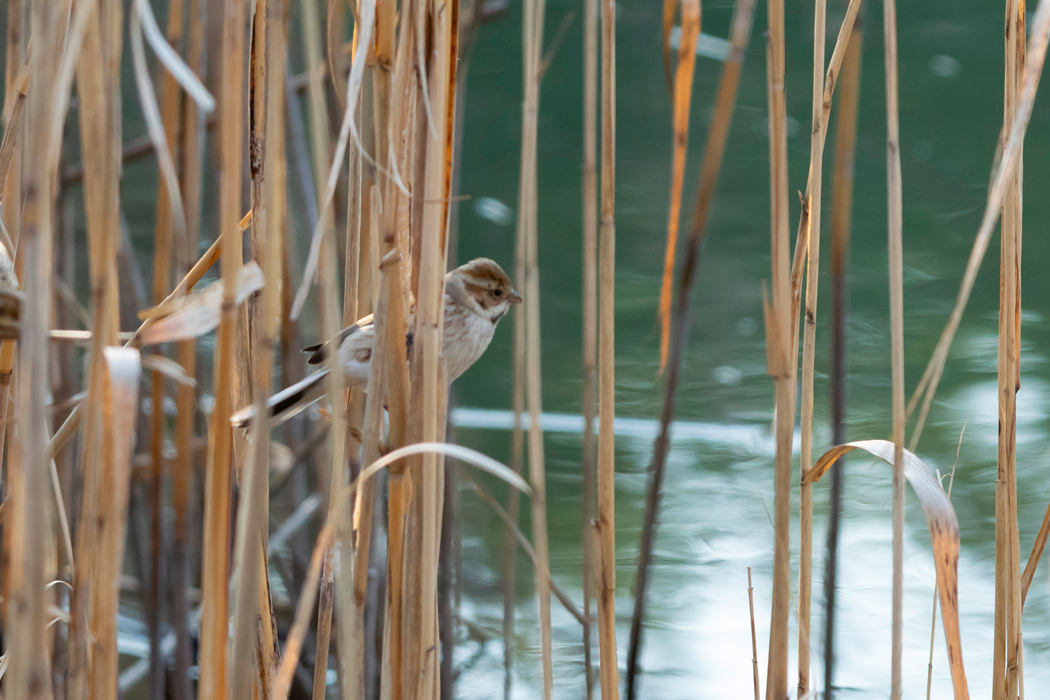
I found it by the pond in Tokyo Port Wild Bird Park. A flock of about four birds jumped from reed to reed, peeling and looking for insects. I couldn't see it at first, but I found it when I was carefully looking for a place where the reeds were shaking. I was able to take a picture of eating while standing vertically on a swaying thin reed.
Pictures
Introducing a picture of Common Reed Bunting.