Japanese Bush Warbler
Known as the "Bush Warbler," it is one of Japan's Three Celebrated Songbirds.
| Scientific name | Horornis diphone |
| English name | Japanese Bush Warbler |
| Japanese name | 鶯 |
| Class | Aves |
| Order | Passeriformes |
| Family | Cettiidae |
| Genus | Horornis |
| Species | diphone |
| Full length | 14-16cm |
| Distribution | Distributed across East Asia. In Japan, it is seen throughout the country. |
Japanese Bush Warbler Characteristics and Morphology
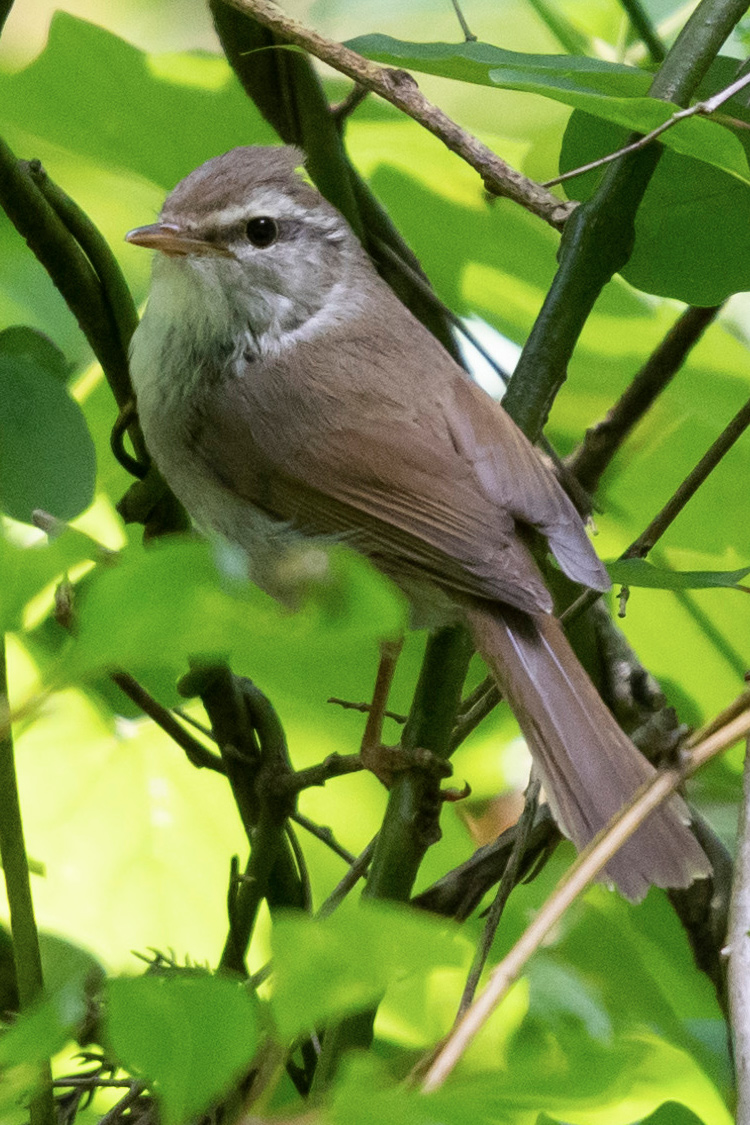
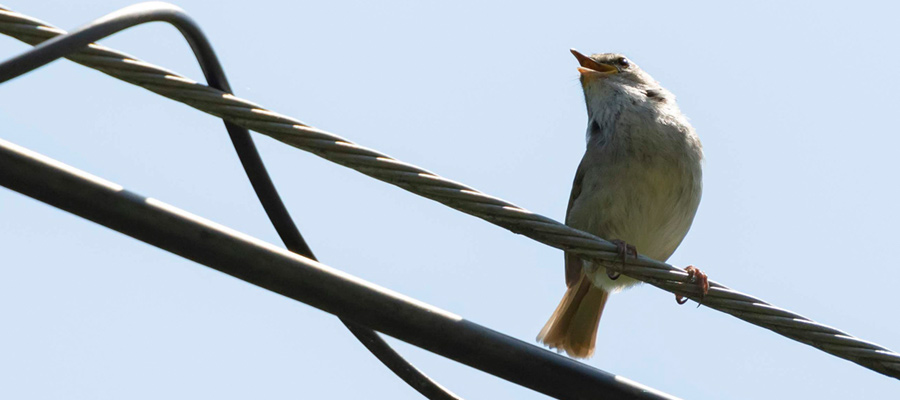
Sparrow-sized and generally a faded olive color.
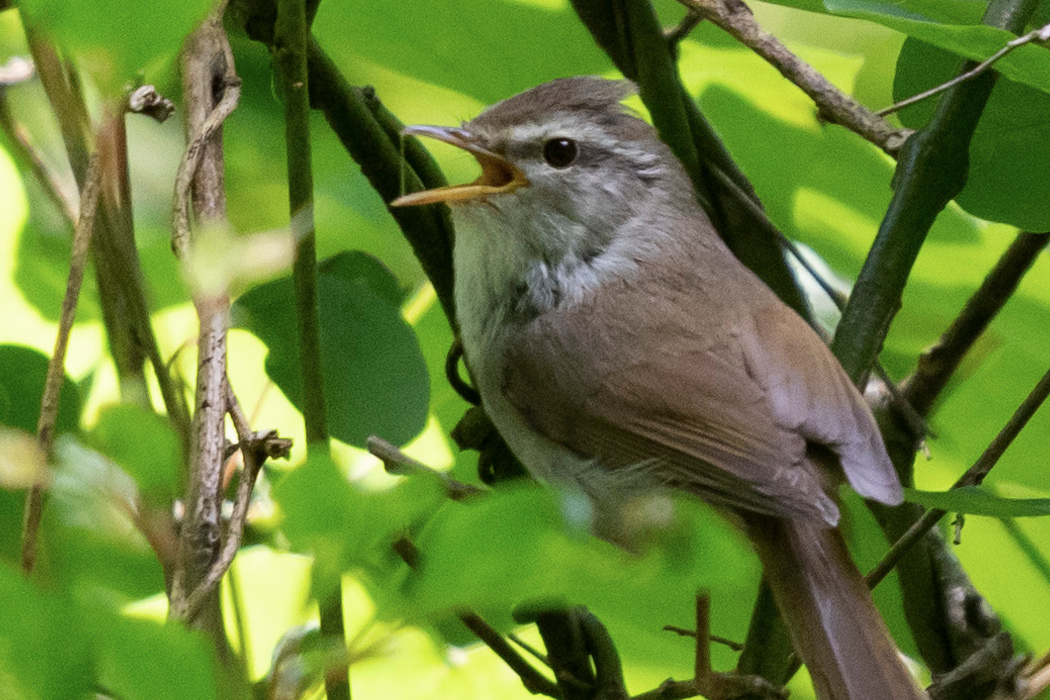
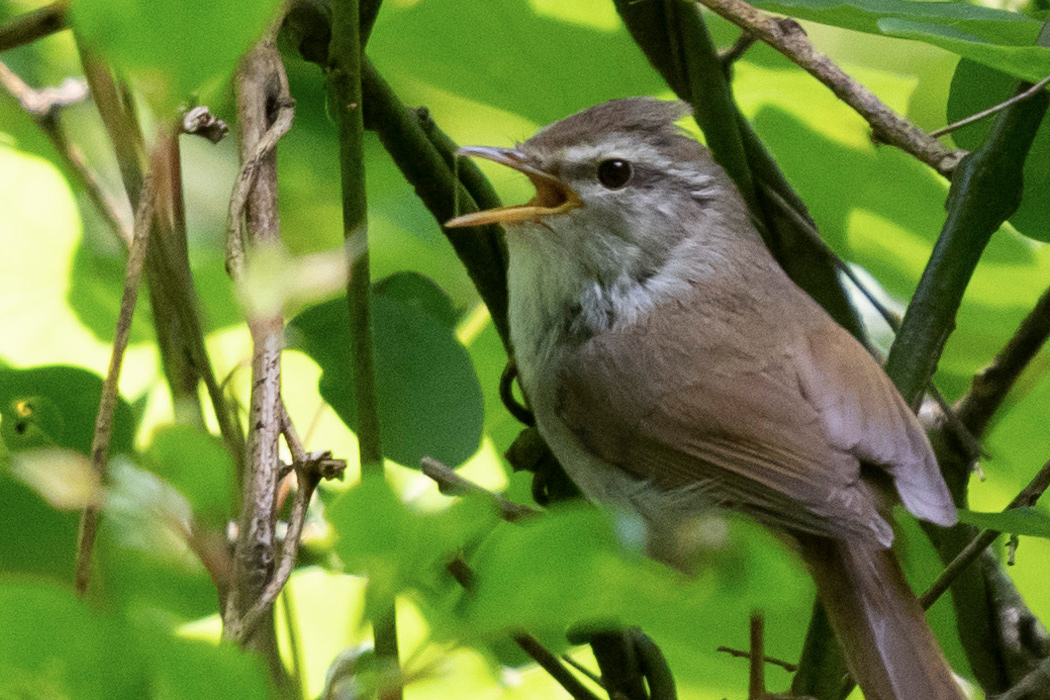
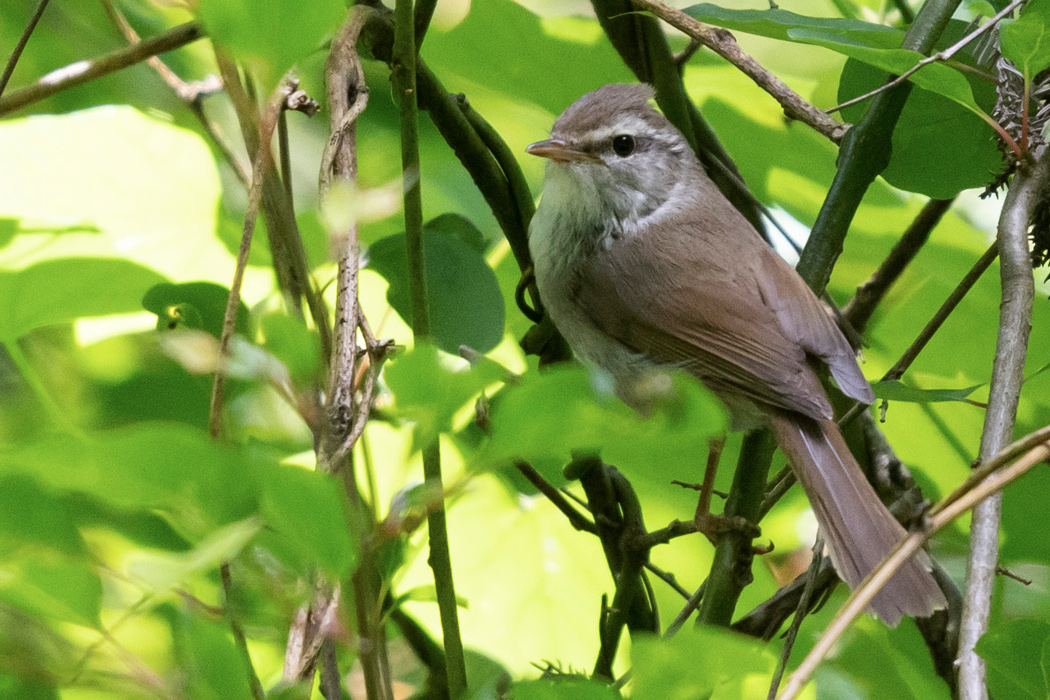
The head is small and connects smoothly to the torso. It has a yellow bill and a white supercilium (eyebrow stripe). The bill is slender with a hint of flesh color.
The back ranges from brown to a color close to olive. The belly is a pale brown.
The tail feathers are the same brown as the back.
Sometimes confused with the Japanese white-eye, but the bush warbler is much closer to brown. It also lacks the white eye-ring around the eyes.
Male
Males are larger, measuring around 16cm.
Female
Females have a body length of about 14cm, slightly smaller than males.
Song
Everyone has likely heard the "Hoo-hokekyo" call of the bush warbler that signals the arrival of spring. In addition to this characteristic song, it has a call known as "Tani-watari" (valley crossing), a repeated "kekyo-kekyo-kekyo-kekyo..." used when it senses danger. Its sub-song (call) consists of short phrases like "jit" or "chat."
Japanese Bush Warbler Ecology
Habitat
Widely found from mountainous areas to plains. Prefers places where it can hide, such as bamboo grass and thickets.
Food
Feeds on insects, spiders, and seeds.
Life Cycle
Song begins to be heard in early spring. They breed through early summer; during this time, males use their song to declare territory. Pairs raise their young together; while the female cares for the chicks, the male searches for and provides food.
Japanese Bush Warbler Photos
Japanese Bush Warbler Photos are introduced.
Tap the photo to open the detail page.

Japanese Bush Warbler Behavior
Although its call is heard frequently, it is quite difficult to spot.
Japanese Bush Warbler Information
Phenological Observation
Because of its "Hoo-hokekyo" song, it is known as the "Haru-tsuge-dori" (Spring-announcing bird) and is one of Japan's Three Celebrated Songbirds. The day the first bush warbler song is heard in a year is called the "Hatsu-naki-bi" (First Song Day), and it is used in phenological observations alongside cherry blossoms and swallows.
The Bush Warbler and "Uguisu-iro" (Bush Warbler Green)
When people hear the term "Uguisu-iro," many imagine a bright matcha green like that of the Japanese white-eye. This is because the name "Uguisu-iro" has historically been used for light green accessories and food products to capitalize on the bird's spring image.
 Actual "Uguisu-iro" is a muted olive color that replicates the actual body color of the bird.
Japanese Bush Warbler Found Locations
Ura-Takao, Hachioji City
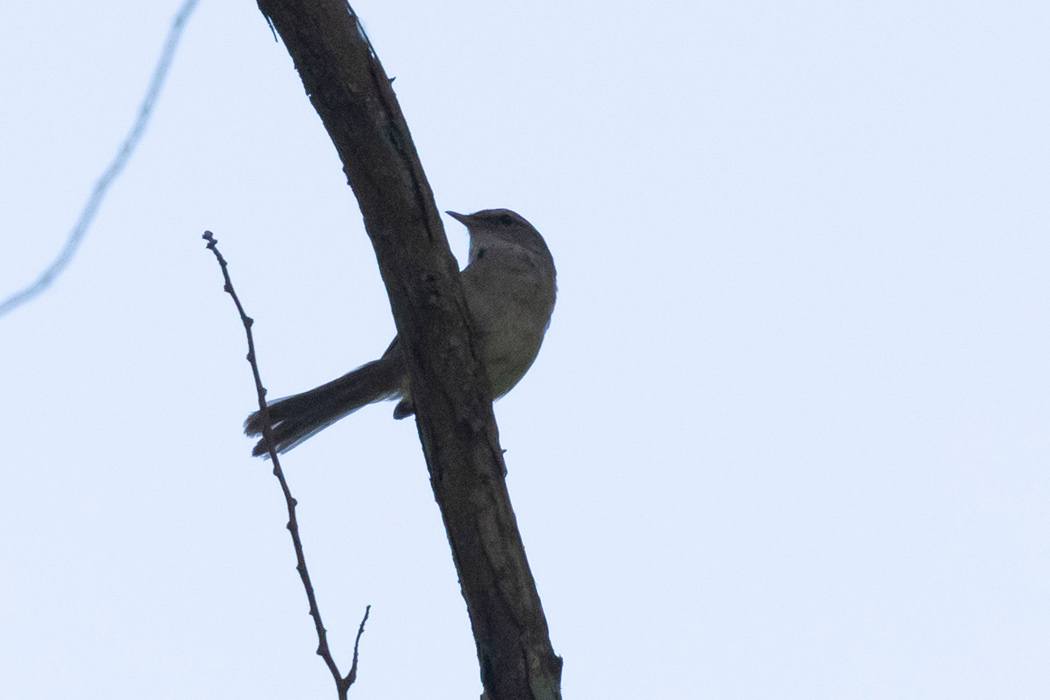
I photographed this individual as it emerged from a thicket. Even when singing, they do not perch on the tips of branches or treetops, but rather deep within trees hidden by leaves. Thus, despite being a familiar bird, seeing one is quite difficult. Rather than approaching a thicket blindly because the call sounds close, it is easier to spot them and observe their natural behavior by looking over the thicket from a slight distance.
Even without seeing them, it is wonderful to observe them through their songs. It is enjoyable to listen to the clumsy calls of individuals early in the spring or to hear their songs echoing through the forest like a chain reaction.
Japanese Bush Warbler Observation Log
These are the observation logs where we found Japanese Bush Warbler.
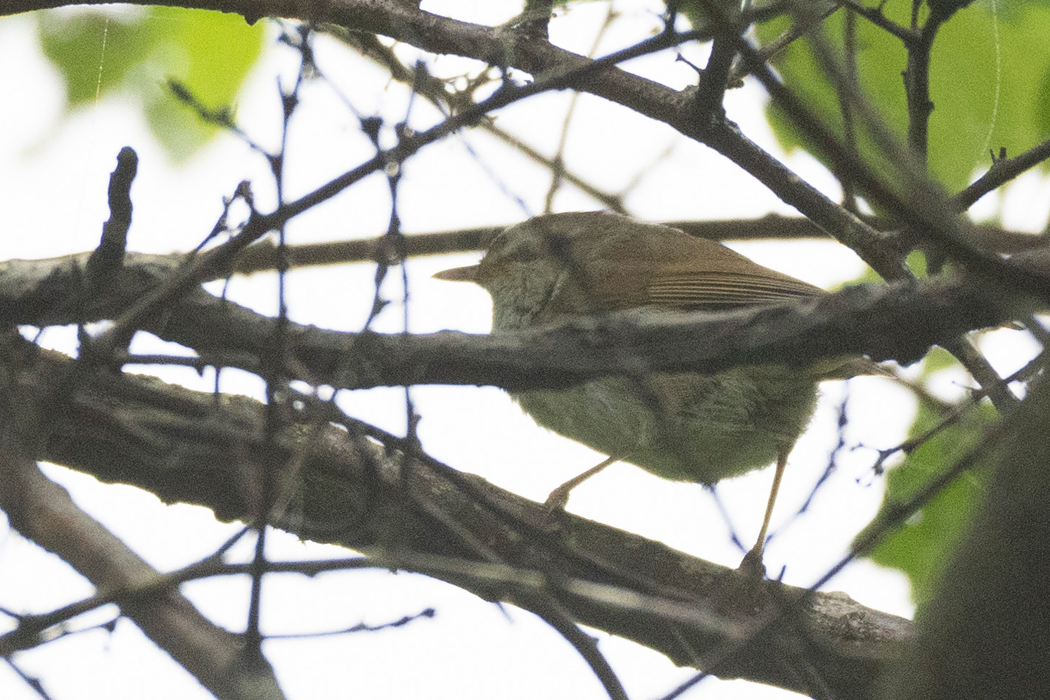
A Japanese Bush Warbler was in the same tree as the Grey-streaked Flycatcher.
Read more >
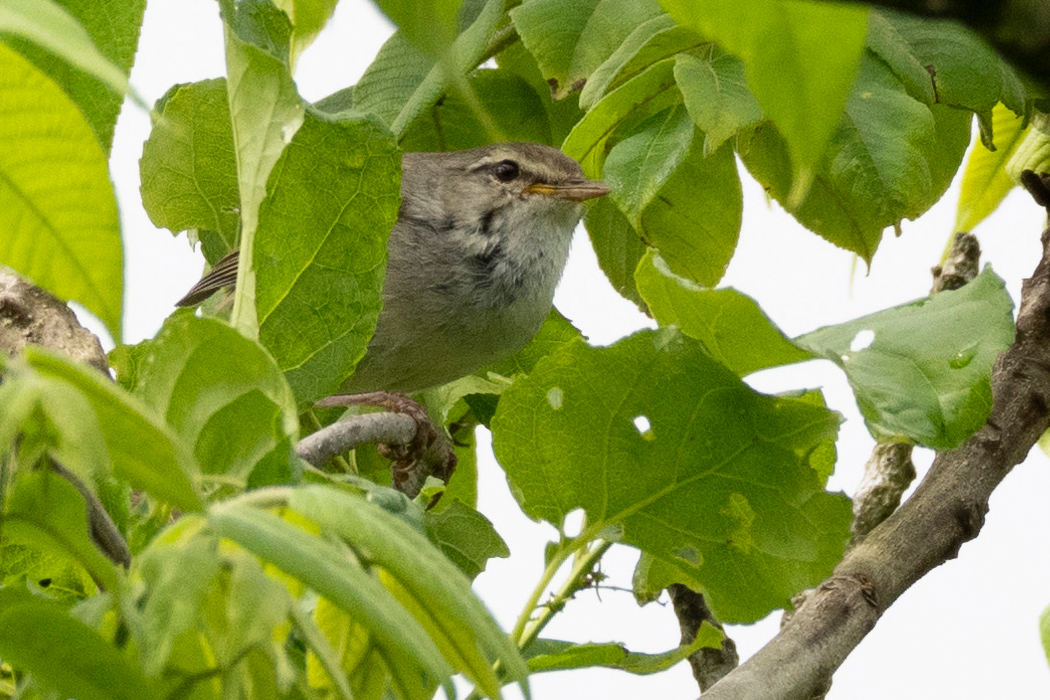
I found a Japanese Bush Warbler again.
Read more >
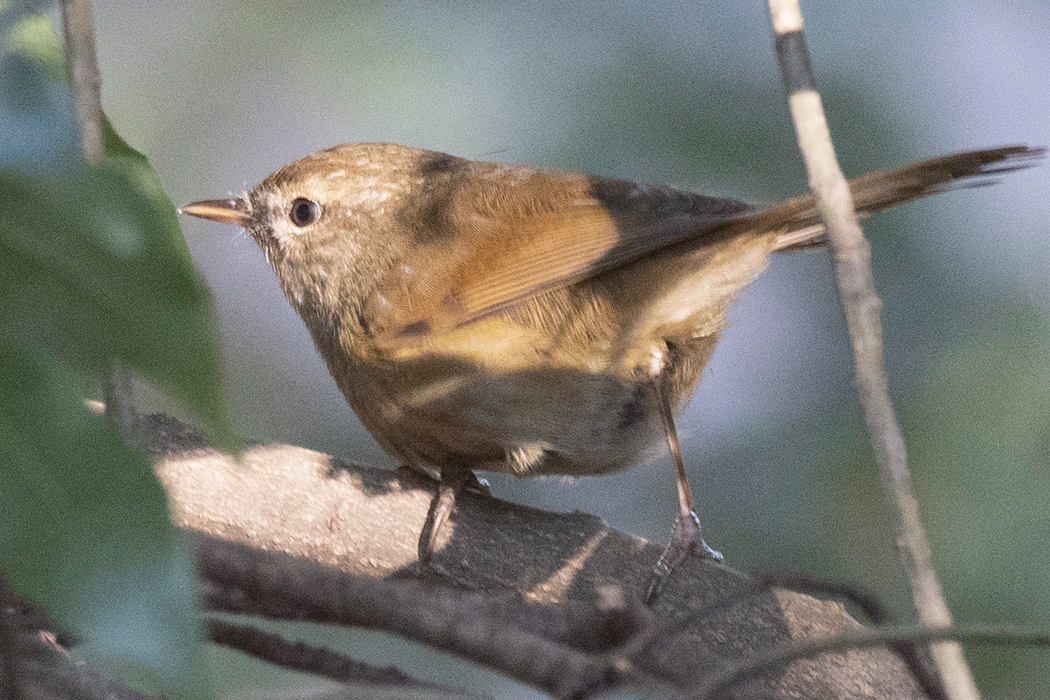
Many birds came to the forest next to the shrine. This Japanese Bush Warbler was strolling at its own pace.
Read more >
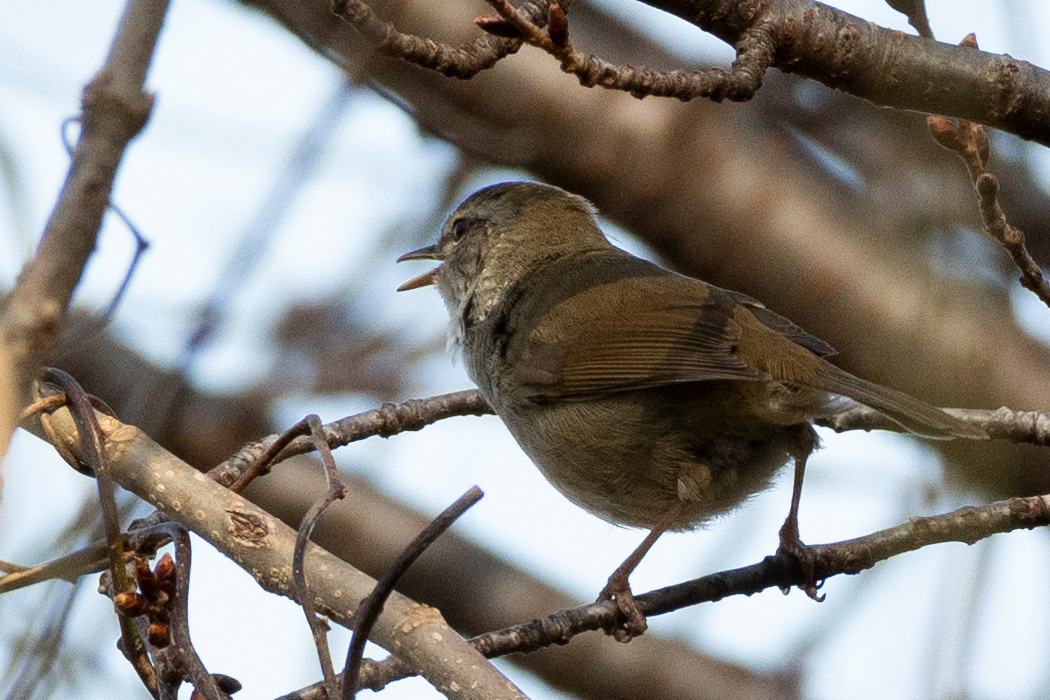
A Japanese Bush Warbler was singing. It's not very good yet.
Read more >
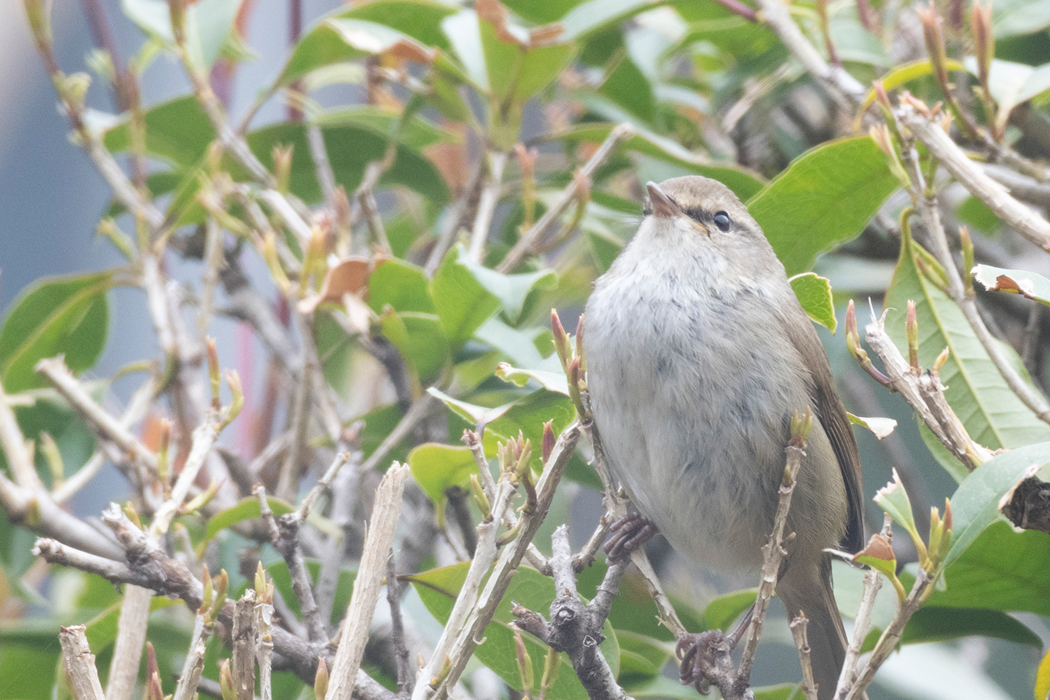
A Japanese Bush Warbler came out on the way home.
Read more >
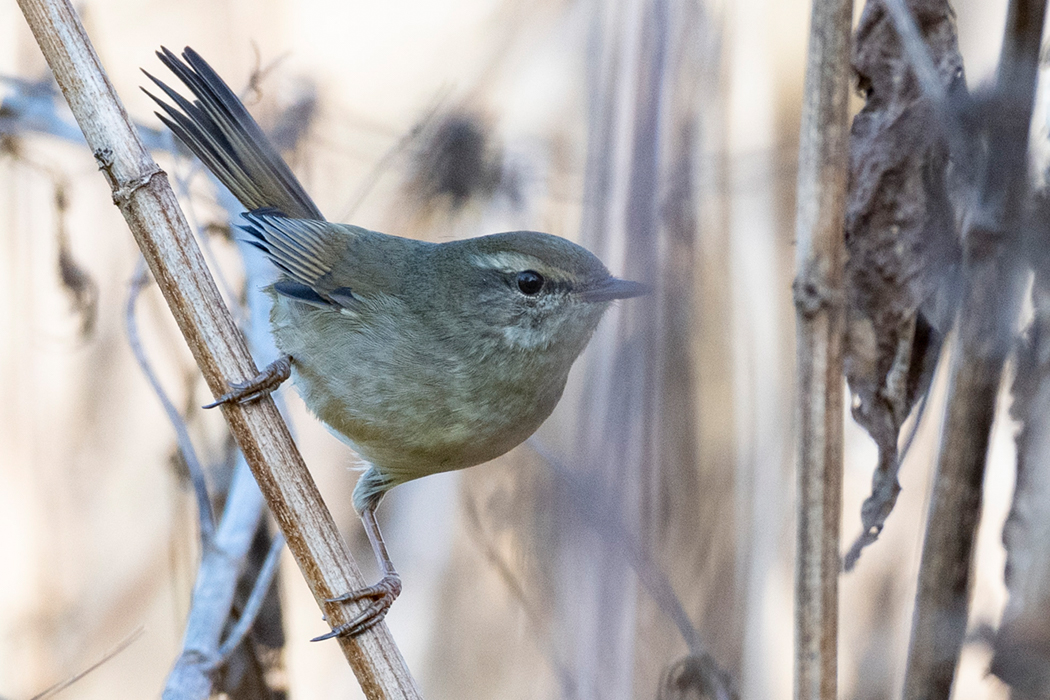
In the thicket next to the field, there were Japanese Bush Warblers and Black-faced Buntings.
Read more >
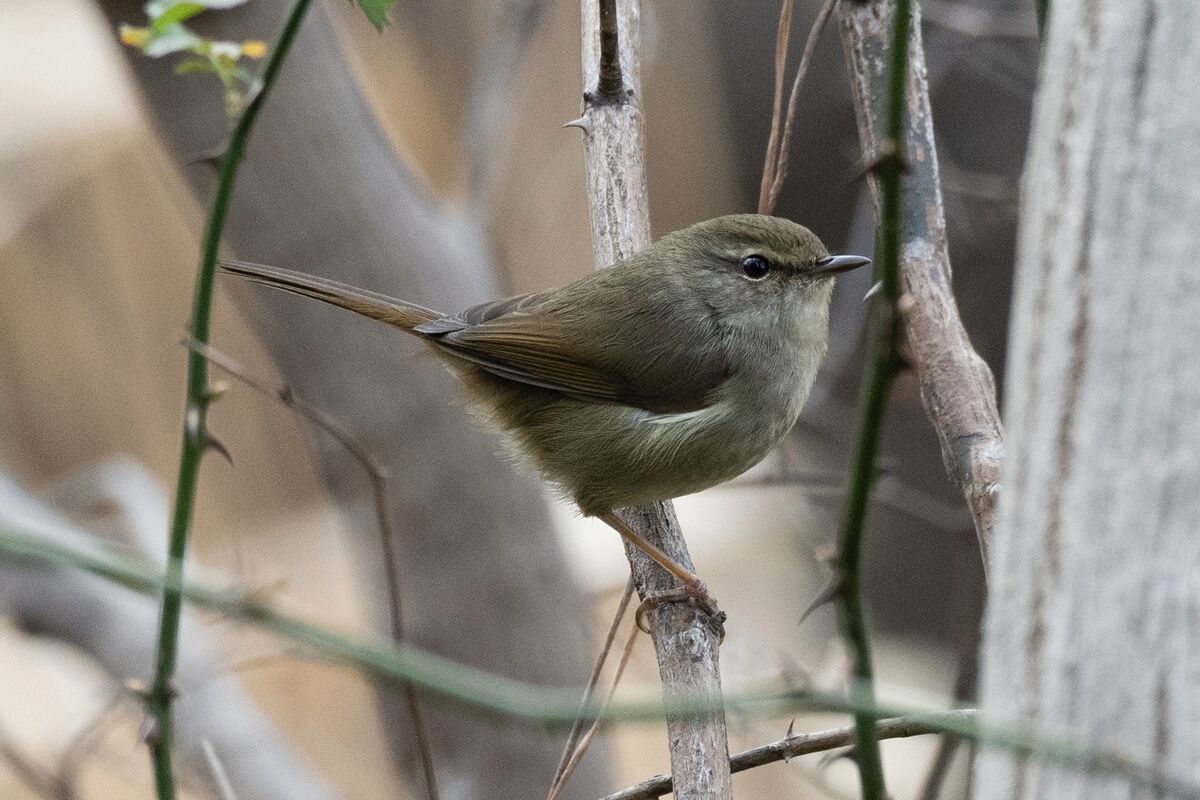
A Japanese Bush Warbler appeared near the water.
Read more >
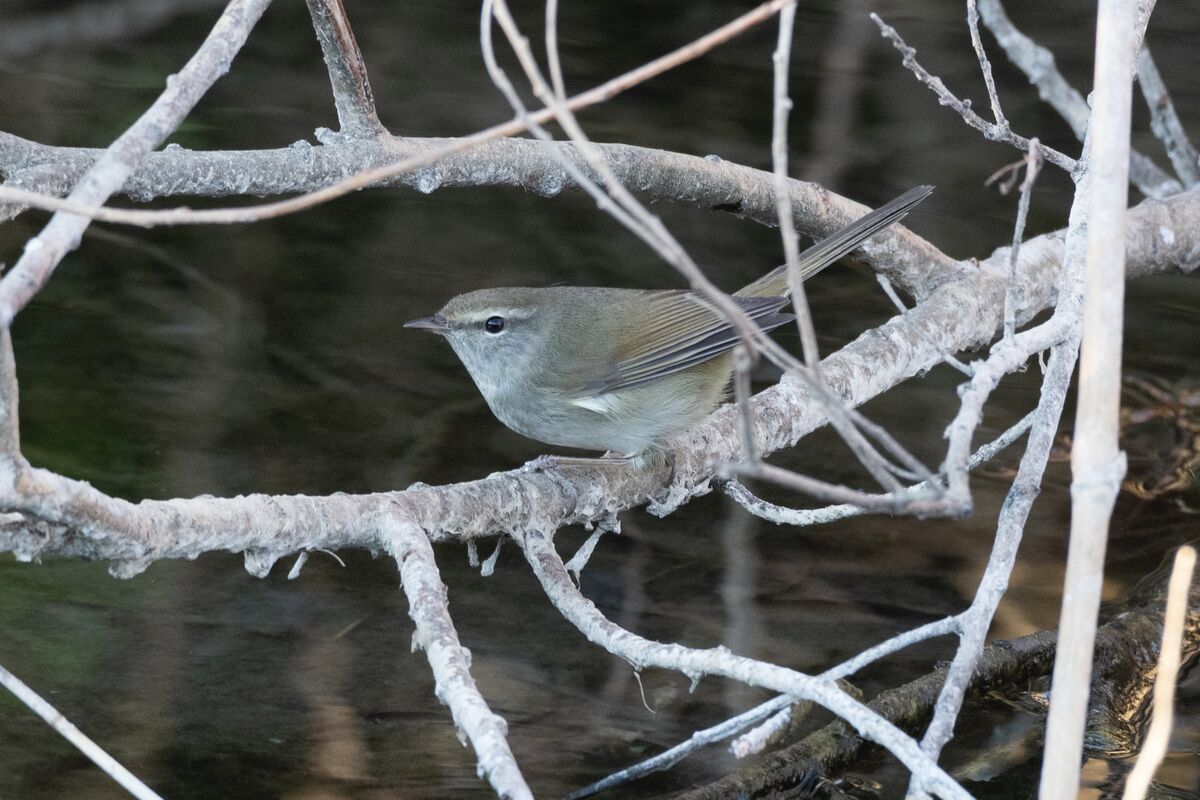
A Japanese Bush Warbler perched on a branch near the water's surface.
Read more >