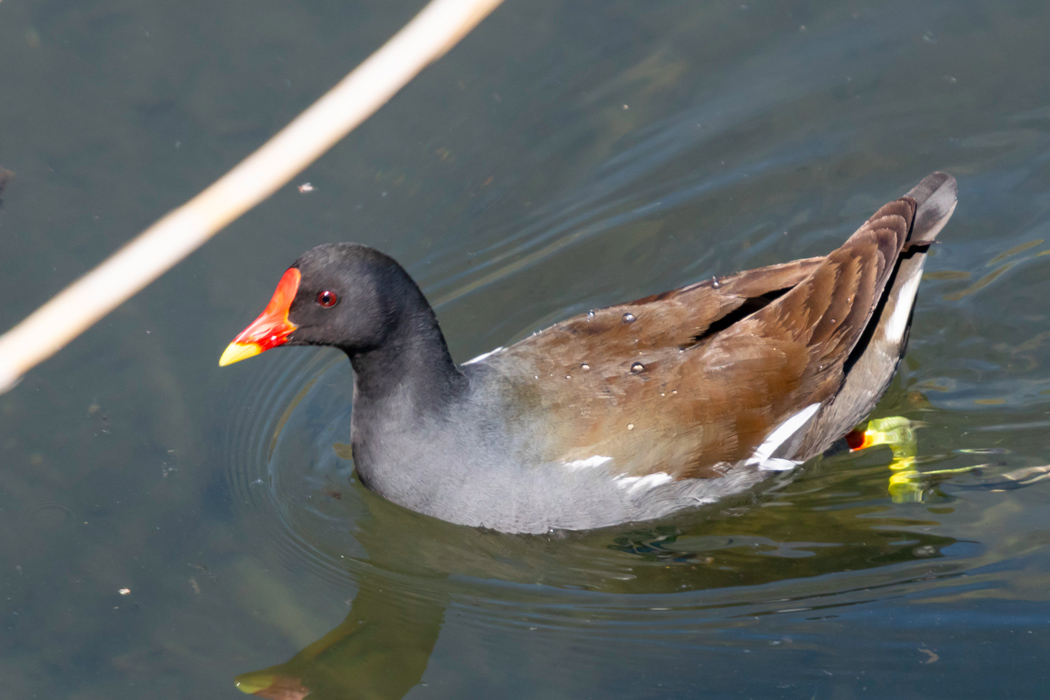
Common Moorhen
Swims slowly with feet adapted for walking.
| Scientific name | Gallinula chloropus |
| English name | Common Moorhen |
| Japanese name | 鷭 |
| Class | Aves |
| Order | Gruiformes |
| Family | Rallidae |
| Genus | Gallinula |
| Species | chloropus |
| Full length | 32cm |
| Distribution | Tropical regions, excluding Oceania. |
Common Moorhen Characteristics and Morphology
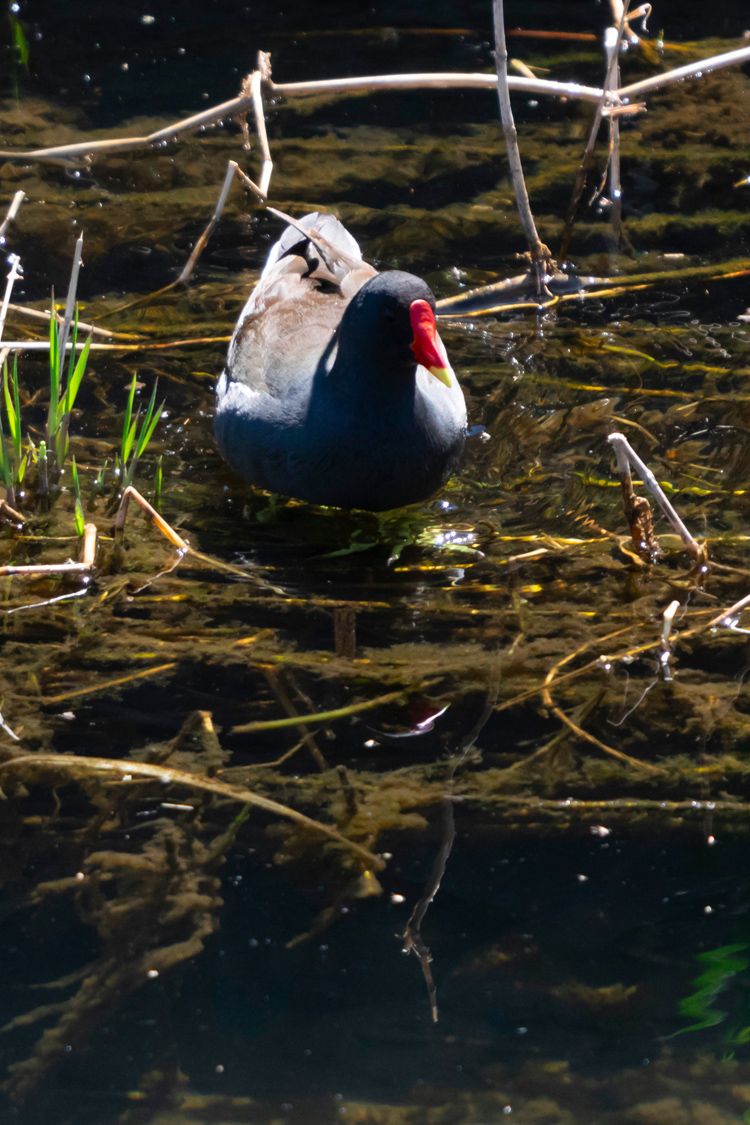
A bird of the Rallidae family. Pigeon-sized and of uniform color. Black from head to abdomen.
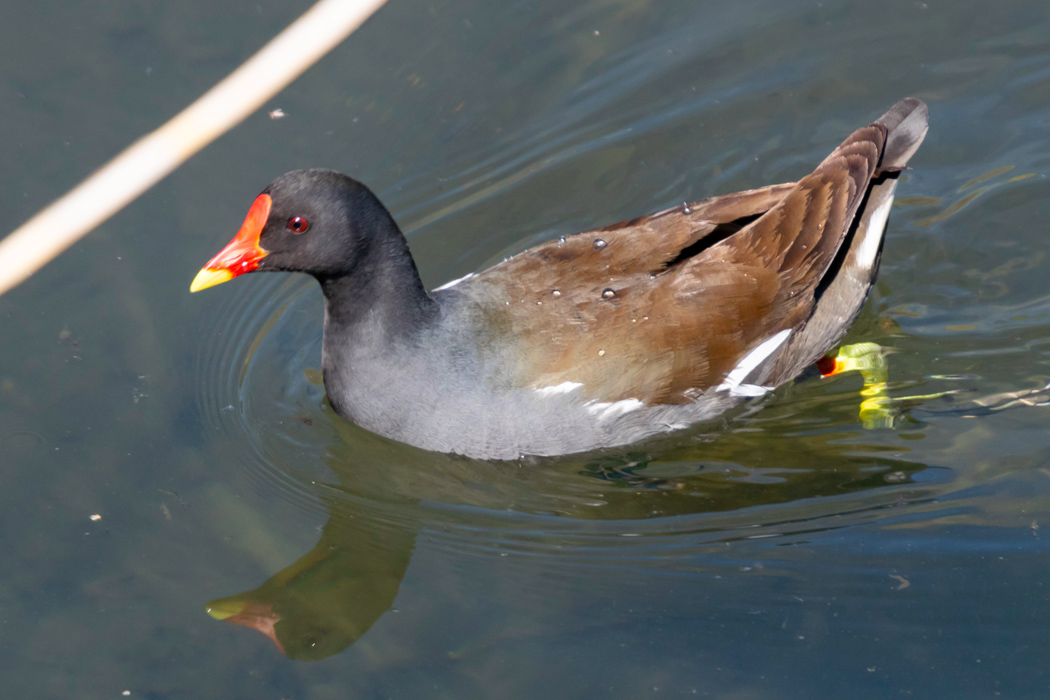
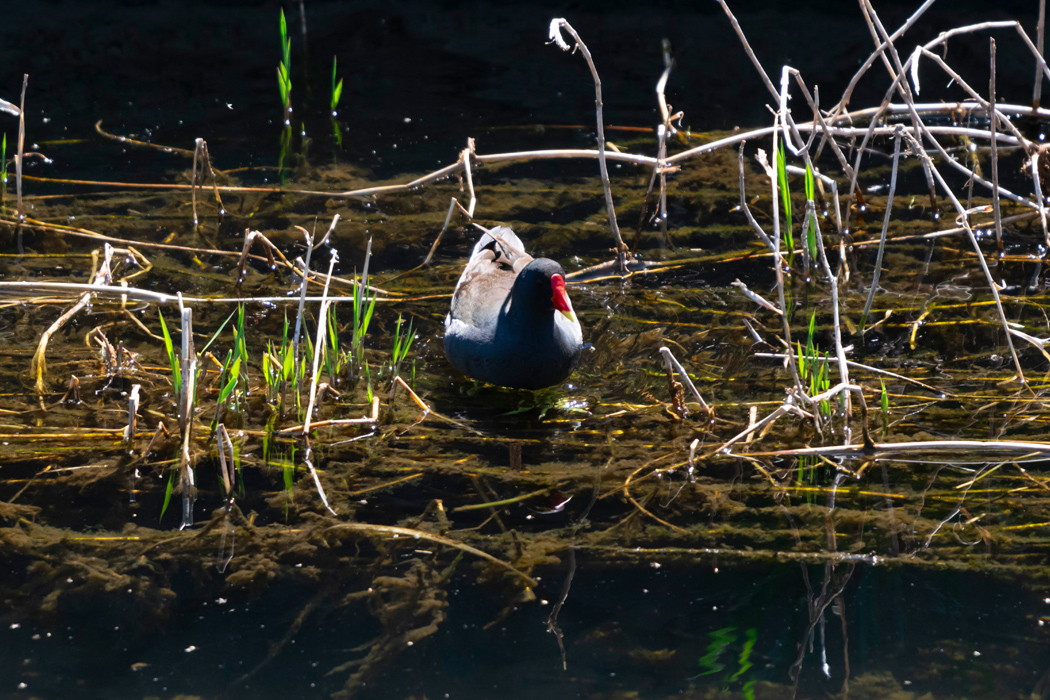
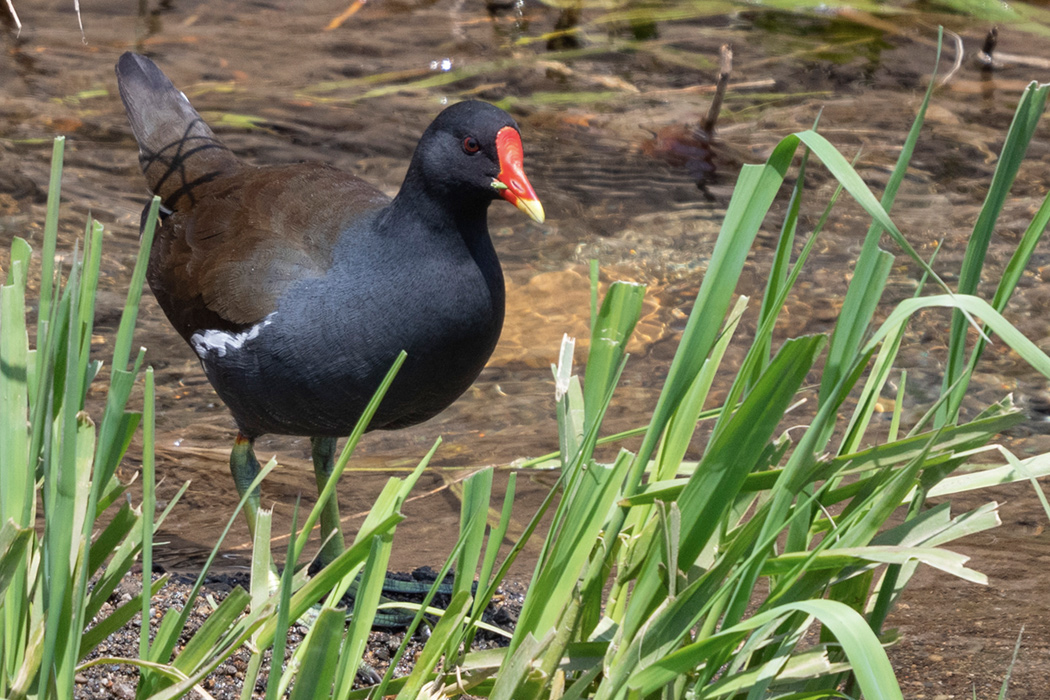
The head is small and black. Characterized by a red beak and frontal shield. The tip of the beak is yellow. The iris is red.
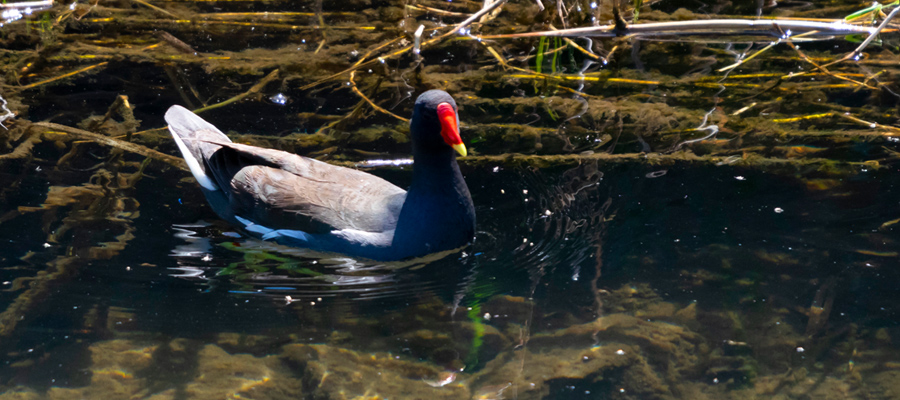
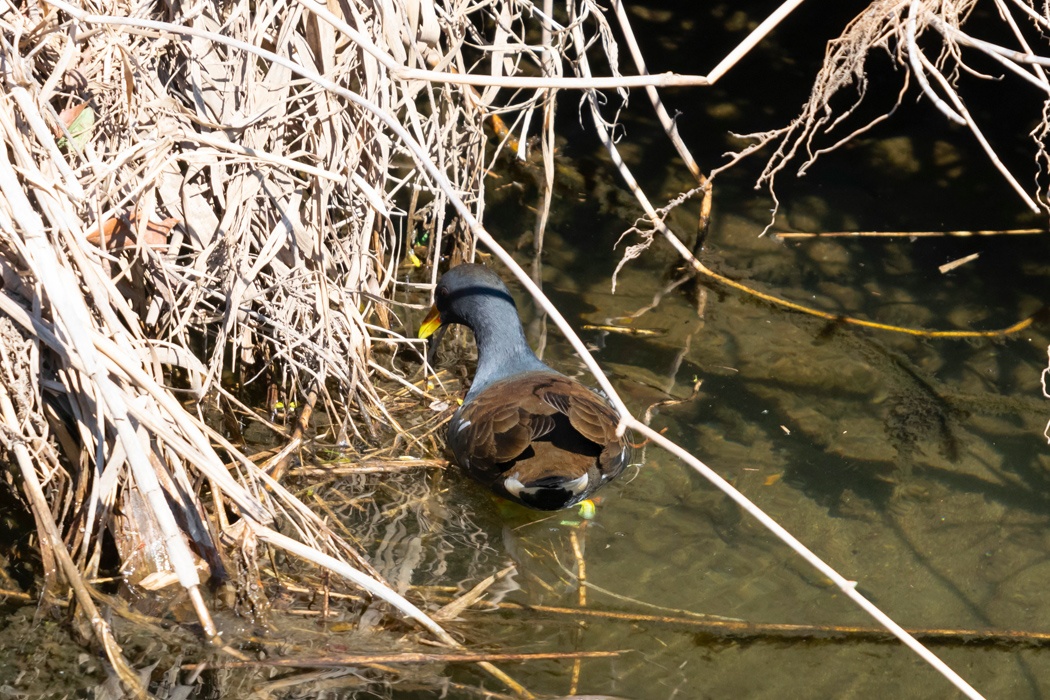
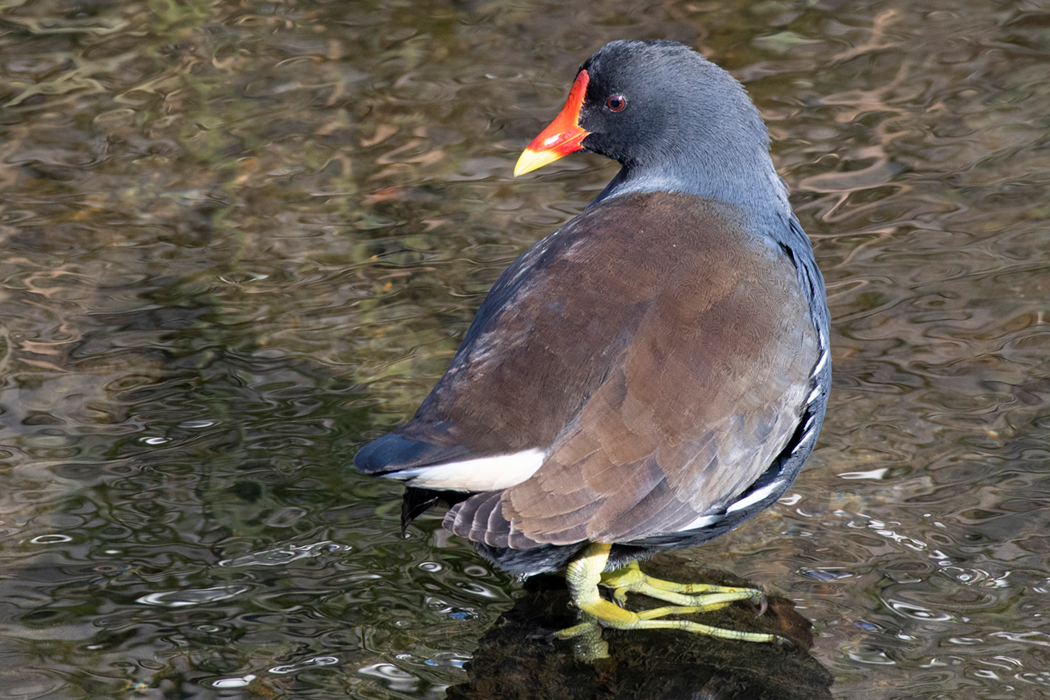
The wings are slightly greenish brown. A white line runs between the wing and the body. From the throat to the abdomen is black with a slight gray tint.
The tail feathers are small, and white feathers are visible. The legs are long and thick, and the lobed toes are yellow to yellowish-green. There are no webs.
Song
Rarely sings, but its call is a loud "Kru".
Common Moorhen Ecology
Habitat
Inhabits lakes, marshes and rivers.
Food
Eats insects and plant seeds.
Life Cycle
Builds nests on the water's edge to breed.
Common Moorhen Photos
Common Moorhen Photos are introduced.
Tap the photo to open the detail page.
Common Moorhen Behavior
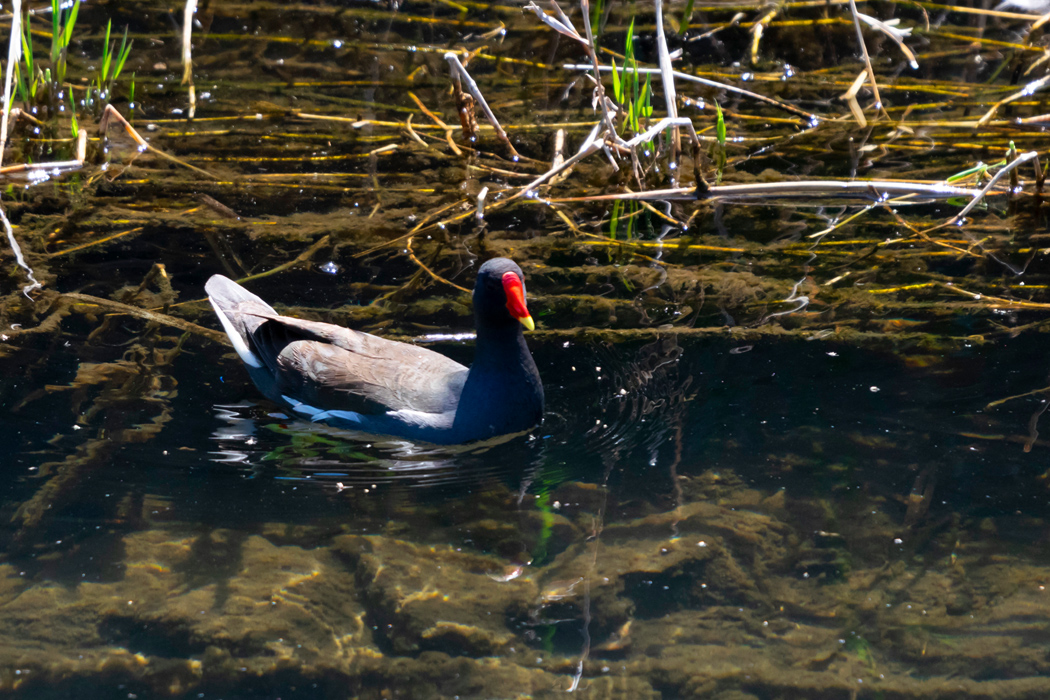
Swims among aquatic plants or walks with its long legs. Not a good swimmer, and slow. Although not as cautious as the rails, it is wary and flees into the bushes when it senses danger.
Common Moorhen Information
Naming
The scientific name "chloropus" means "green foot", and is derived from the distinctive color of its legs. The Japanese name comes from the fact that it is a bird that "guards" the rice fields because of its call.
Common Moorhen Found Locations
Yudono River
It was swimming around the area where aquatic plants grow thickly along the Yudono River. It seemed indifferent to the people walking along the river, but when I peered in to take a picture, it became wary and fled into the reeds. Since it is not a fast swimmer, you can observe it well if you find it from a distance.
Yudono River in December
It was foraging on the sunny surface of the Yudono River on a clear day in December. It was putting its head in the water to get food.
Common Moorhen Video
Common Moorhen is introduced by video.
It was walking in the Yudono River.
Picture book
Its entire body is black, with slightly blue antennae....... Read more

Known as the "Bush Warbler," it is one of Japan's Three Celebrated Songbirds....... Read more
The chirping is characteristic....... Read more
A jumping spider that can be seen in parks and houses....... Read more

Has a snake-like pattern....... Read more
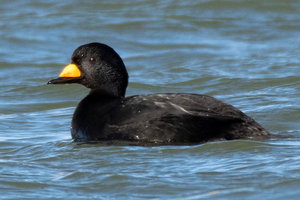
All-black duck....... Read more