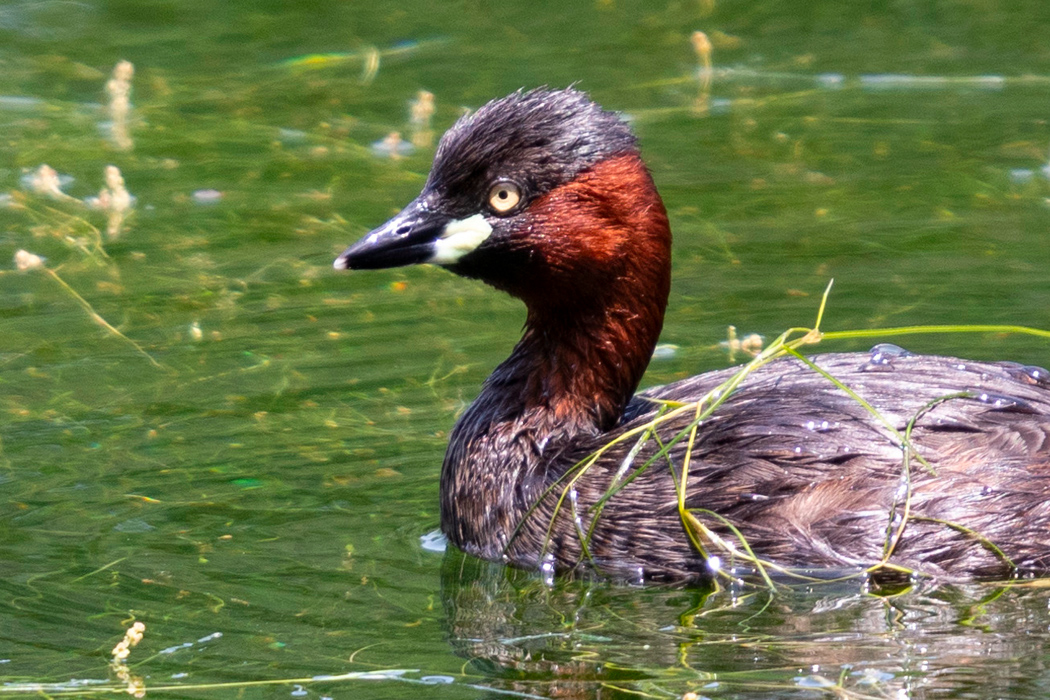
Little Grebe
Raising young in calm waters.
| Scientific name | Tachybaptus ruficollis |
| English name | Little Grebe |
| Japanese name | 鳰 |
| Class | Aves |
| Order | Podicipediformes |
| Family | Podicipedidae |
| Genus | Tachybaptus |
| Species | ruficollis |
| Full length | 26cm |
| Distribution | Resident bird south of Honshu. Wanderer in Tohoku and northward. |
Little Grebe Characteristics and Morphology
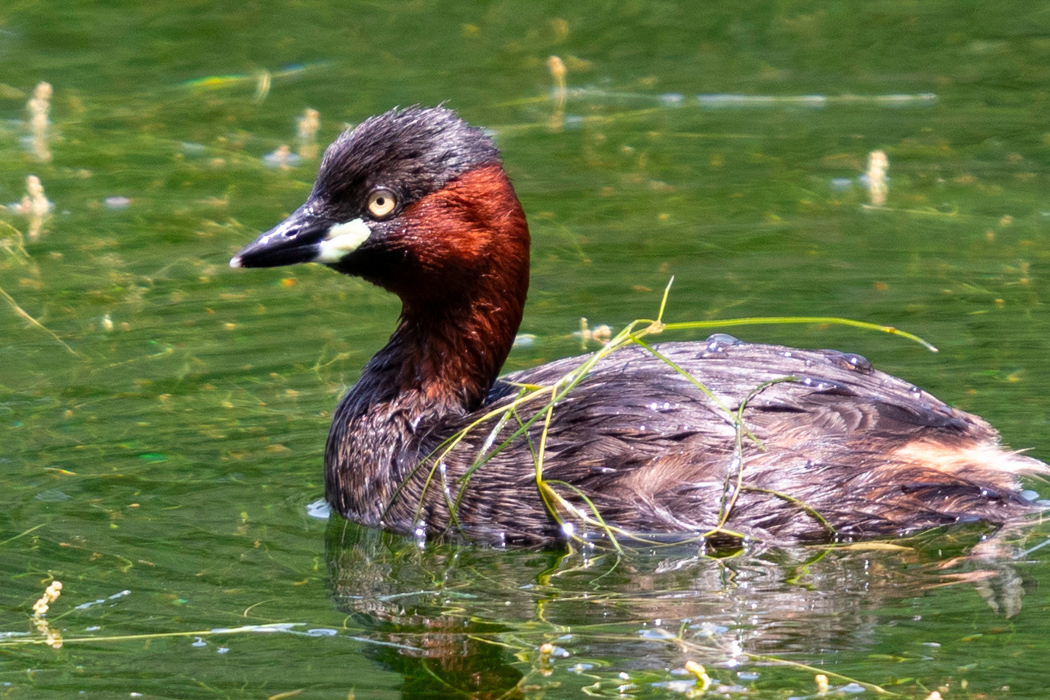
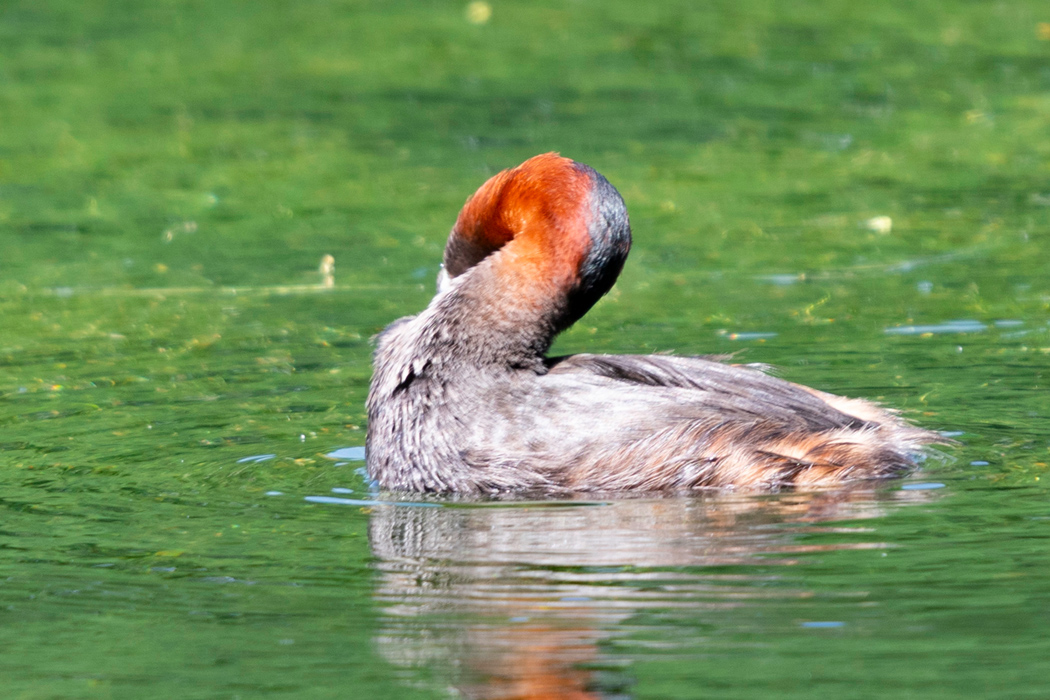
The smallest grebe in Japan. At first glance, it looks like a duck. The entire body is brown, and in winter plumage, the overall color becomes paler. Monomorphic.
Head is dark brown. Bill is black. Iris is yellow. The reddish-brown neck of the summer plumage is striking.
The body has a rounded silhouette. Wings are dark brown.
The tail is extremely short, with almost no tail feathers. The area around the vent is white. The legs are positioned far back on the body.
Similar to ducks, but a different species. The bill is sharper and the body is shorter than that of ducks.
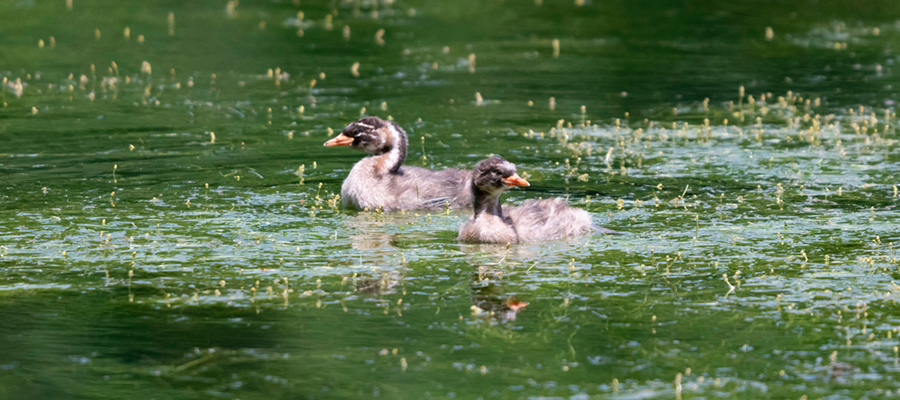
Juvenile
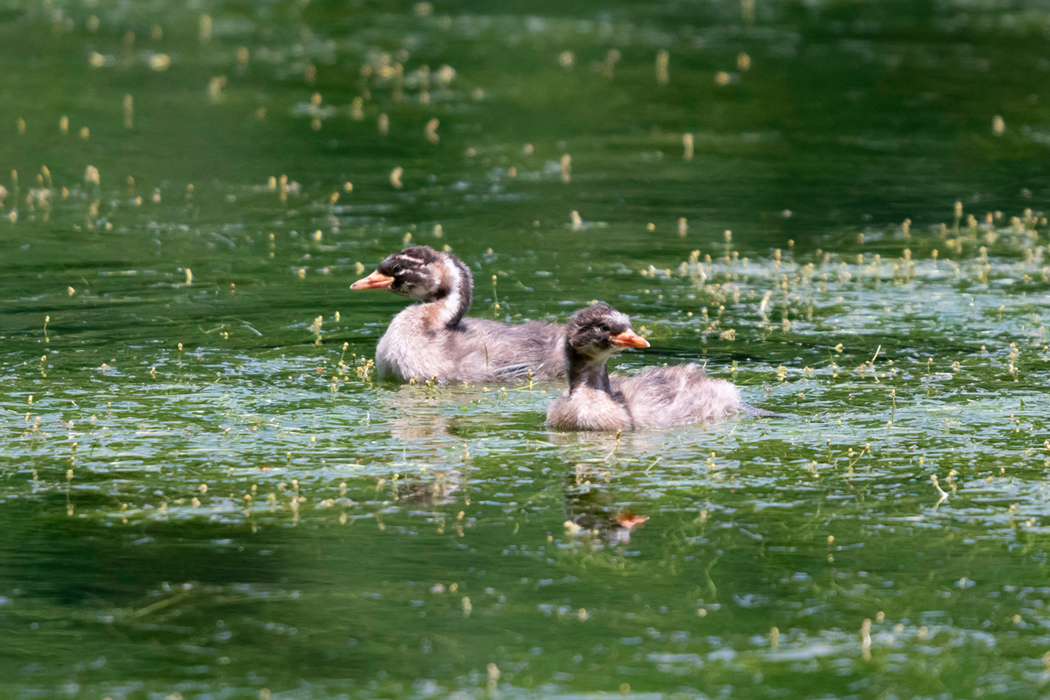
Juveniles are overall pale brown.
White stripes are visible on the neck.
Song
Cries with thin voices like "kyuriri" or "pi."
Little Grebe Ecology
Habitat
Inhabits calm waters such as lakes, ponds, and inner bays.
Food
Small fish, shrimp, and insects found near aquatic plants.
Life Cycle
Breeds in freshwater areas, forming pairs and establishing territories. They build floating nests attached to aquatic plants, stakes, or reed stems. These are known as "Nio no ukisu" (floating nests of the grebe). Eggs are laid from spring to summer. Chicks can swim immediately after hatching and leave the nest in about a week. To protect them from predators or keep them warm, parents sometimes swim with the chicks on their backs. They grow while learning how to catch prey from their parents.
Little Grebe Photos
Little Grebe Photos are introduced.
Tap the photo to open the detail page.

Little Grebe Behavior
Excellent at diving; they submerge into the water, sometimes staying under for more than 15 seconds. They are not good at walking.
Little Grebe Information
Naming
The scientific name "ruficollis" means "red-necked," derived from the vivid neck color of the summer plumage.
There are several theories regarding the origin of the Japanese name "Kaitsuburi," including the phrase "kakitsu muguritsu" (scratching and diving) or likening the body shape to a "kai" (paddle) and "tsuburu" (gourd). In Kanji, it is written with the Japanese-made character "鳰" (bird that enters water) and was traditionally called "Nihodori." Since Lake Biwa in Shiga Prefecture has been home to many grebes since ancient times, the lake has the alias "Nio-no-umi" (Sea of Grebes).
Little Grebe Found Locations
Inokashira Park
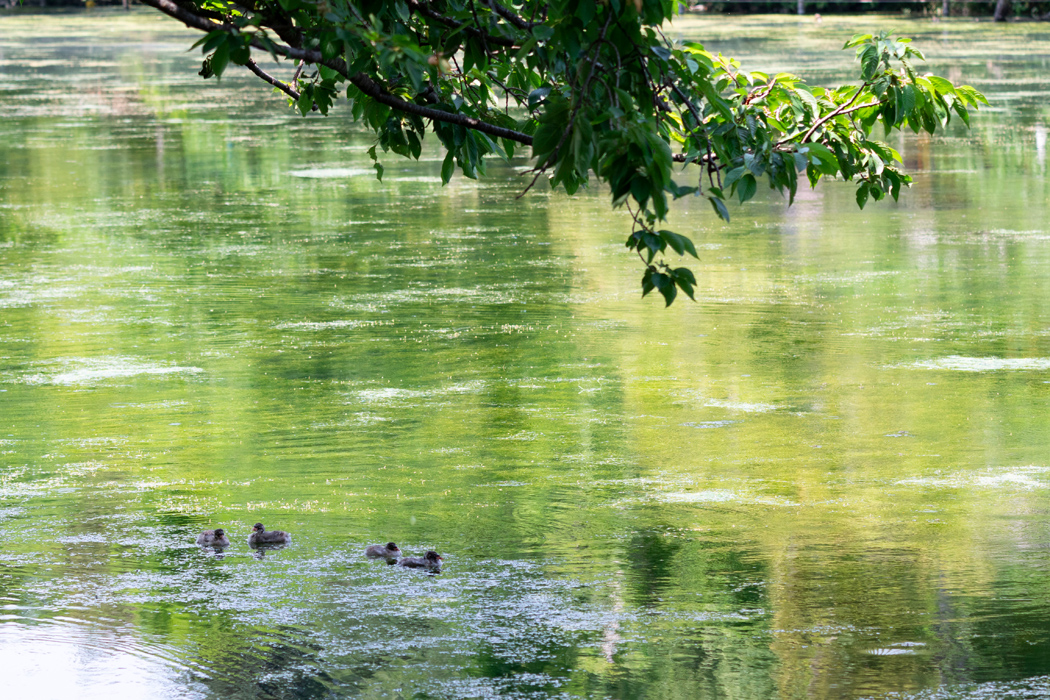
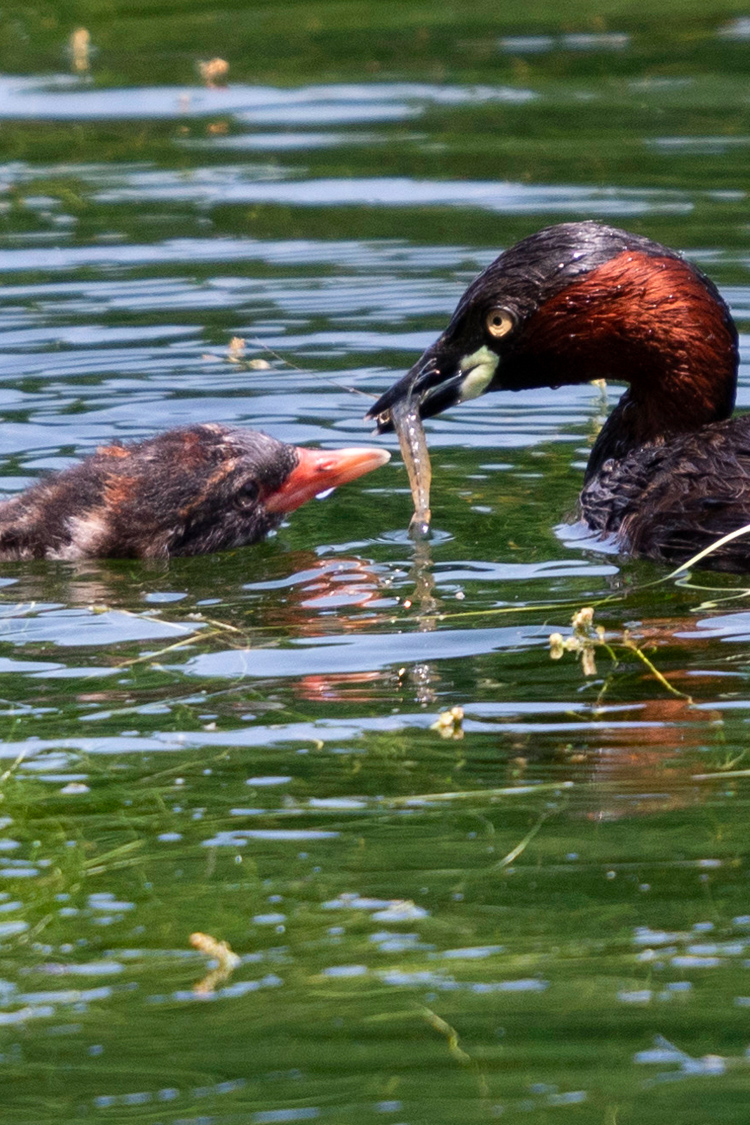
I discovered Little Grebes raising their young at Inokashira Park in Mitaka City, Tokyo. The parent bird was feeding river shrimp to five chicks in turn. After catching prey by diving, the parent would call the chicks with a "pi-pi" sound and pass the food mouth-to-mouth. The chicks seemed to know their turn and waited quietly when it wasn't their time to eat.
Yudono River
Little Grebes have settled in the Yudono River in Hachioji City. They are often seen acting alone.
Little Grebe Video
Little Grebe is introduced by video.
Huddled in a ball on the cold Yudono River.
Picture book
Navy body with white tail fin....... Read more
Swoop to catch prey....... Read more
White from the face to the chest....... Read more
Wrapping its body in seaweed....... Read more
From the forehead like a long nose in Japanese....... Read more
Insect-eaten patterns blending in with the trees....... Read more