Daurian Redstart
A call that sounds like striking flintstones together.
| Scientific name | Phoenicurus auroreu |
| English name | Daurian Redstart |
| Japanese name | 尉鶲 |
| Class | Aves |
| Order | Passeriformes |
| Family | Muscicapidae |
| Genus | Phoenicurus |
| Species | auroreu |
| Full length | 14cm |
| Distribution | Arrives throughout Japan as a winter visitor. |
Daurian Redstart Characteristics and Morphology
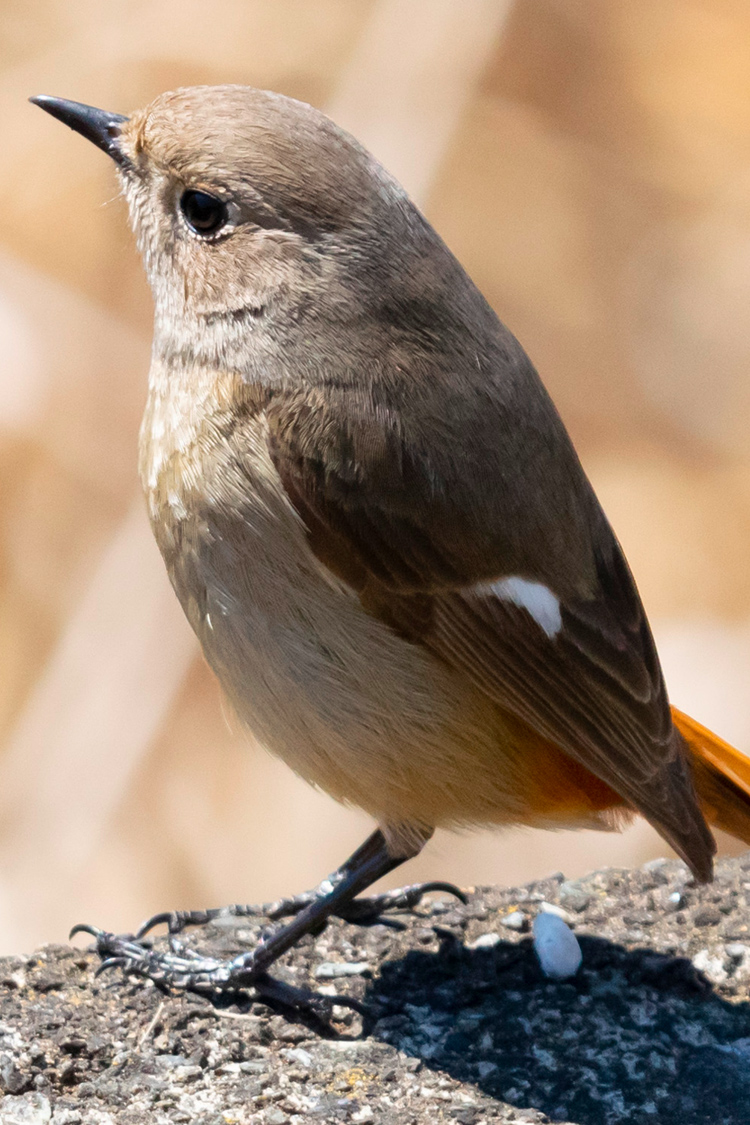
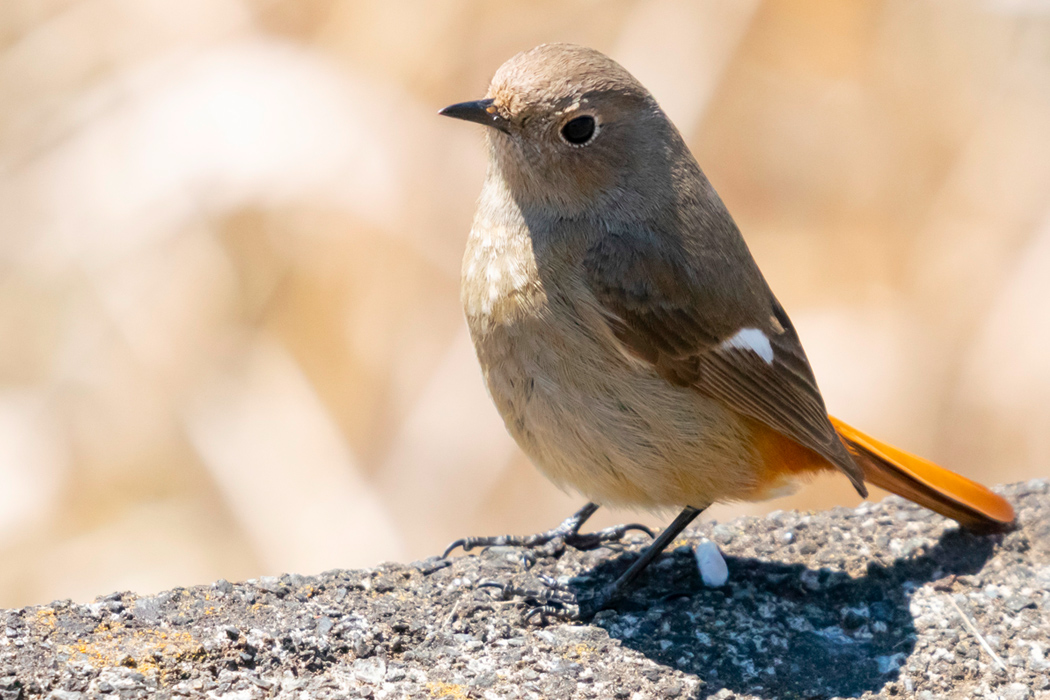
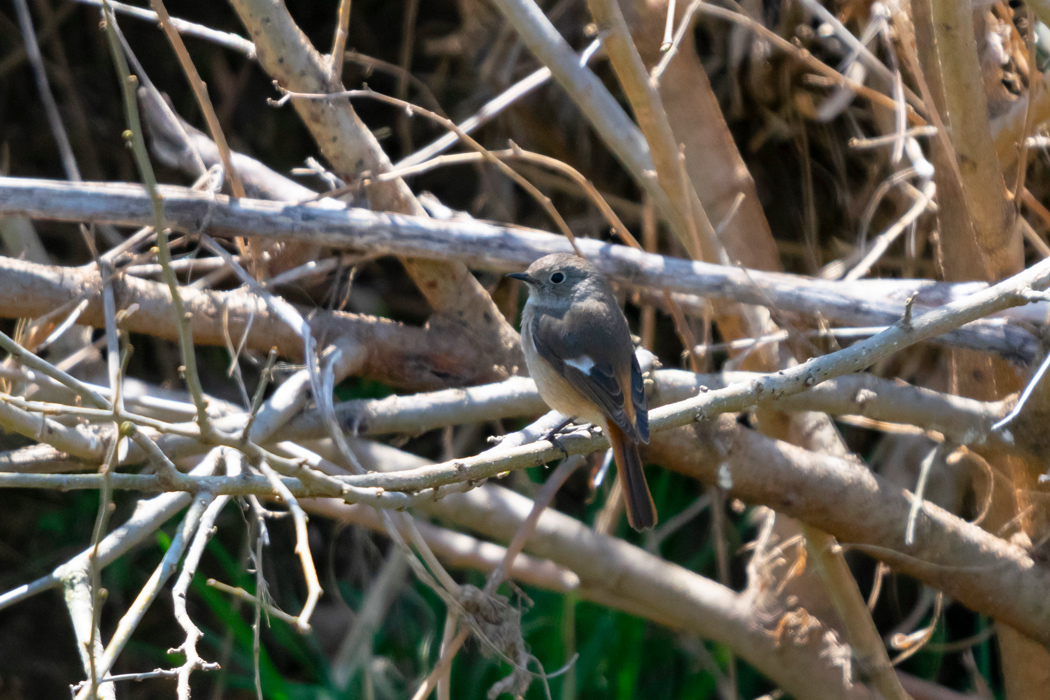
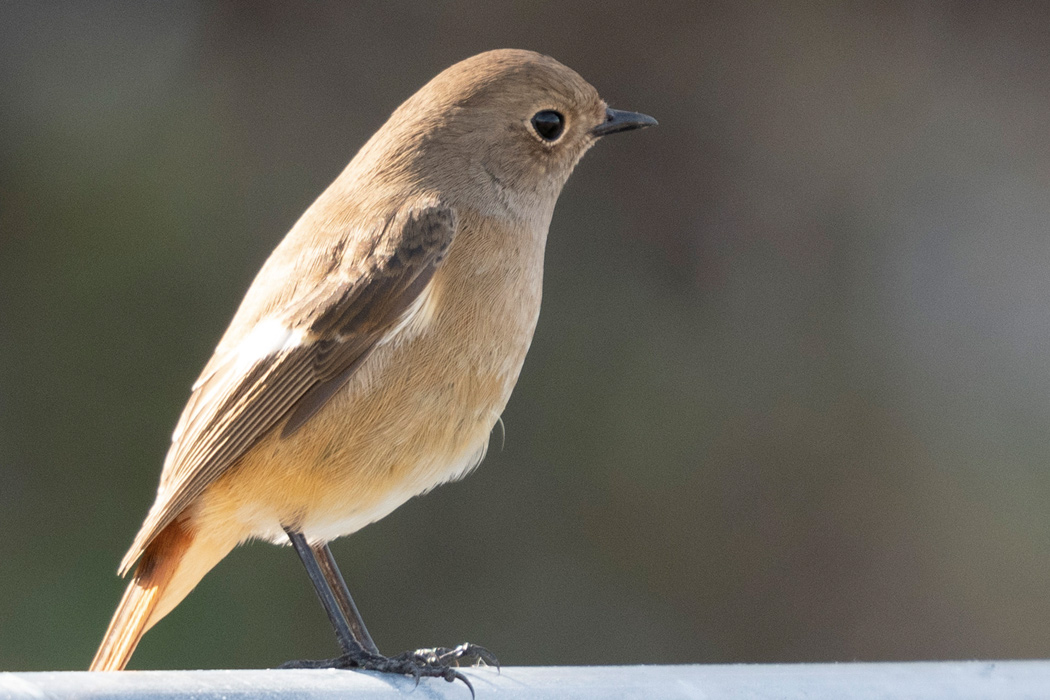
Sparrow-sized with a rounded belly. Generally brownish in color.
The bill is lead-colored and short; the iris is black.
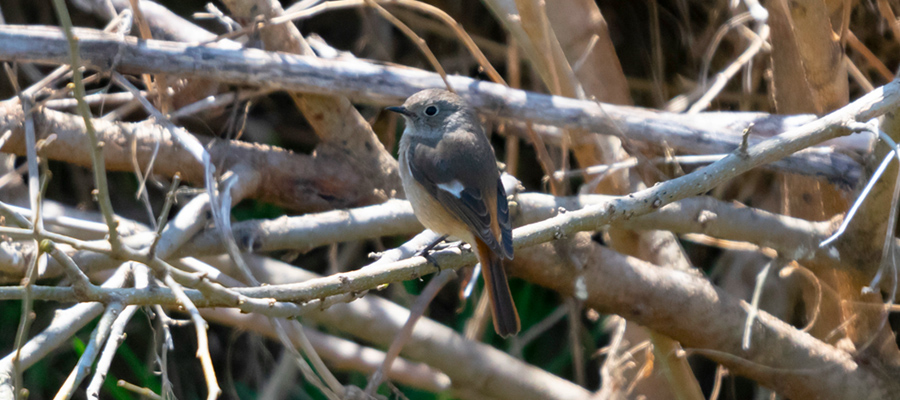
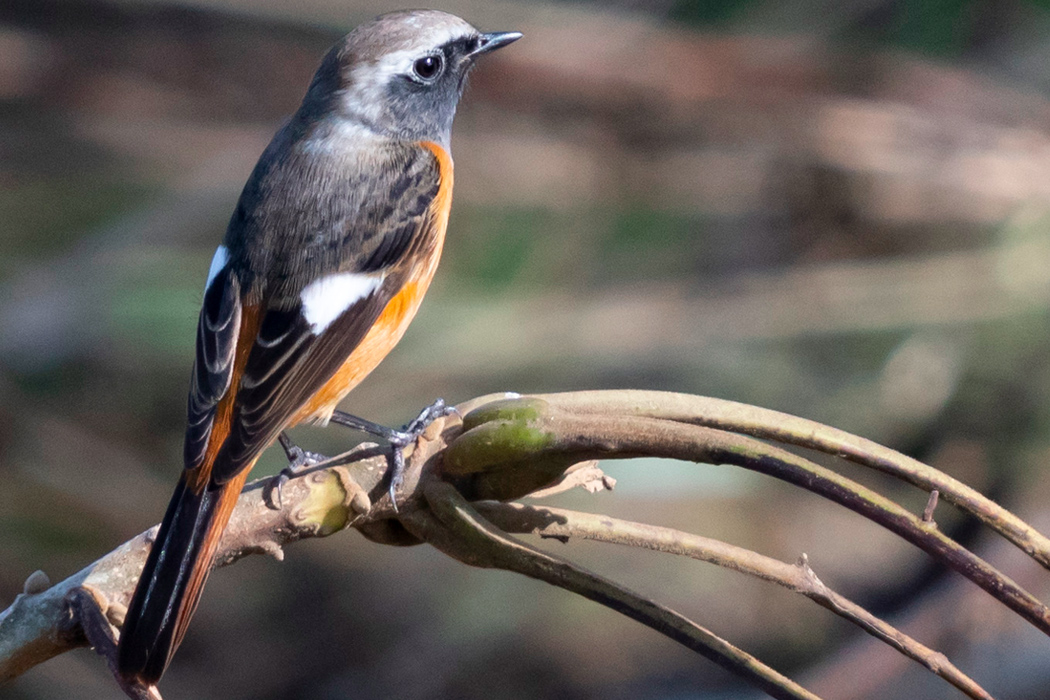
The tail feathers are slender and somewhat long. When perched on branches, the tip of the tail points downward. The legs are lead-colored.
Male
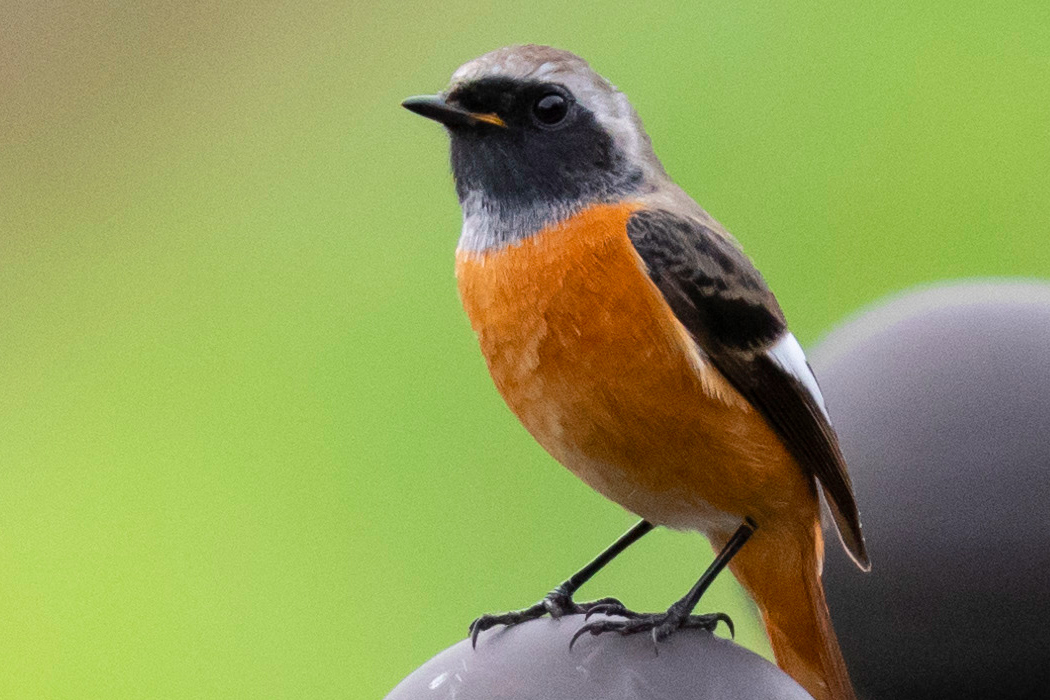
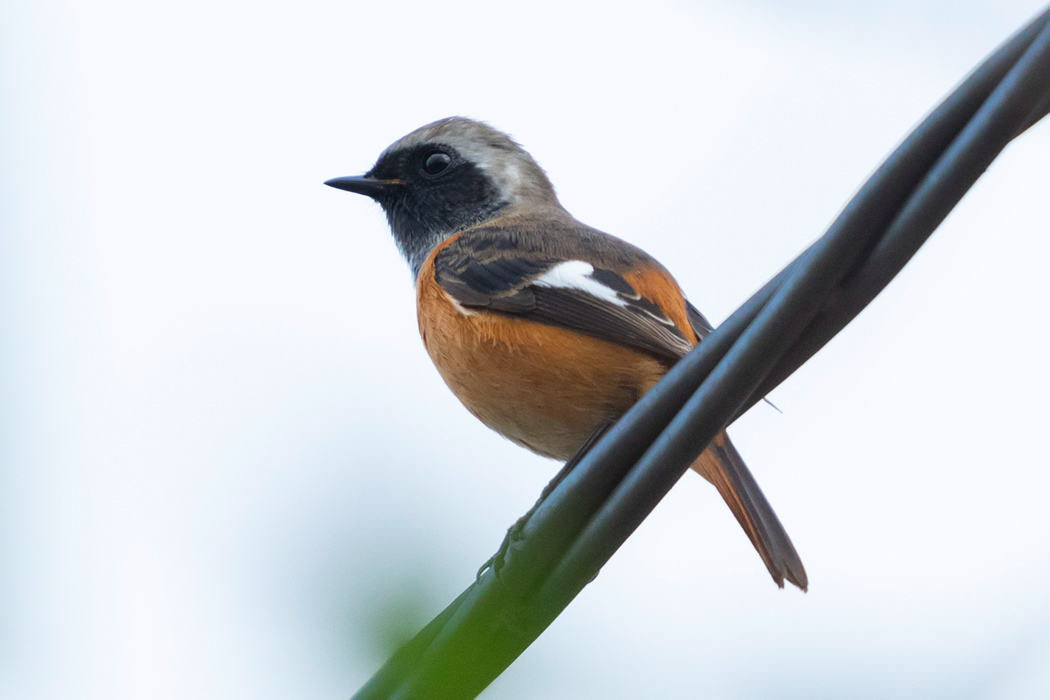
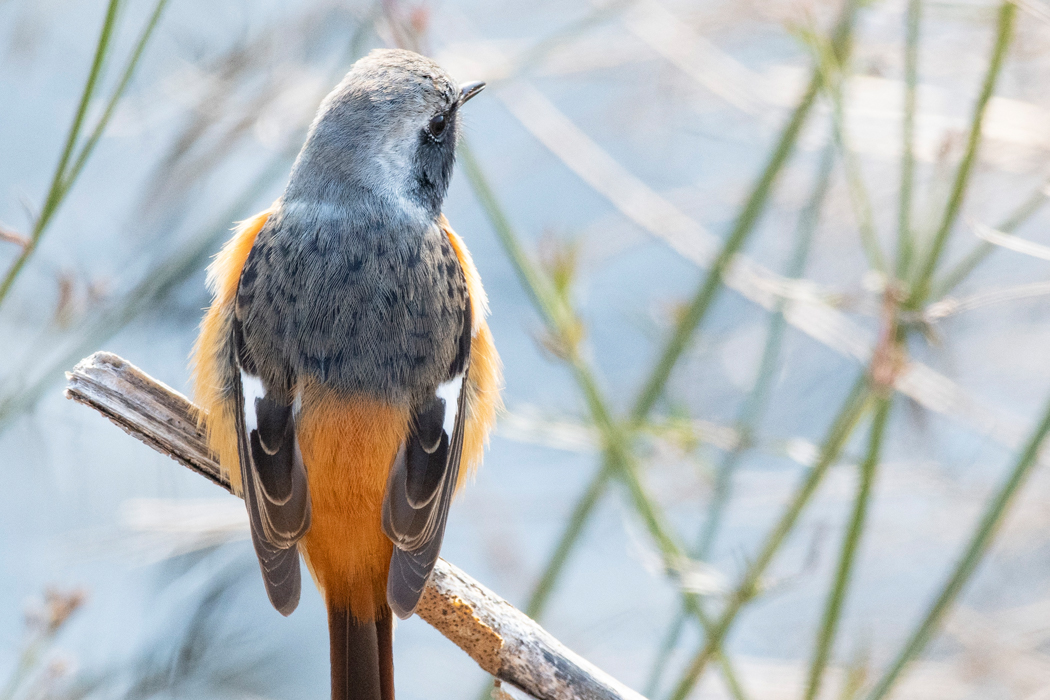
The colors differ between the dorsal and ventral sides, with an overall flashier appearance than the female.
Covered in white to silvery feathers from the crown to the back. The area from below the eyes to the throat is pitch black. There is a thin line of white feathers at the border with the belly.
The wings are generally blackish-brown with a distinctive white wing patch. The area from the middle of the back to the base of the tail is the same bright brown as the belly. The belly is bright brown to orange, giving a more saturated impression than the female.
Somewhat similar to the Varied Tit, but can be distinguished by the color placement on the head. The Daurian Redstart has a "white/silver top, black bottom" head, while the Varied Tit has a "black top, pale brown bottom (cheeks)."
Female
Generally pale brown, the color of dry soil or sand.
The head is pale brown, and females have a noticeable white eye ring around the eyes.
The belly is a faded brown similar to the head, but the base of the tail is a slightly brighter brown.
Juvenile
Mottled pattern of brown and pale brown.
The base of the tail is a more vivid orange than other parts.
Song
Makes calls like "hi, ki" or "ka, ka." Because this sound resembles striking flintstones together, it is called "Hitaki" (Fire-striker).
Daurian Redstart Ecology
Habitat
Inhabits open forests in plains and low mountains; also seen in urban parks. Spends the non-breeding season in Japan.
Food
Eats insects and spiders on trees or on the ground.
Daurian Redstart Photos
Daurian Redstart Photos are introduced.
Tap the photo to open the detail page.



Daurian Redstart Behavior
Territory
Males and females each hold their own territories and act solitarily. They have a habit of excluding other Daurian Redstarts or different bird species that enter their territory. The author has often been "interrupted" by a Daurian Redstart while waiting for a Wryneck to appear.
Distance from Humans
Frequently seen in urban areas, giving the impression that they are not very wary. They may descend to garden fences or concrete ground, and with luck, can be observed from a distance of just a few meters.
Daurian Redstart Information
Naming
The scientific name "auroreus" is derived from "Aurora," the goddess of dawn in Roman mythology, because the vivid color of the belly was reminiscent of the morning sky. The English name "Daurian Redstart" comes from its habitat in the Dauria region east of Lake Baikal in Russia. The "Jo" (尉) in the Japanese name refers to a "silver-haired old man" in Noh theater, originating from the silver crown of the male.
Daurian Redstart Found Locations
Yudono River, Hachioji City
Encountered along the Yudono River.
The entire area seemed to be its territory, as it flew from tree to tree. It appeared to have favorite branches, flying around within a territory of about 10 meters and returning to the same branch. I was able to observe it closely while it sat still on the riverbank.
Daurian Redstart Video
Daurian Redstart is introduced by video.
Found along the Yudono River.