
Oriental Greenfinch
Perching in clusters on branches like bells.
| Scientific name | Carduelis sinica |
| English name | Oriental Greenfinch |
| Japanese name | 河原鶸 |
| Class | Aves |
| Order | Passeriformes |
| Family | Fringillidae |
| Genus | Carduelis |
| Species | sinica |
| Full length | 15cm |
| Distribution | Throughout Japan, East Asia |
Oriental Greenfinch Characteristics and Morphology
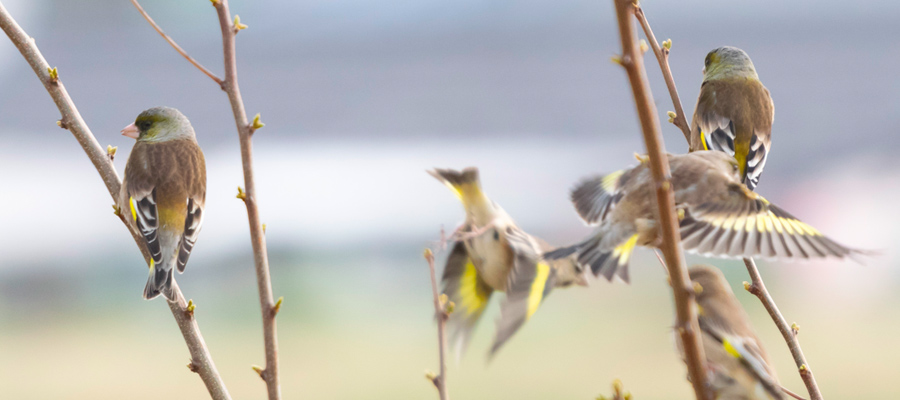
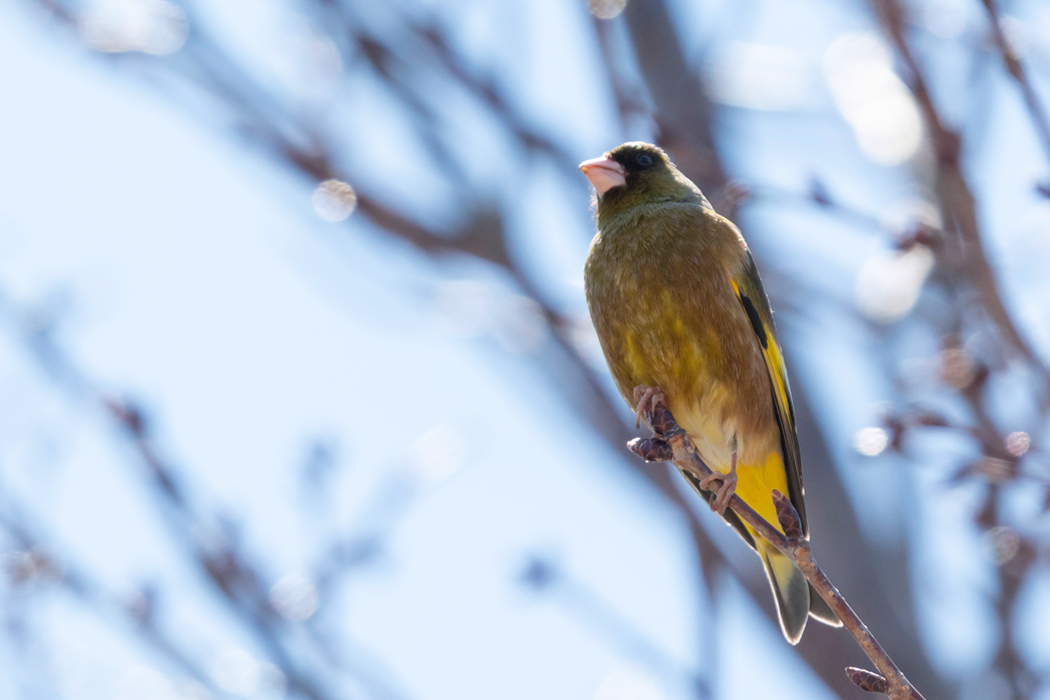
A finch about the size of a sparrow. The body is brownish with a yellowish-green tint.
The beak, with its pink base, is thick and looks powerful.
The back is brown, and the wings have yellow patches. The primary feathers are black.
The tail is notched and black in color. The legs are flesh-colored.
Male
Males have more vivid coloration compared to females.
The face color is a yellowish-green brown, with darker coloration around the eyes.
The belly is also darkly colored, in a brown with hints of yellowish-green.
Female
Females are closer to gray and have more subdued colors compared to males.
The area around the face is brown with a high proportion of gray.
The belly color is paler than that of the male.
Song
Chirps with a "kyuru-kyuru" or "kiri-kiri" sound. The pattern is similar to the Japanese White-eye, but the voice is a bit louder.
Oriental Greenfinch Ecology
Habitat
As the Japanese name "Kawarahiwa" suggests, it mainly inhabits dry riverbeds, but is also seen in parks and low-altitude forests.
Food
Feeds on plant seeds.
Life Cycle
They maintain a certain territory during the breeding season.
Oriental Greenfinch Photos
Oriental Greenfinch Photos are introduced.
Tap the photo to open the detail page.

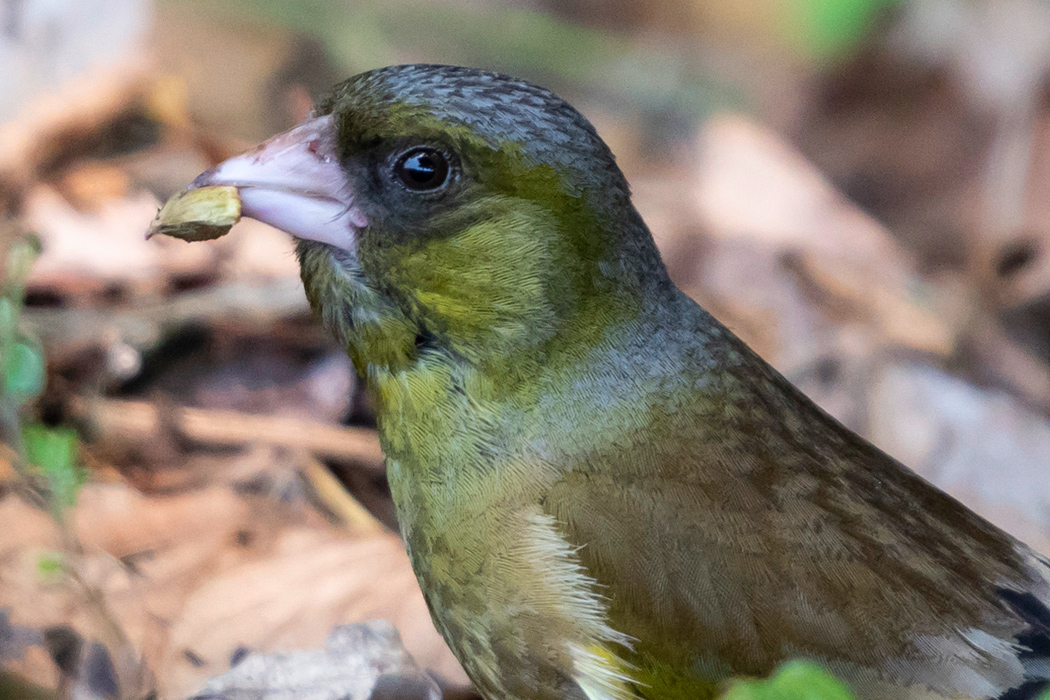
Oriental Greenfinch Behavior
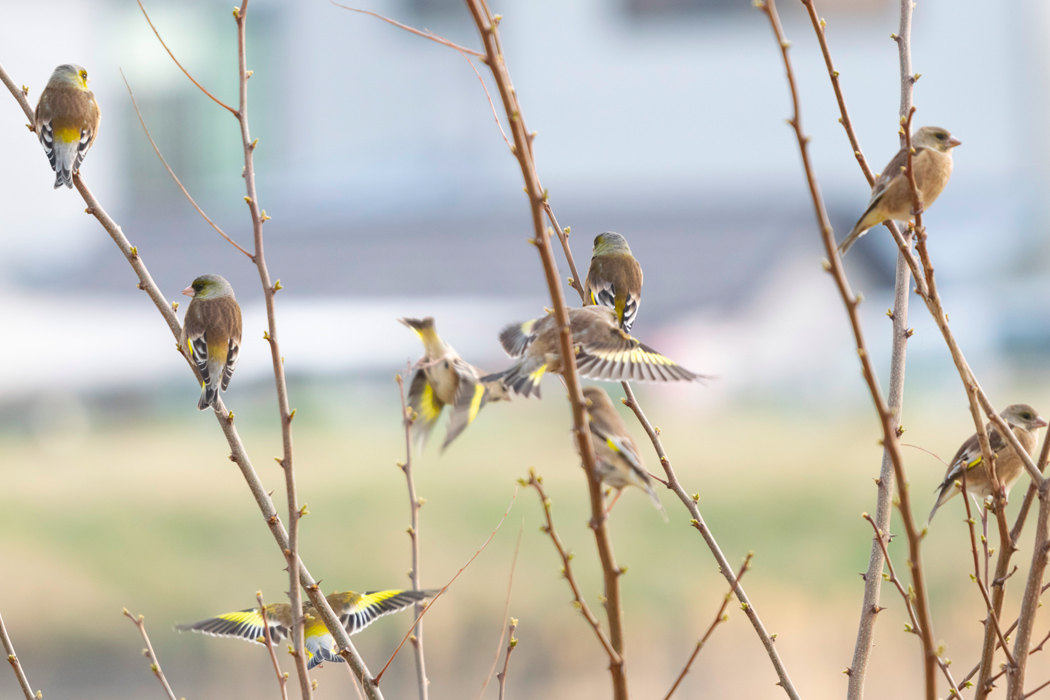
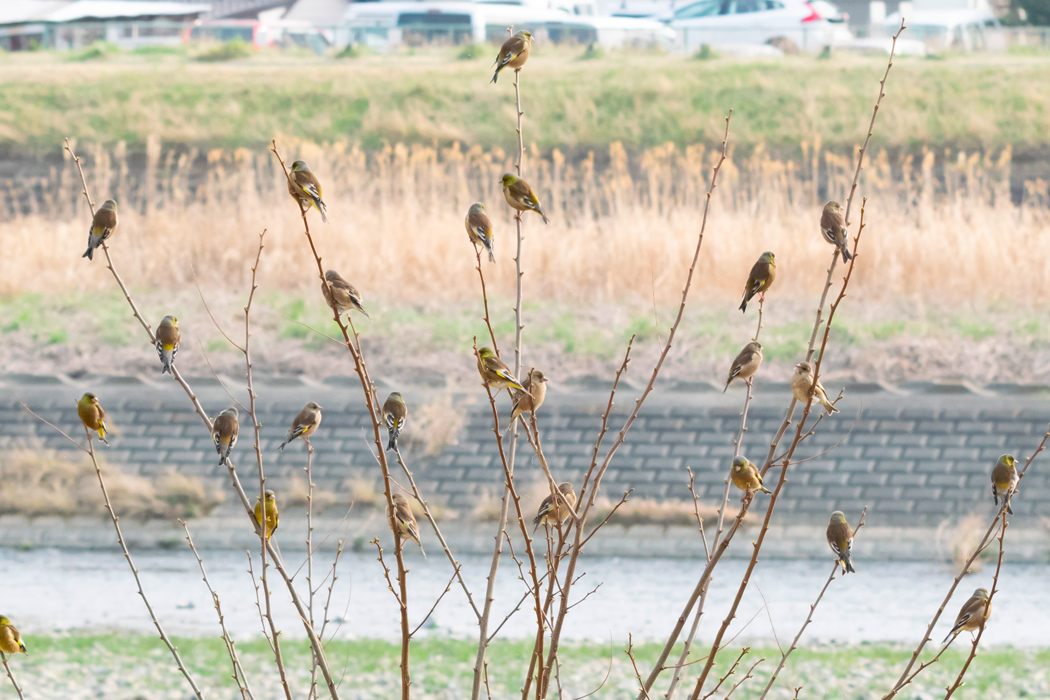
They form flocks and perch on branches in dense clusters. When they fly off, they depart while chirping with a "kyoro-kyoro" sound. They live near human settlements, and it is not uncommon to see them descending to the ground or staying in locations with a clear view.
Oriental Greenfinch Information
Naming
The scientific name "sinica" means "of China," referring to the region where this species lives. The Japanese name is thought to originate from its habitat, the "Kawara" (dry riverbed).
Oriental Greenfinch Found Locations
Along the Asa River, Hachioji City
I discovered a flock along the Asa River in Hachioji City. While strolling along the river, whenever I hear a "kiriri" chirp like a White-eye, it is usually a Grey-capped Greenfinch. They are often in reed thickets, but sometimes about 20 birds perch together in a single tree like a cluster of bells.
Oriental Greenfinch Observation Log
These are the observation logs where we found Oriental Greenfinch.
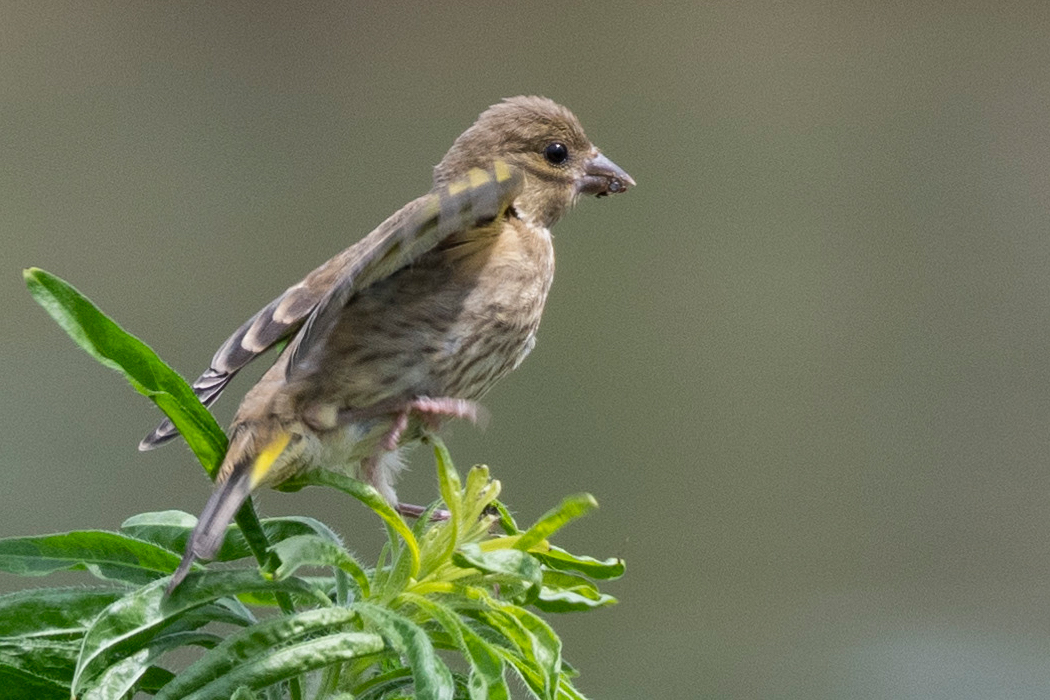
I also saw several flocks of Oriental Greenfinches.
Read more >
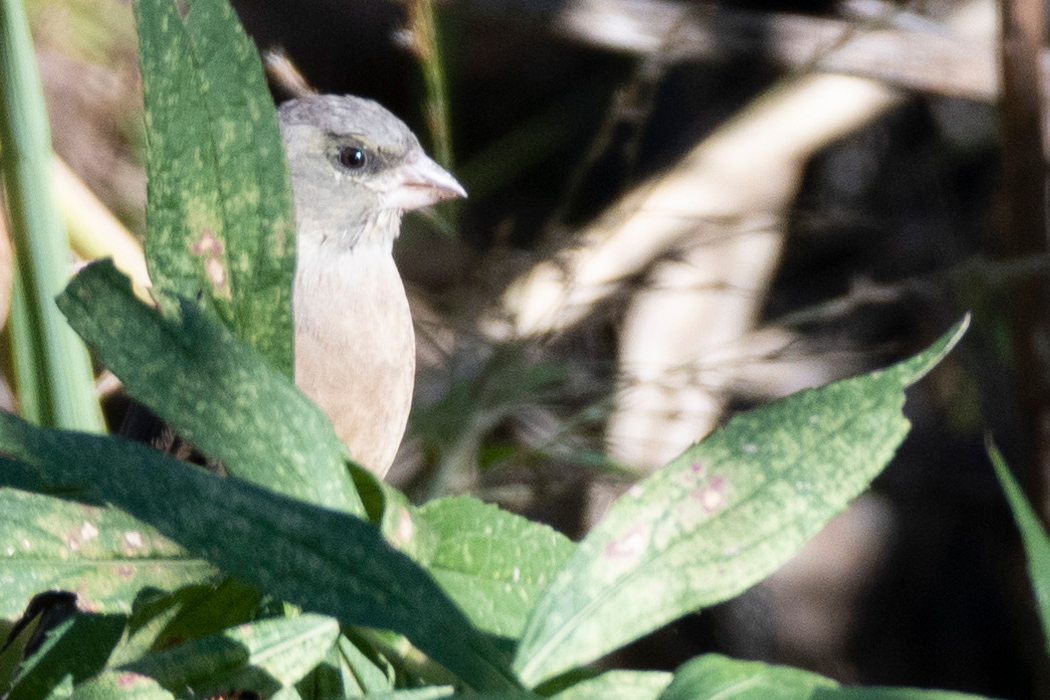
There were many Eurasian siskins in the grassy areas of the riverbed.
Read more >
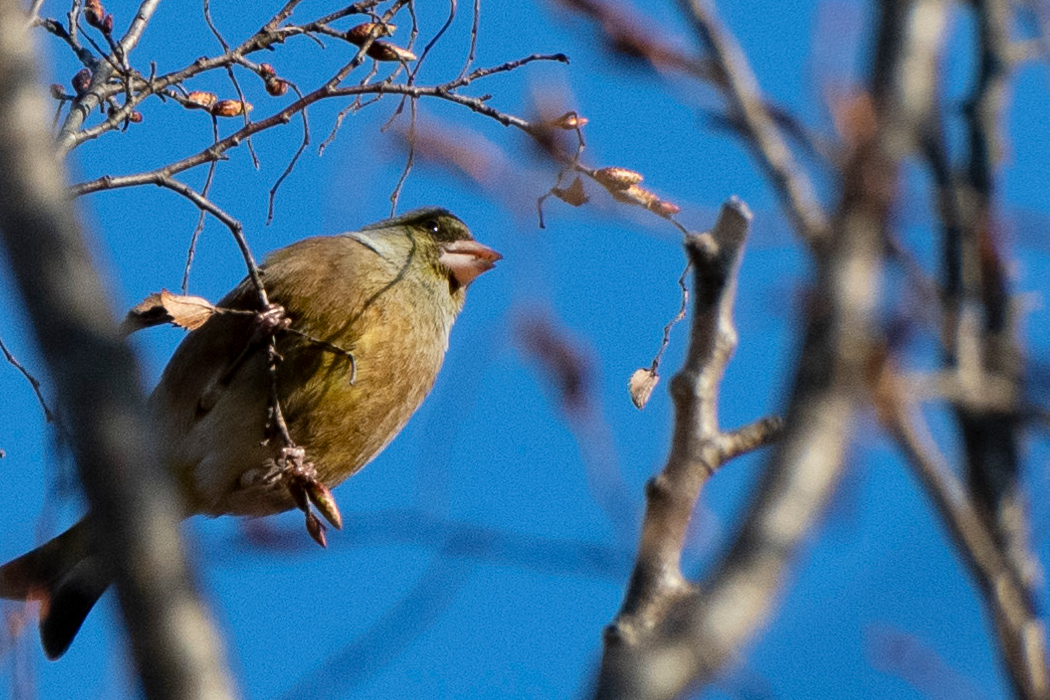
There were Oriental Greenfinches in the upper plaza. Two years ago, Hawfinches used to come here often.
Read more >
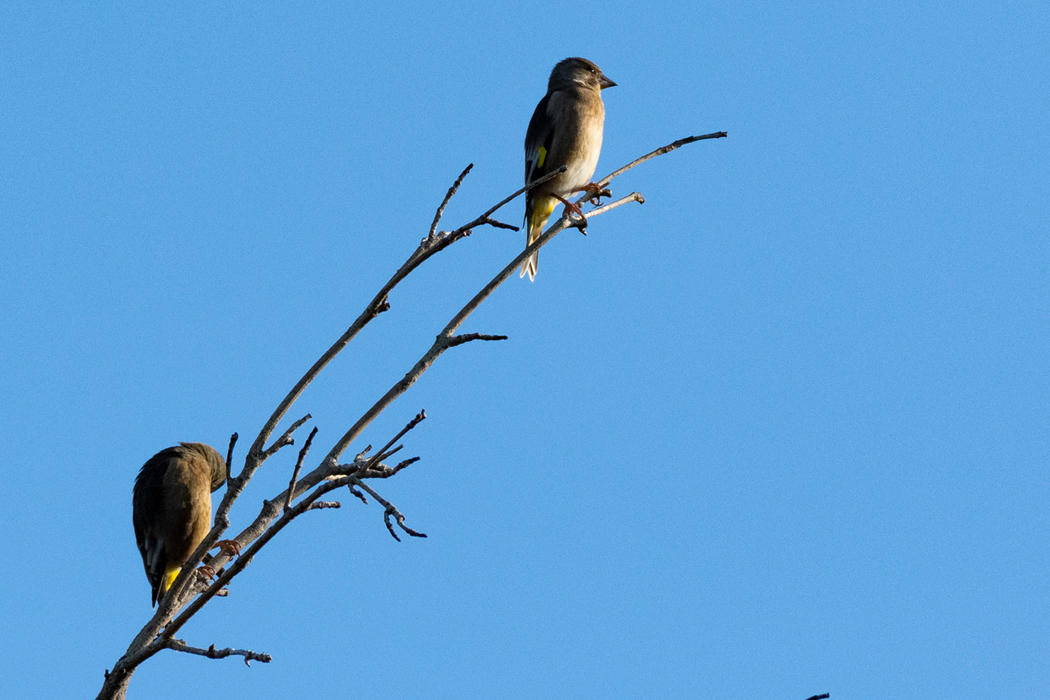
Oriental Greenfinches were gathered on a branch.
Read more >
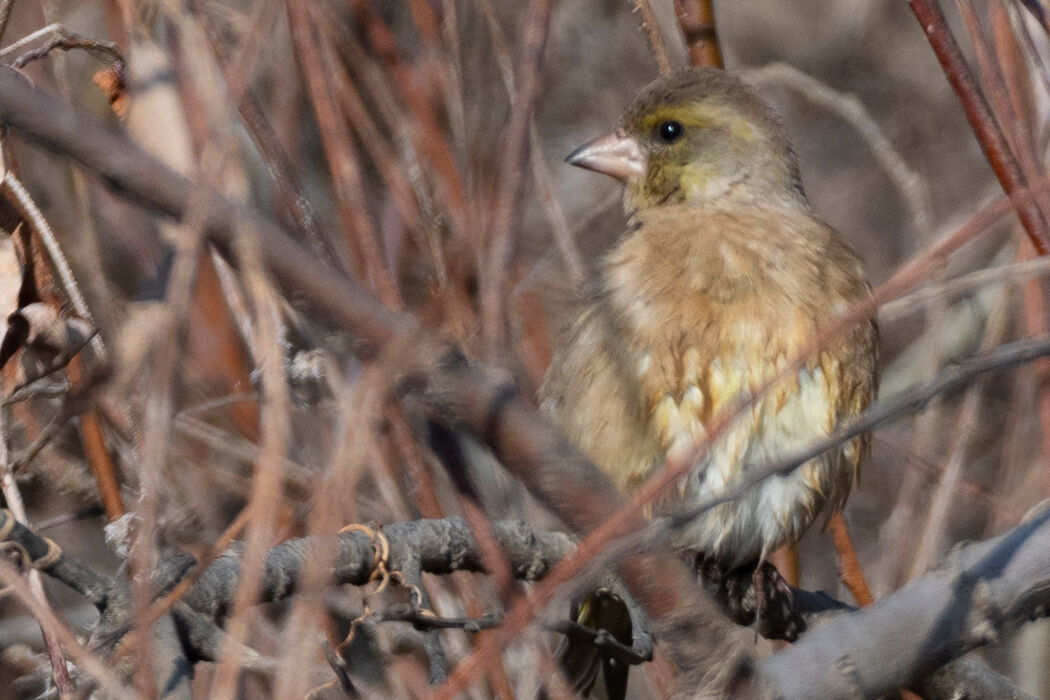
Oriental Greenfinches were clustered near the water. There was also a Brown-headed Thrush, but I couldn't photograph it.
Read more >

Picture book
Catch crabs on the shore....... Read more

Flashy crimson body color....... Read more
Swimming in small groups near the bottom of the water....... Read more
One of the three beautiful Lazuline songbirds....... Read more
The larva is an antlion. Its translucent wings are beautiful....... Read more
A forest-dwelling bovine with short horns....... Read more