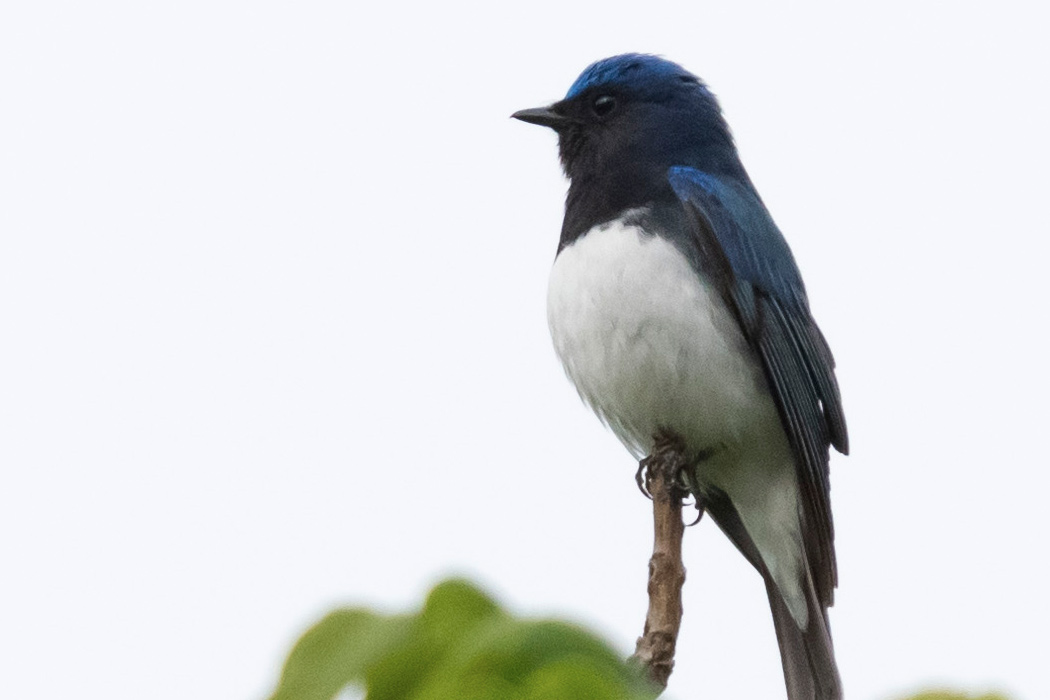
Blue-and-White Flycatcher
One of the three beautiful Lazuline songbirds.
| Scientific name | Cyanoptila cyanomelana |
| English name | Blue-and-White Flycatcher |
| Japanese name | 大瑠璃 |
| Class | Aves |
| Order | Passeriformes |
| Family | Muscicapidae |
| Genus | Cyanoptila |
| Species | cyanomelana |
| Full length | 16cm |
| Distribution | Distributed in East Asia, including Japan. Winters as far as the Indochinese Peninsula. In Japan, it can be seen in all areas except the Southwest Islands. |
Blue-and-White Flycatcher Characteristics and Morphology
A beautiful blue Muscicapidae bird, about the size of a sparrow. Males and females have different colors.
The iris and beak are black.
The tail feathers are shallowly concave. The legs are lead-colored.
Male
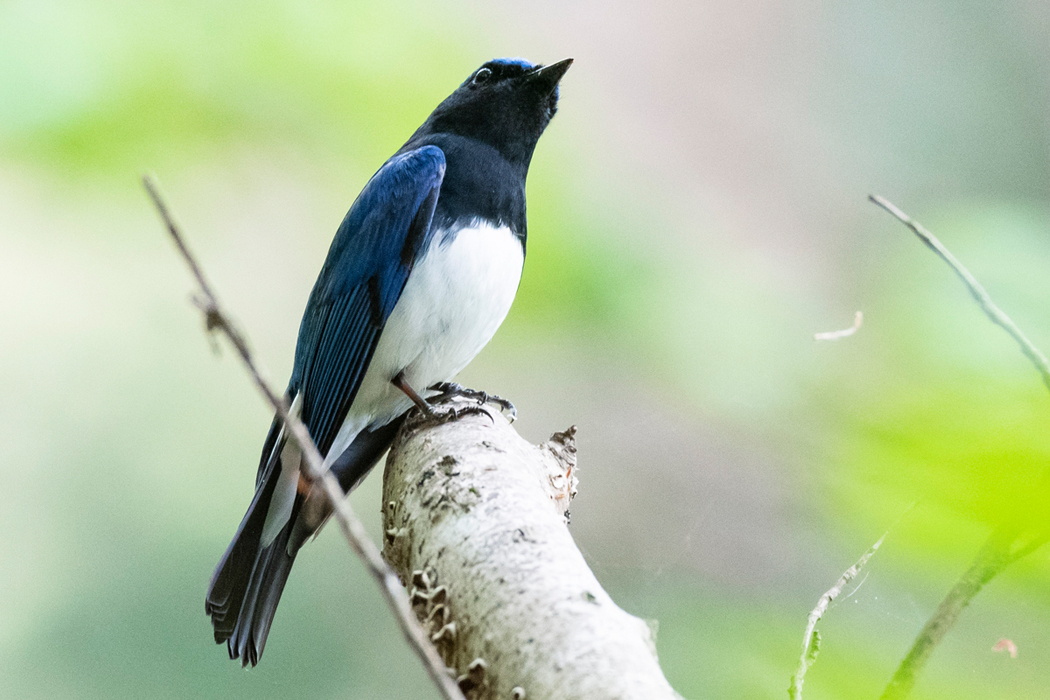
The entire body is blue. It may appear blackish when seen in the forest.
The area from around the eyes to the neck is jet black. The top of the head to the back is a bright blue.
The back towards the tail is a beautiful blue. Some black feathers can be seen here and there. The ventral side is black up to the chest, and white from the chest down.
Female
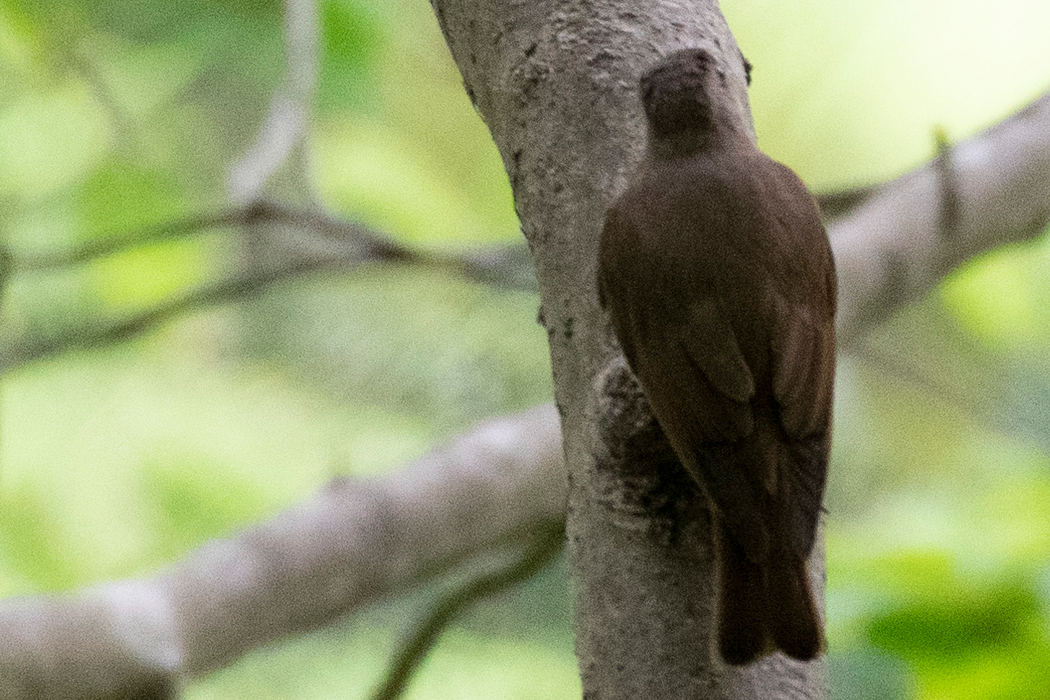
The entire body is a plain brownish color.
The head is a slightly faded brown.
The chest is brown, but becomes whiter towards the abdomen. Unlike the male, it has a gradation.
The tail feathers are a brighter brown than the head.
It closely resembles the female Narcissus Flycatcher, but while the Narcissus Flycatcher has a slight greenish tinge to its brown color, the Blue-and-white Flycatcher is only brown.
Song
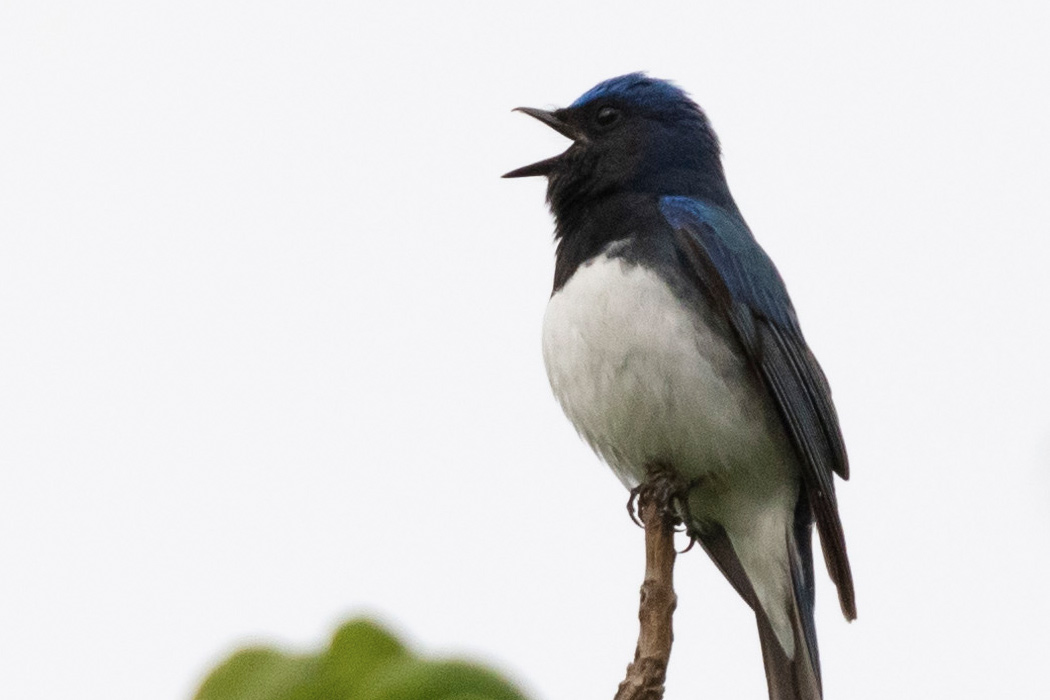
The Blue-and-white Flycatcher is also known as a bird with a beautiful song. It sings from treetops in a loud, clear voice that sounds like "pīrīrī." A "jijji" or "chichi" sound may be added at the end of the song.
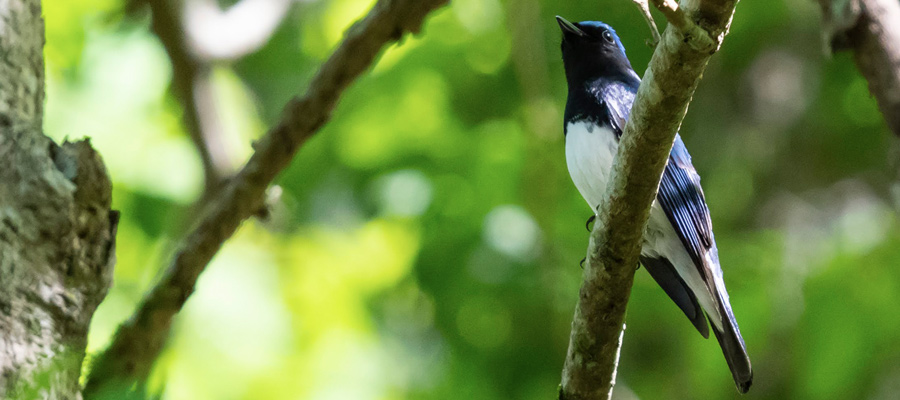
Blue-and-White Flycatcher Ecology
Habitat
Prefers forests along mountain streams in low mountains.
Food
Preys on flying insects.
Life Cycle
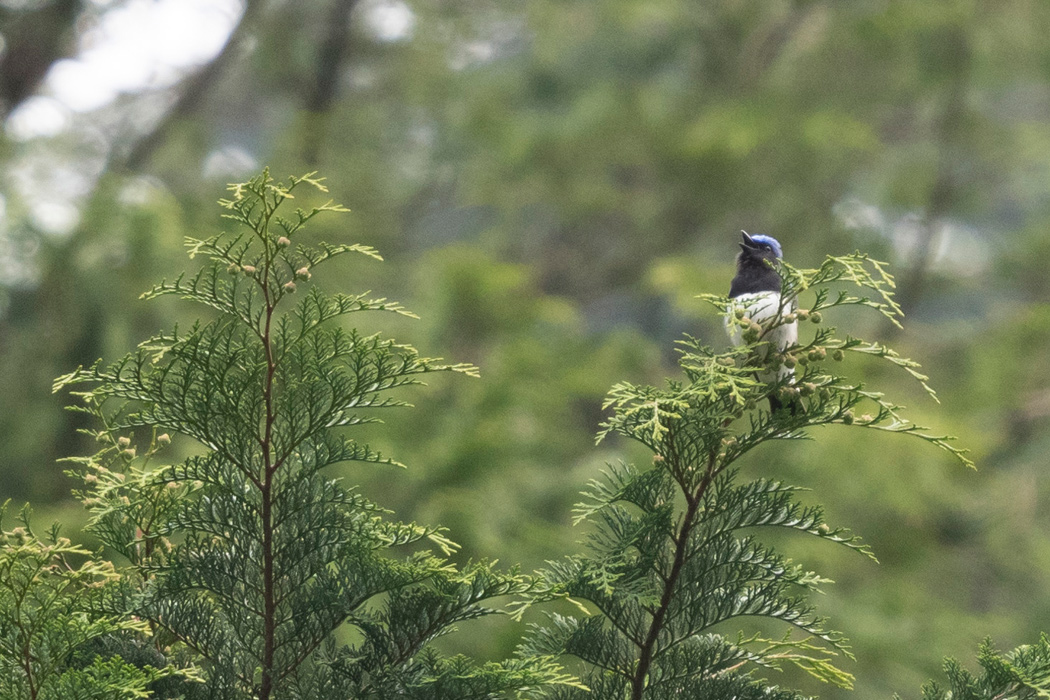
Nests and breeds on rocky cliffs along rivers. During the breeding season, males sing from prominent treetops.
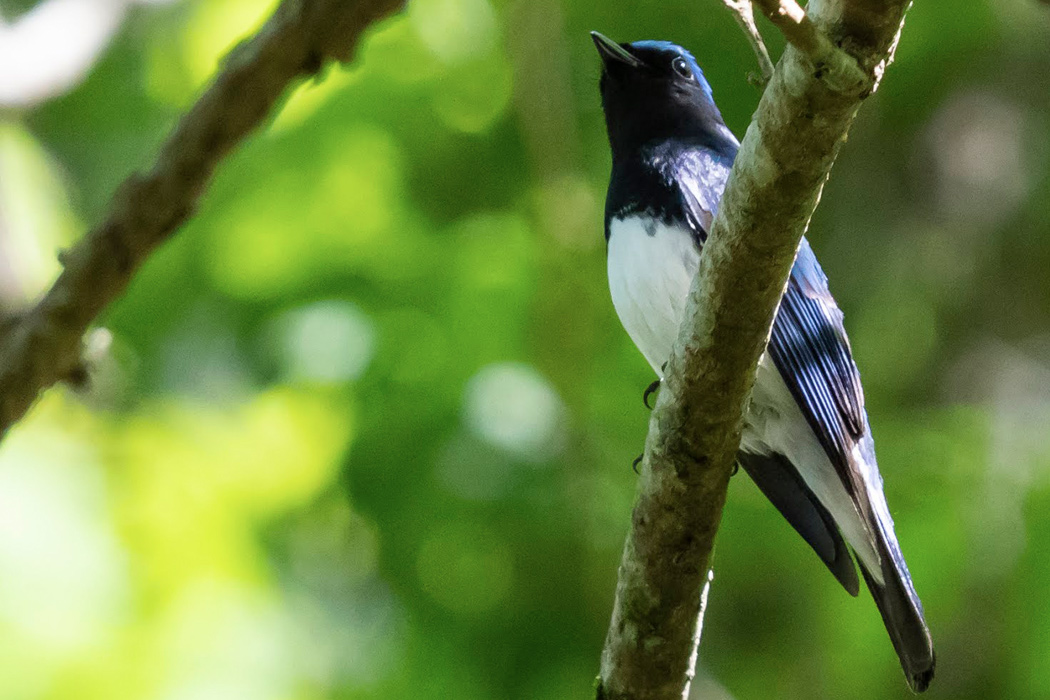
Blue-and-White Flycatcher Photos
Blue-and-White Flycatcher Photos are introduced.
Tap the photo to open the detail page.

Blue-and-White Flycatcher Behavior
When a male is singing, it gives the impression that it will continue to sing without paying much attention to observers as long as they are quiet. They may fight over females, and in such cases, they fight fiercely without paying attention to humans.
Blue-and-White Flycatcher Information
Naming
The scientific name "cyanomelana" means "blue and black" and is derived from the male's bright blue and black colors.
Lazuline Three Birds
Along with the Siberian Blue Robin and the Chestnut-bellied Rock Thrush, it is called one of the three Lazuline birds, and is also counted among the three best songbirds in Japan because of its beautiful song. It is also known as a bird with a beautiful song.
Blue-and-White Flycatcher Found Locations
Mountain forests in Hachiōji
I photographed it singing in a mountain forest in Hachiōji early in the morning. It seems to have a favorite treetop on a slope facing a stream, and it stayed in the same place for a while.
The Blue-and-white Flycatcher has a loud song, so it is easy to tell where it is even from a distance, but it often sings near the treetops, so it is better to find a good observation point. You can observe it slowly if you can find it near a bridge over a mountain stream.
Blue-and-White Flycatcher Observation Log
These are the observation logs where we found Blue-and-White Flycatcher.
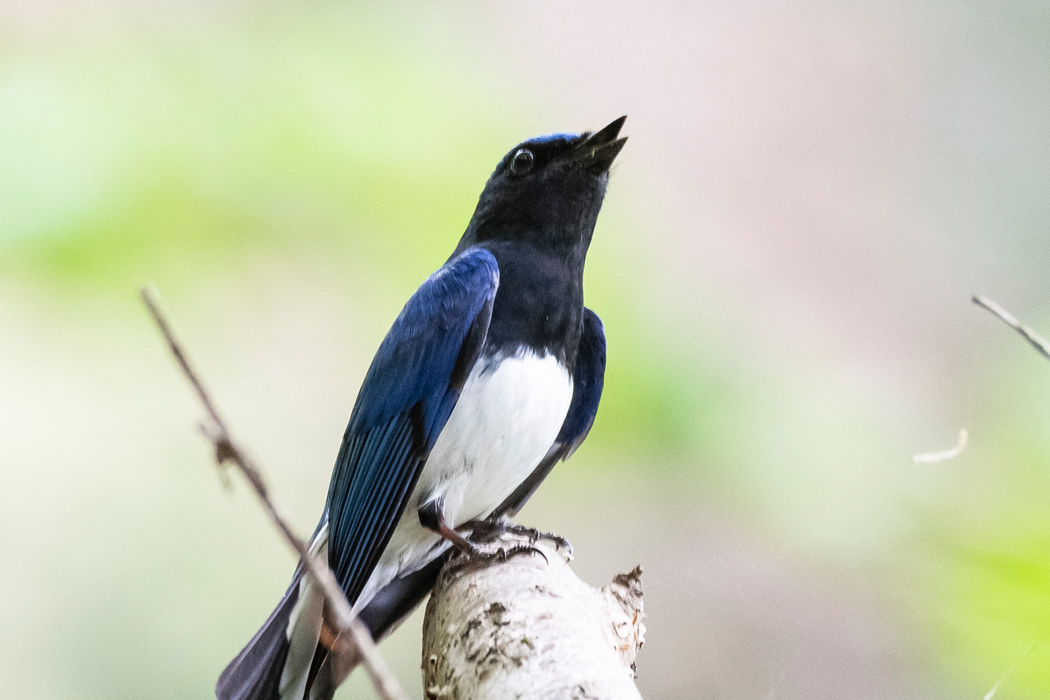
Many blue-and-white flycatchers were singing in the forest below Mt. Imakuma. I also saw males fighting over females.
Read more >
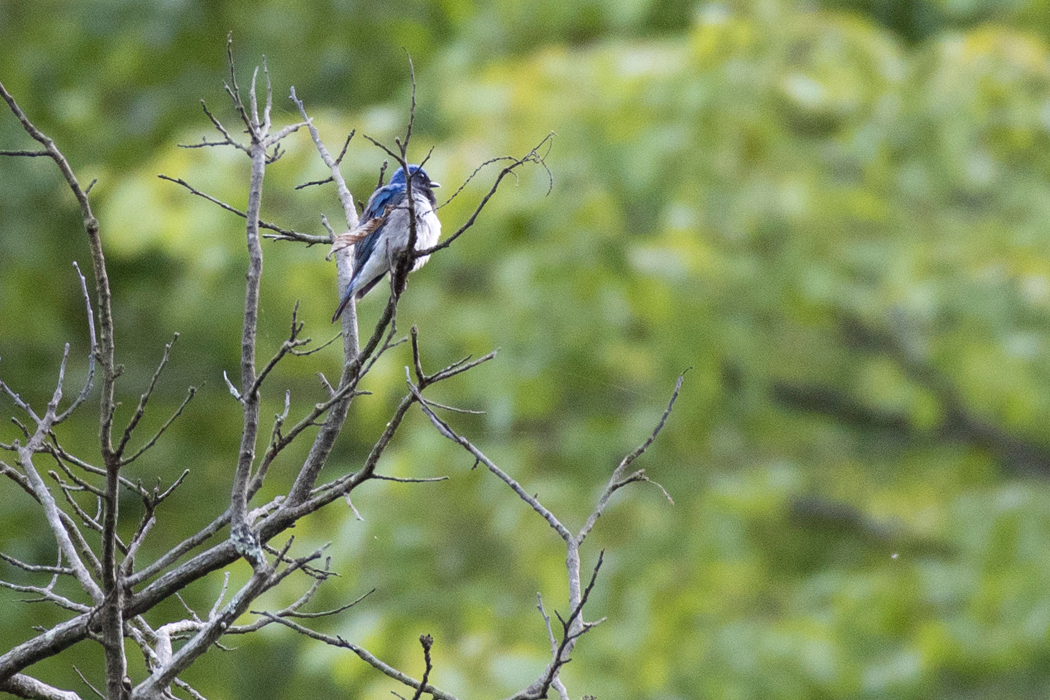
A Blue-and-white Flycatcher was singing in the treetops at the forest entrance. I was able to observe it in a relatively bright spot.
Read more >
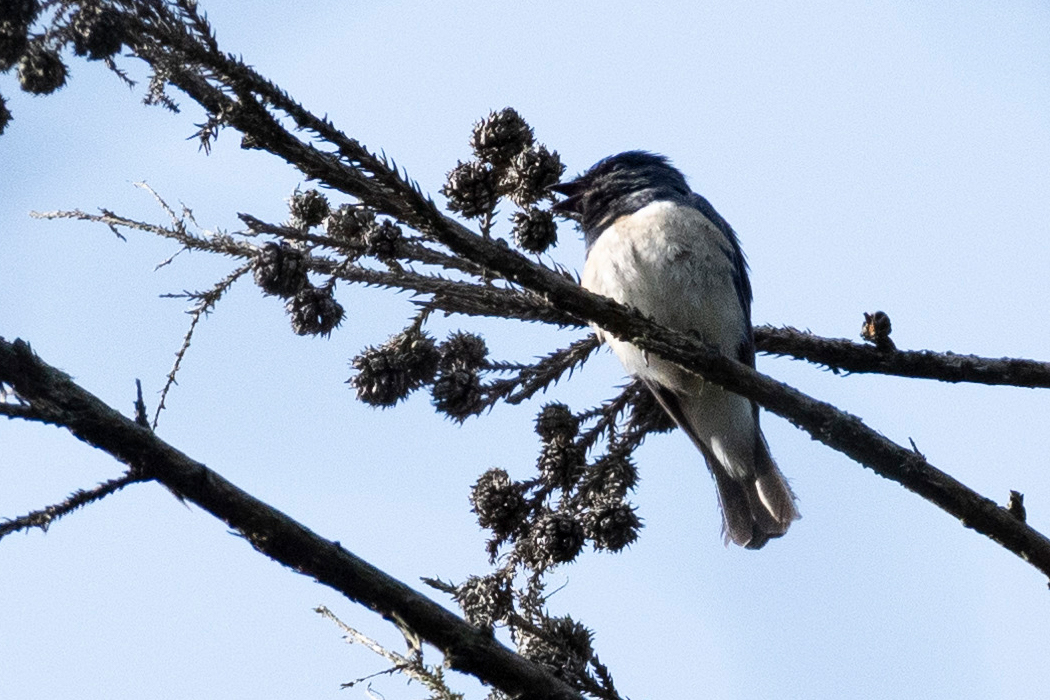
In the middle of the forest, I heard the voice of a Blue-and-white Flycatcher again. A male was in the treetops of a tall tree. It seemed to be a favorite spot, and it sang in the same place for quite a long time.
Read more >
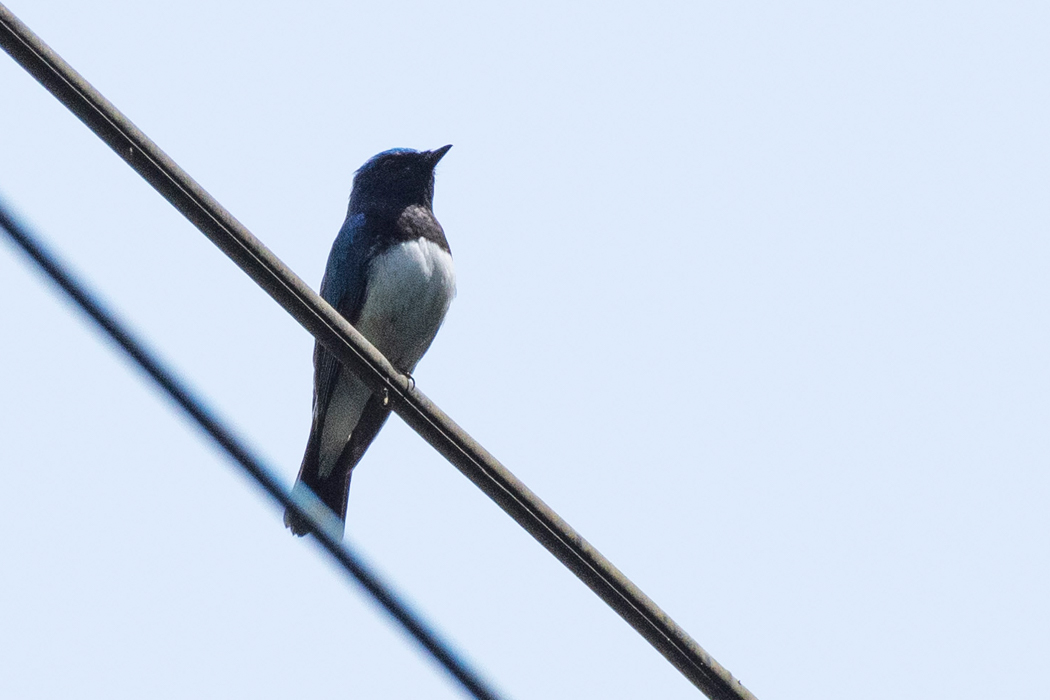
I found another Blue-and-white Flycatcher on the power line along the road leading to the interchange.
Read more >
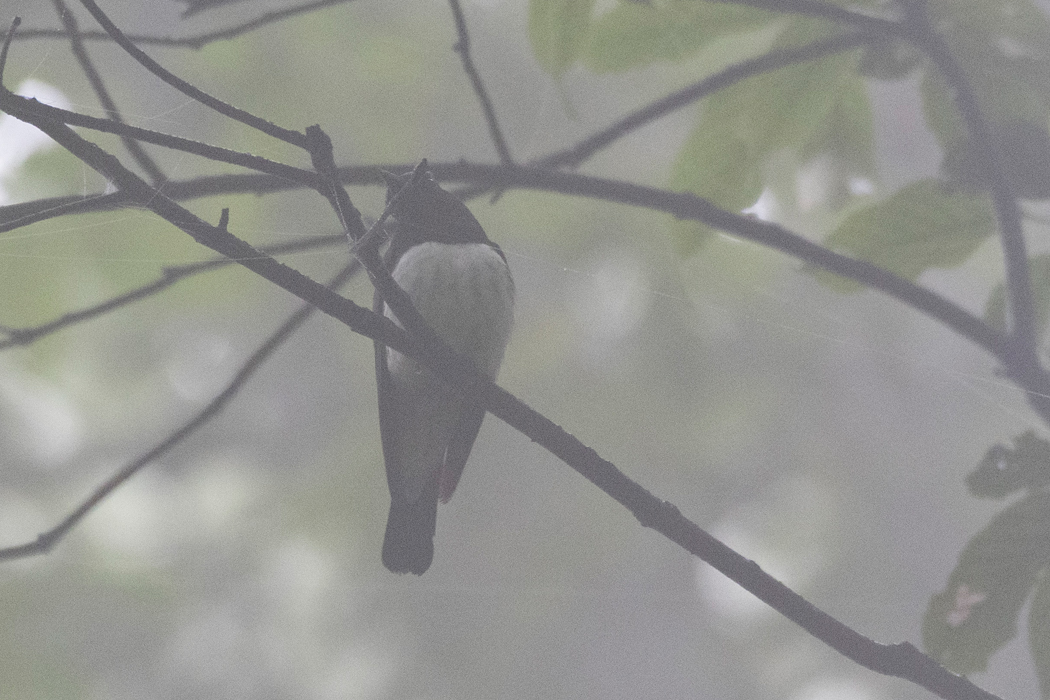
I heard the loud voice of a Blue-and-white Flycatcher in the forest. Fortunately, the thick fog seemed to prevent the flycatcher from seeing me well either.
Read more >
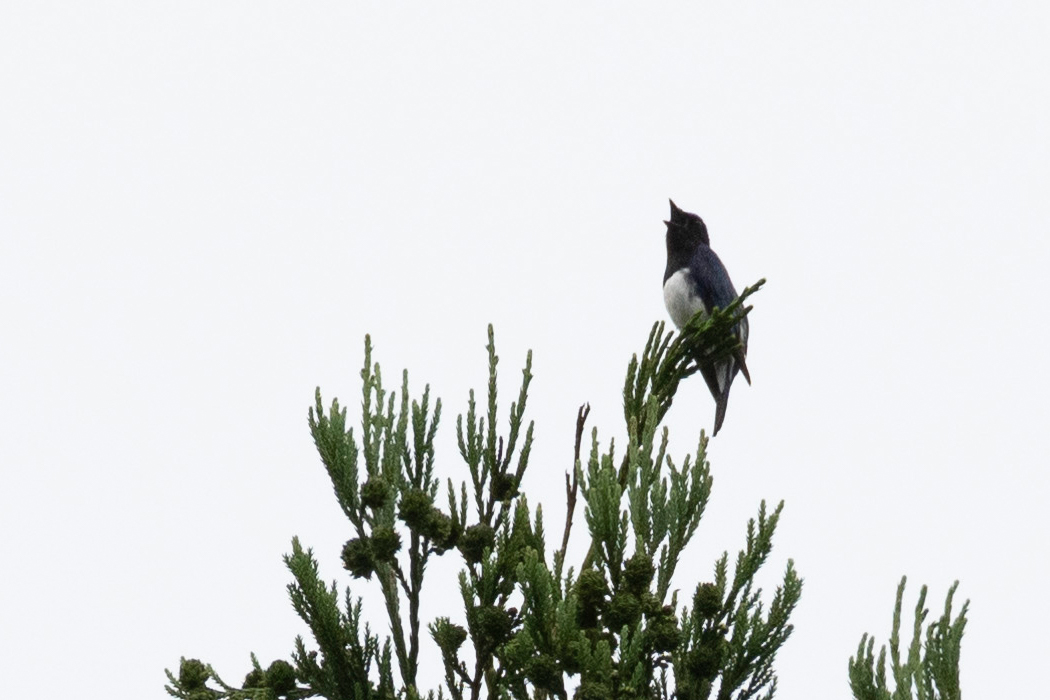
A Blue-and-white Flycatcher was singing at the top of a cedar tree near the foot of the mountain.
Read more >
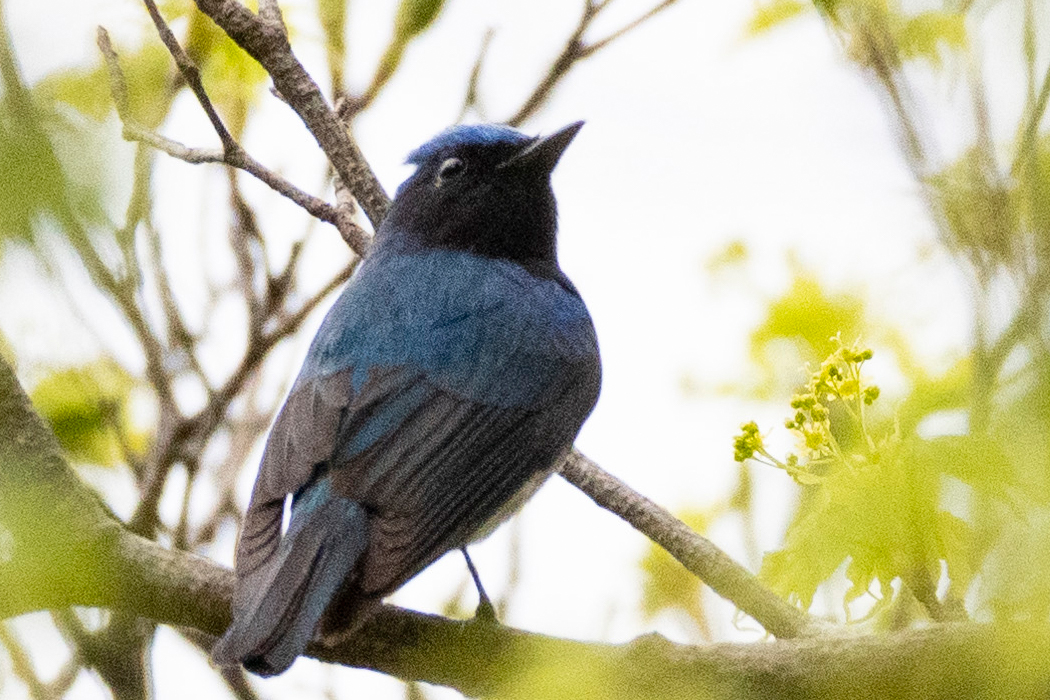
It was singing in the treetops as seen from the forest road.
Read more >
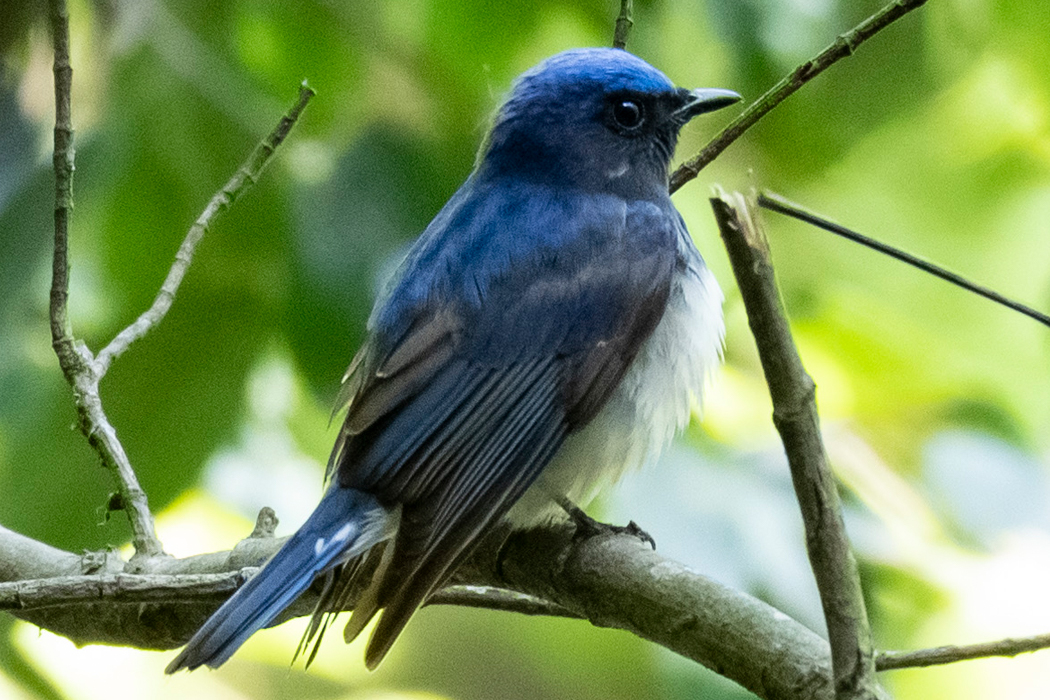
It was singing on a tree branch along the slope.
Read more >
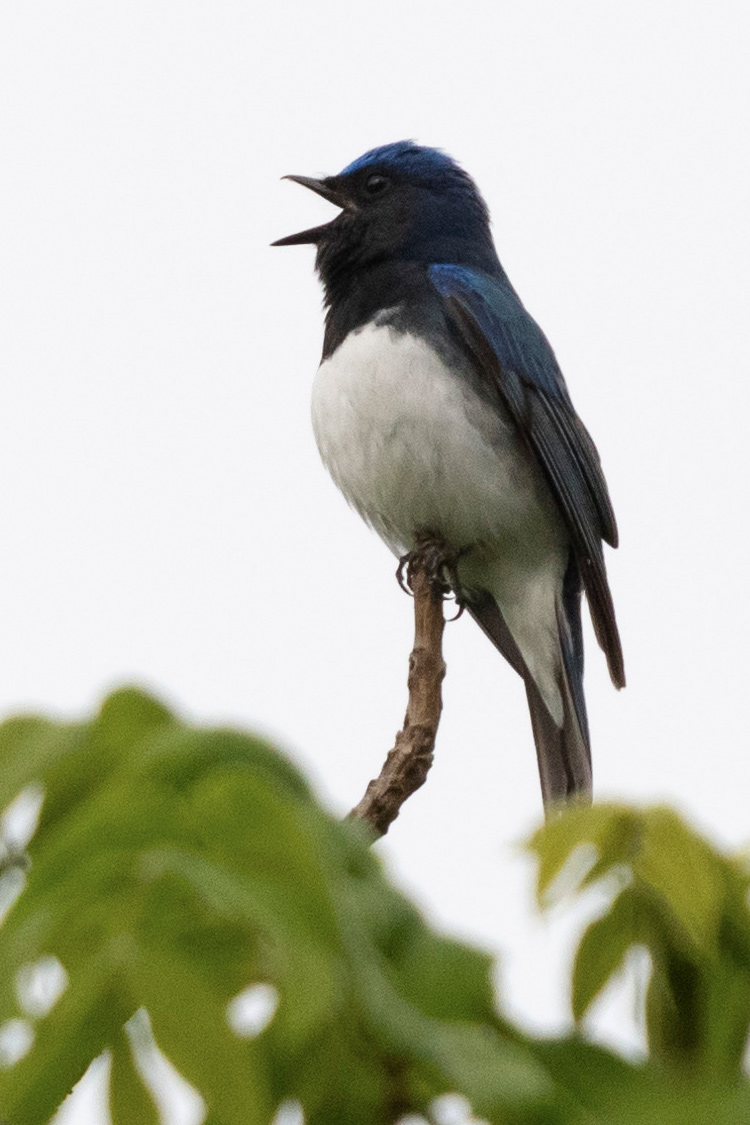
Picture book
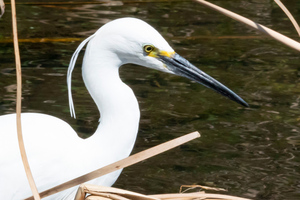
A heron with stylish nuptial plumes in summer....... Read more
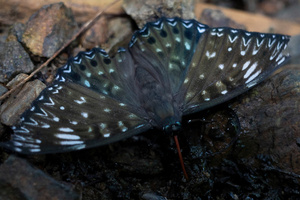
Wing color that looks like ink mixed with blue or green paint....... Read more
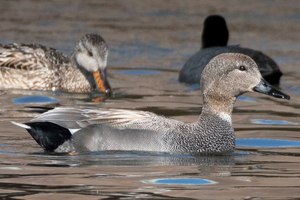
Gray body with fine black patterns....... Read more
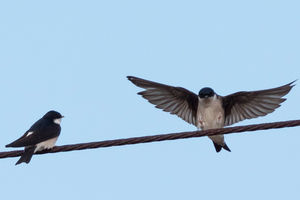
White hair on legs is cute....... Read more
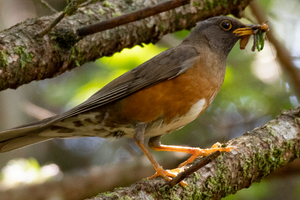
It was called "Chajinai" (written as "brown thrush")....... Read more
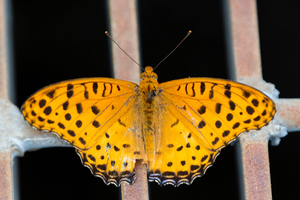
It has a leopard print that shines in the grassland....... Read more