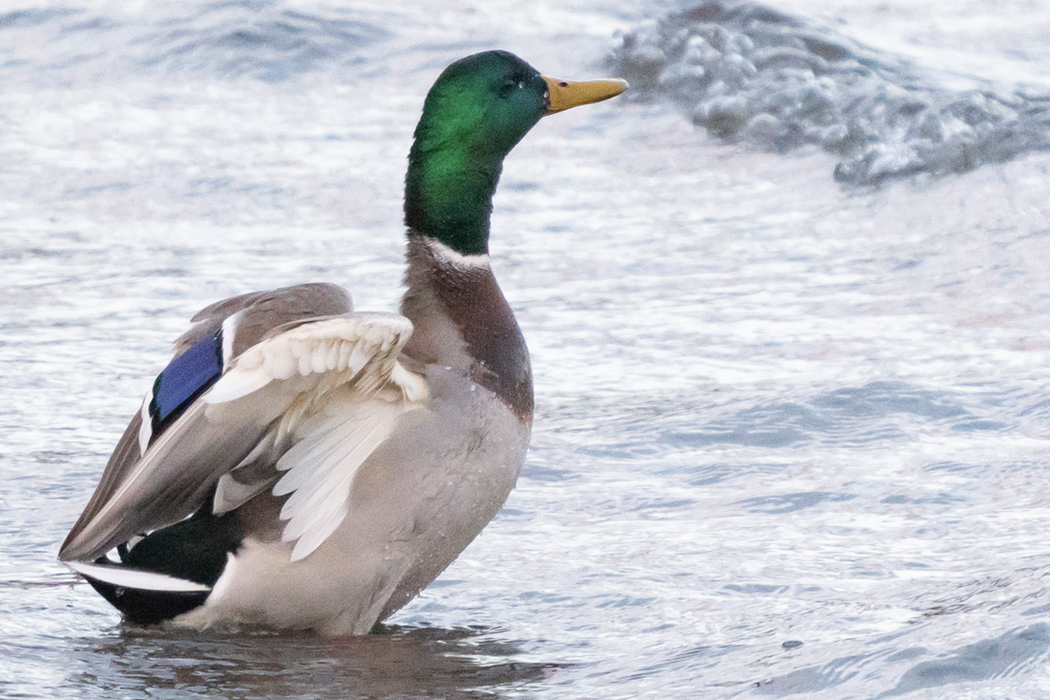
Mallard
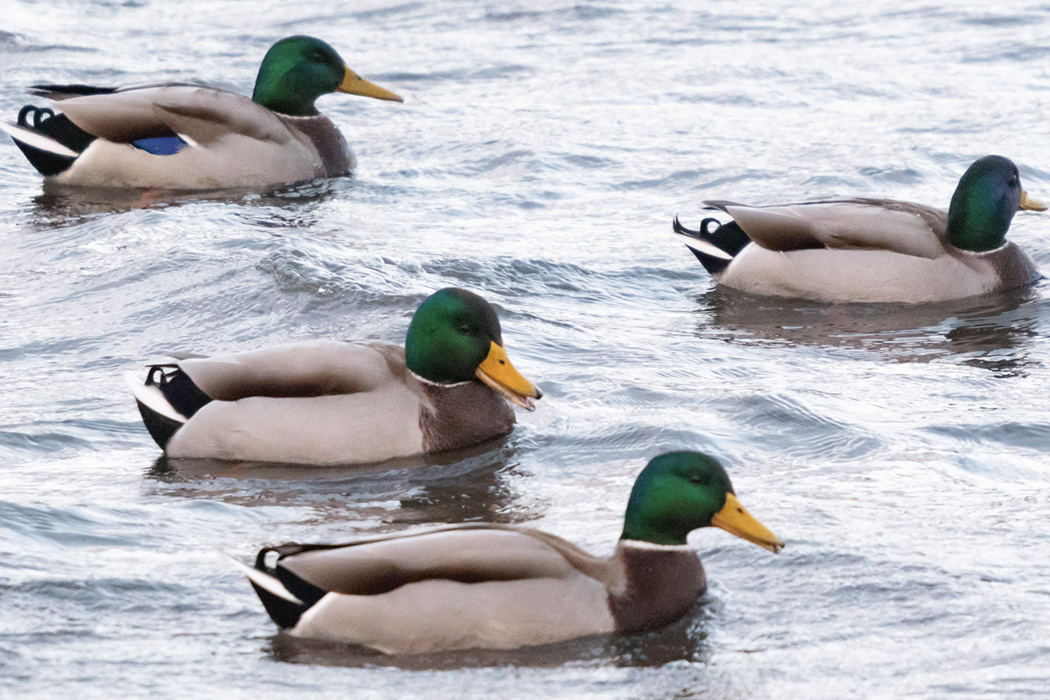
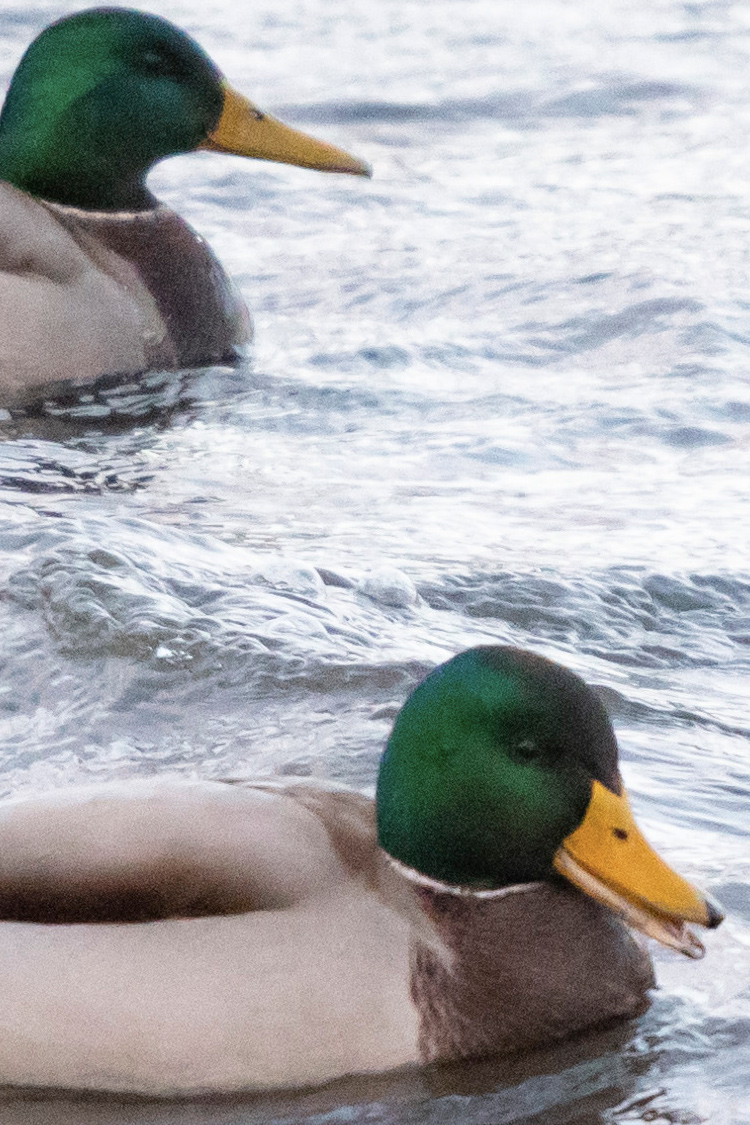
The male has a bright green head.
| Scientific name | Anas platyrhynchos |
| English name | Mallard |
| Japanese name | 真鴨 |
| Class | Aves |
| Order | Anseriformes |
| Family | Anatidae |
| Genus | Anas |
| Species | platyrhynchos |
| Full length | 50-65cm |
| Distribution | Widely distributed throughout the Northern Hemisphere. |
Mallard Characteristics and Morphology
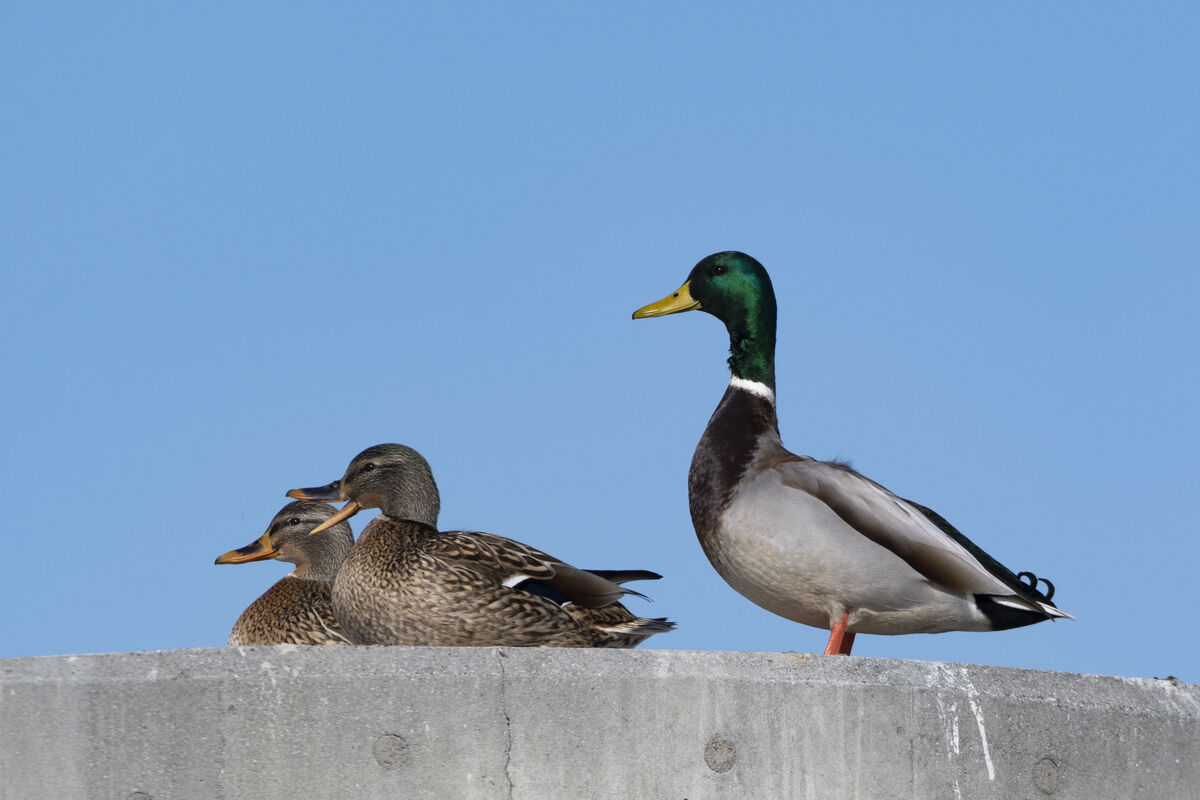
Males and females have significantly different coloration.
The head is round and lacks a crest. The iris is black to dark brown.
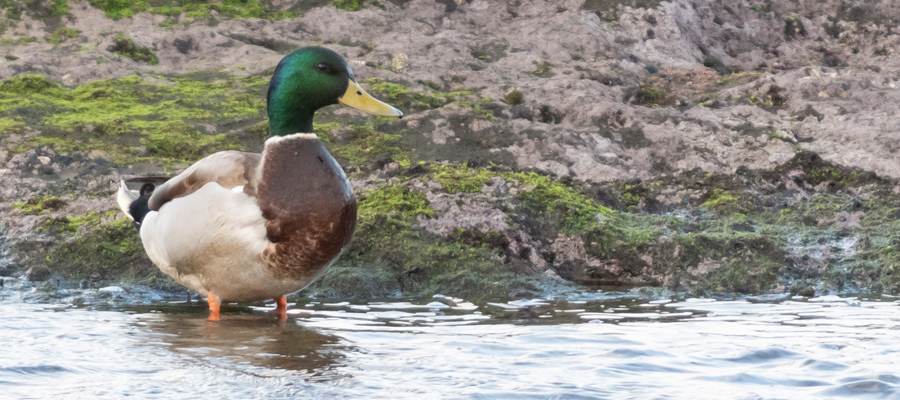
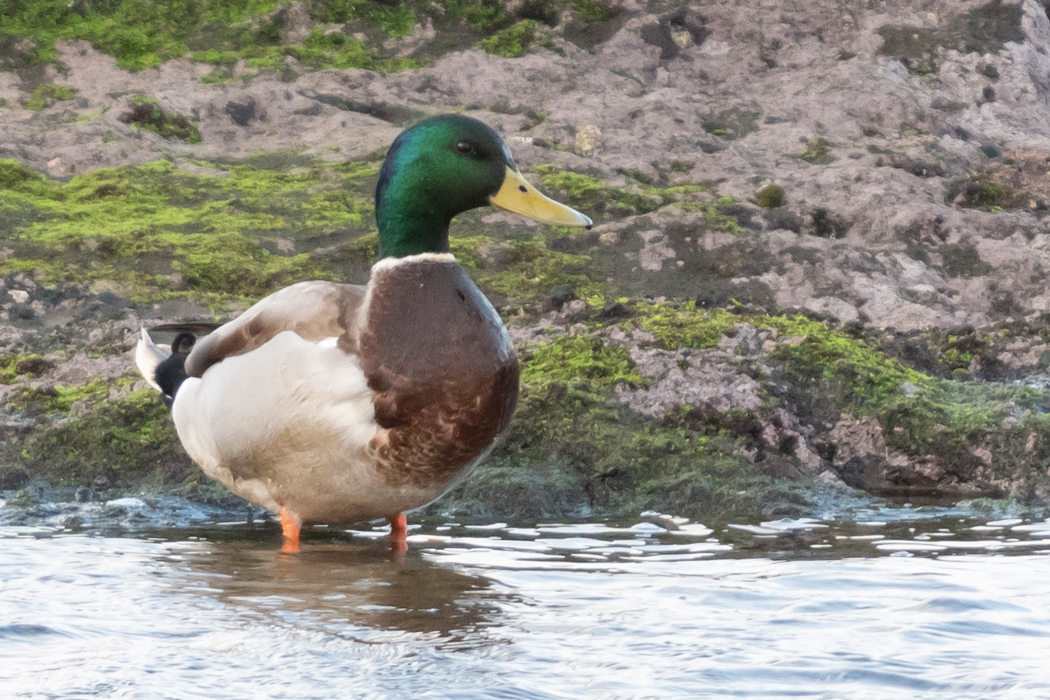
The legs are orange.
It is difficult to distinguish the Spot-billed Duck from the Mallard.
Male
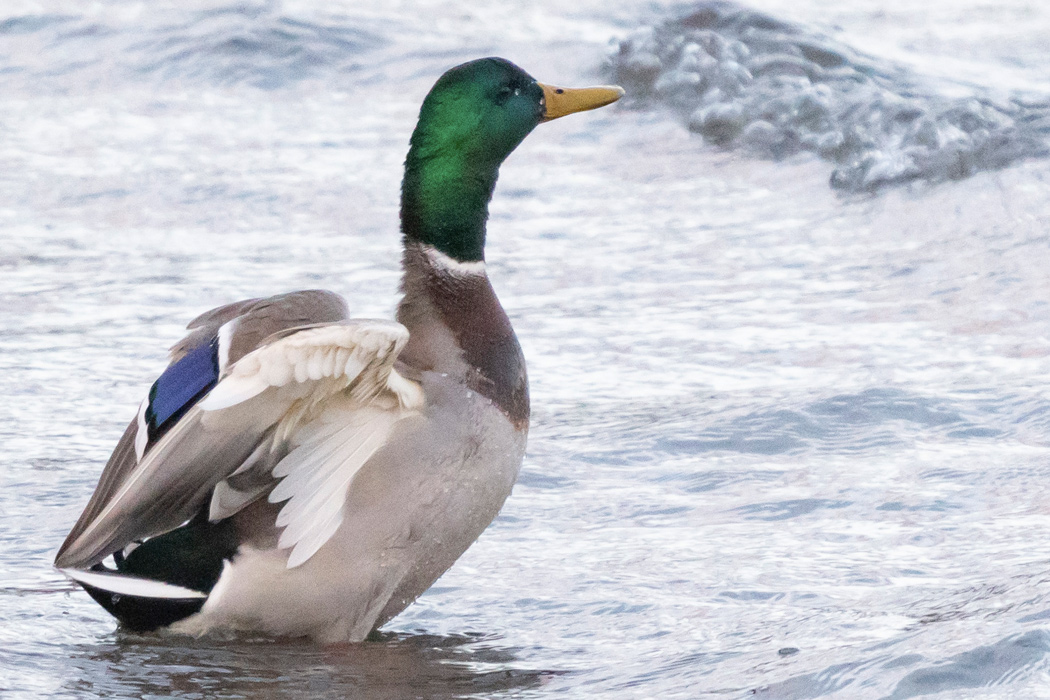
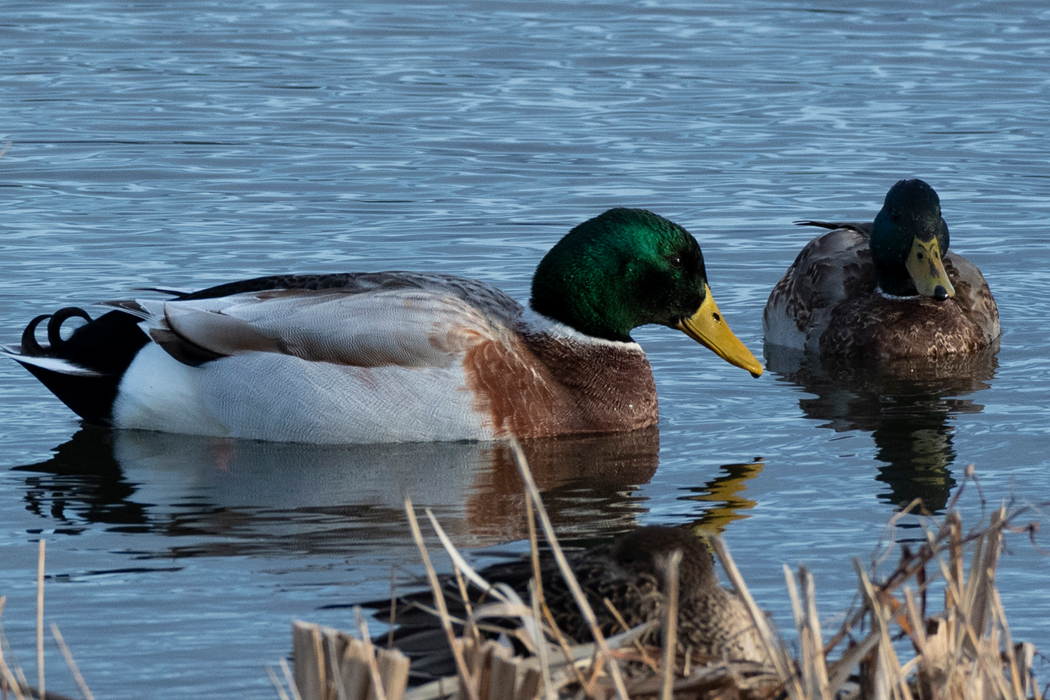
The head is glossy green, extending to the throat. There is a white ring around the neck at the throat. The bill is yellow, and this remains the same in winter plumage. The chest is brown. The wings are whitish, and the speculum is blue-purple. The bill is yellow, which remains the same in winter plumage and is a key point for distinguishing it from females.
Female
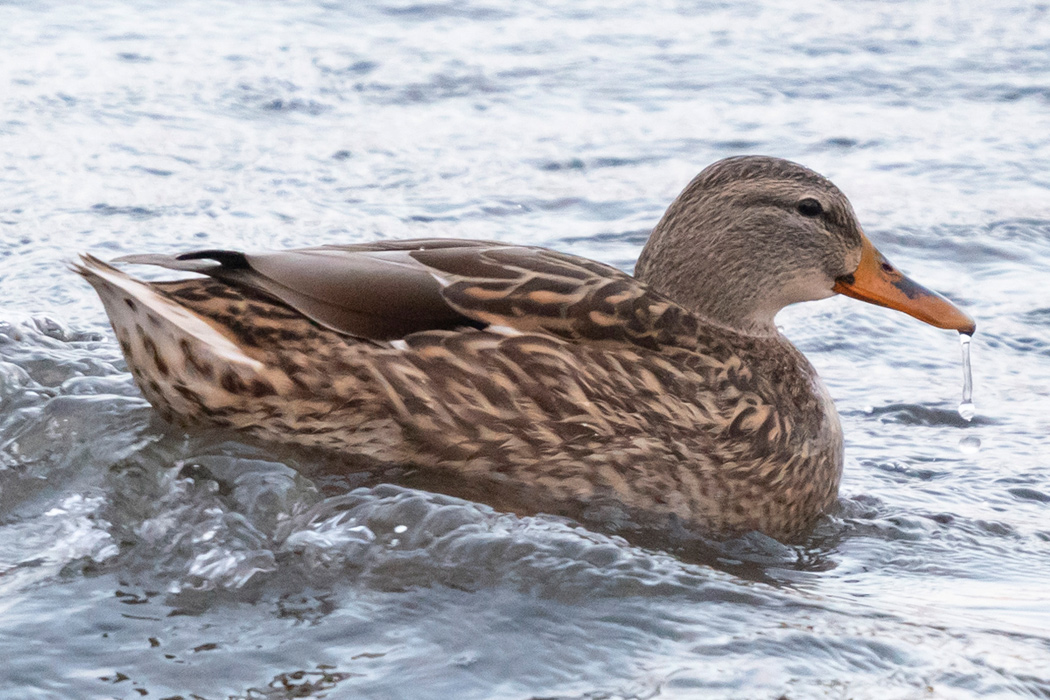
The entire body is brown with a mottled pattern.
The bill is orange with a darkish area near the base.
The wings are also brown with mottled patterns of light and dark brown.
Song
They call repeatedly, "Gae gae gae."
Mallard Ecology
Habitat
They live in rivers, lakes, and harbors.
Food
They feed on plant seeds, aquatic plants, and shellfish in rice fields and shallow waters.
Life Cycle
They migrate during the breeding season in spring.
Mallard Photos
Mallard Photos are introduced.
Tap the photo to open the detail page.
Mallard Behavior
They live in flocks. They rest during the day and begin searching for food in the evening. When foraging, they often submerge their heads, searching in an upside-down position.
Mallard Information
Naming
The scientific name "platyrhynchos" means "broad-billed."
Both domestic ducks and Spot-billed Ducks are the same species as the Mallard. The ancestor of domestic ducks is the Mallard, which was domesticated as poultry. Originating in China, it spread to Japan and England, where various breeds were created. The Spot-billed Duck is a cross between the Mallard and the Chinese Spot-billed Duck.
Mallard Found Locations
Miura Peninsula
I photographed them swimming in a flock along the coast in the morning. They stood up and flapped their wings in the shallows where they could touch the bottom. They were swimming quite leisurely. There was also a male alone on a nearby rocky shore.
Mallard Observation Log
These are the observation logs where we found Mallard.
Picture book
Sings with a voice surprisingly loud for its tiny size....... Read more
Sandpiper as small as a skylark....... Read more

The red iris is beautiful....... Read more
It has a distinctive odor, but it is not poisonous....... Read more
There are black spots like eyebrows on the face....... Read more
Lurking in the winter thickets....... Read more